Estúdio de Escultura 2025-26 • Projeto do 2.º Semestre
1. Title:
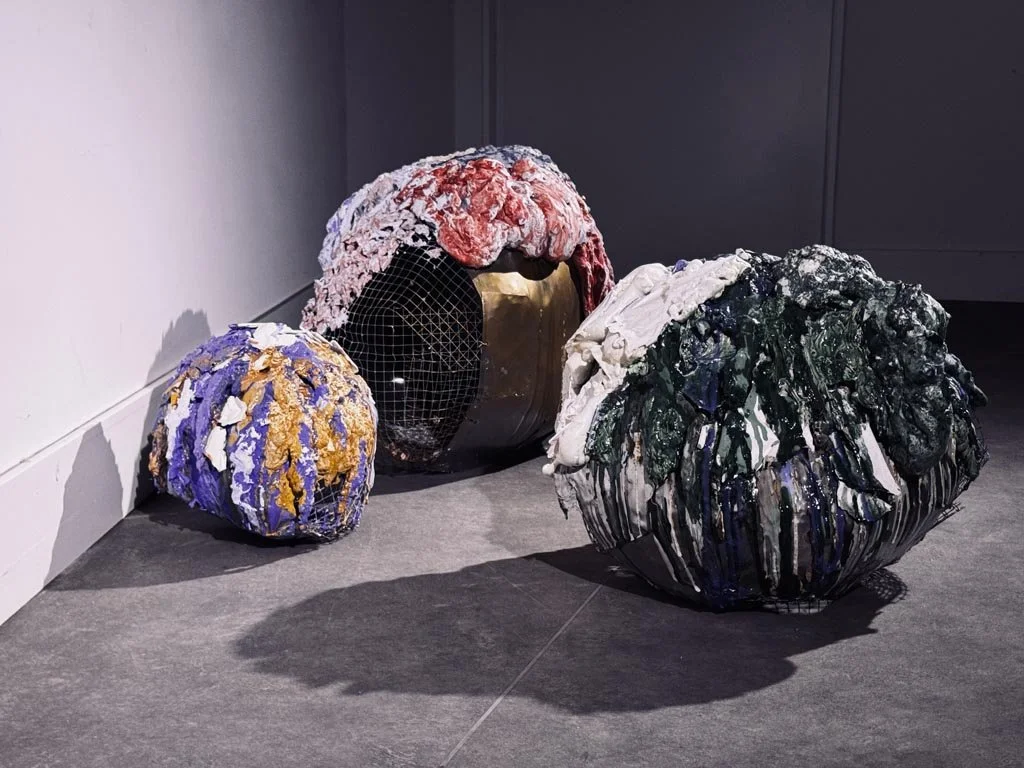
Project 1 Title: Still Warm
Carbon steel, stainless steel, aged zinc-coated steel mesh, plaster, concrete, resin, epoxy, polyurethane foam, pigment, iron oxide, aggregate
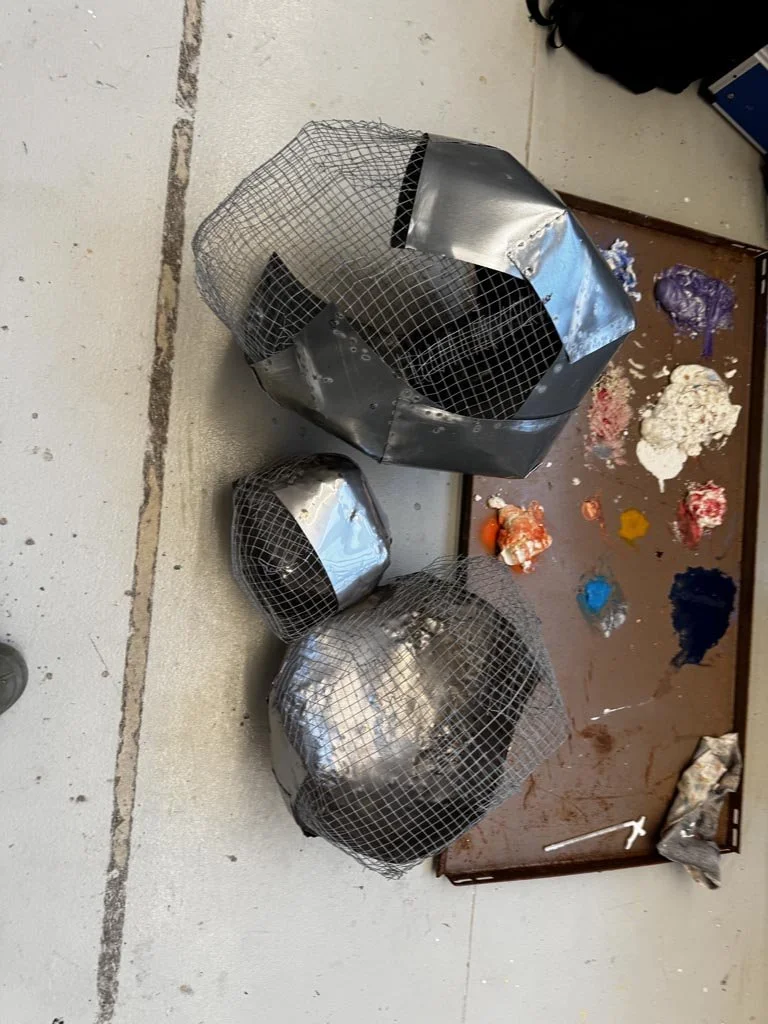
47 x 40 x 50cm, 38 x 38 x 34cm, 27 x 25 x 23 cm
2026
Caption: On the weight of sustained presence
Project 2 Title: What the Æther Holds
Caption: A kinetic meditation on breath, scent, and the invisible work of nurturing
2. Keywords:
Still Warm
Accumulation
Body
Deformation
Cellular
Geological
Pregnancy
What the Æther Holds
Ephemeral
Kinetic
Atmosphere
Impermanence
3. Description:
Still Warm
Materials: Carbon steel, stainless steel, aged zinc-coated steel mesh, plaster, concrete, resin, epoxy, polyurethane foam, pigment, iron oxide, aggregate
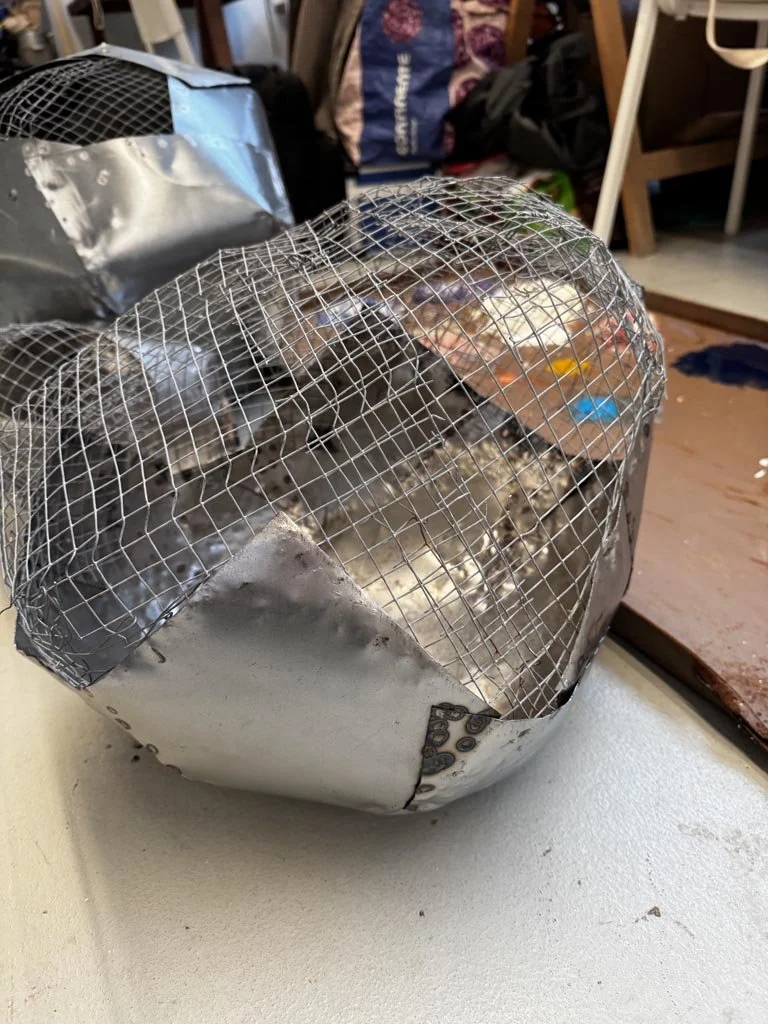
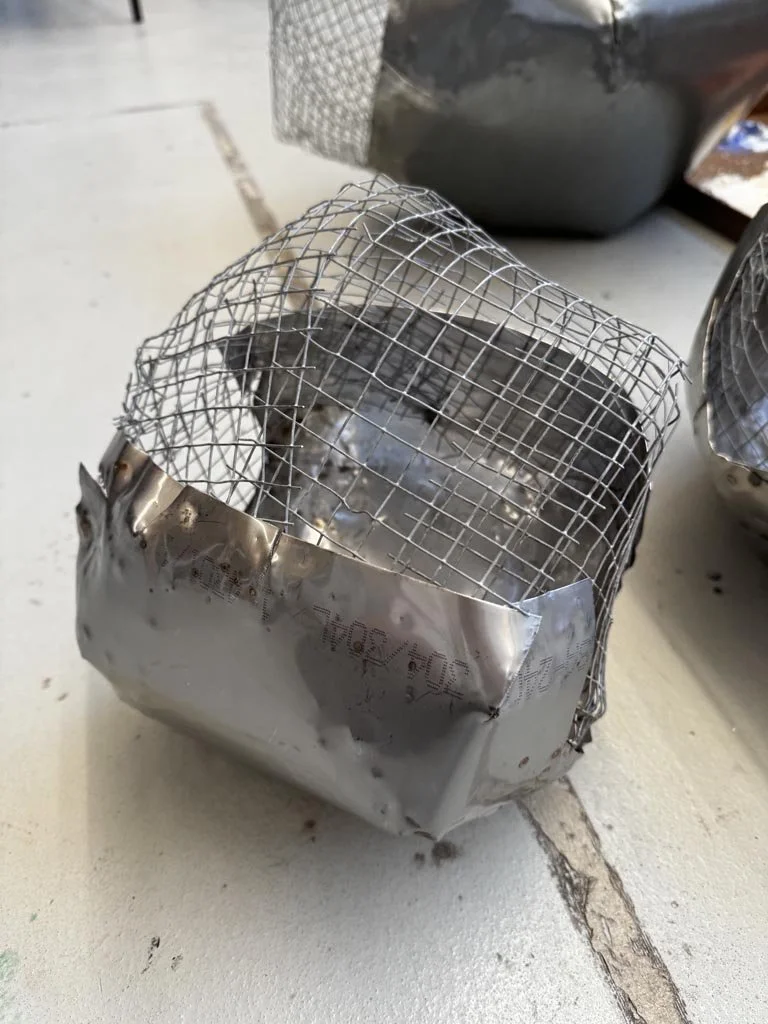
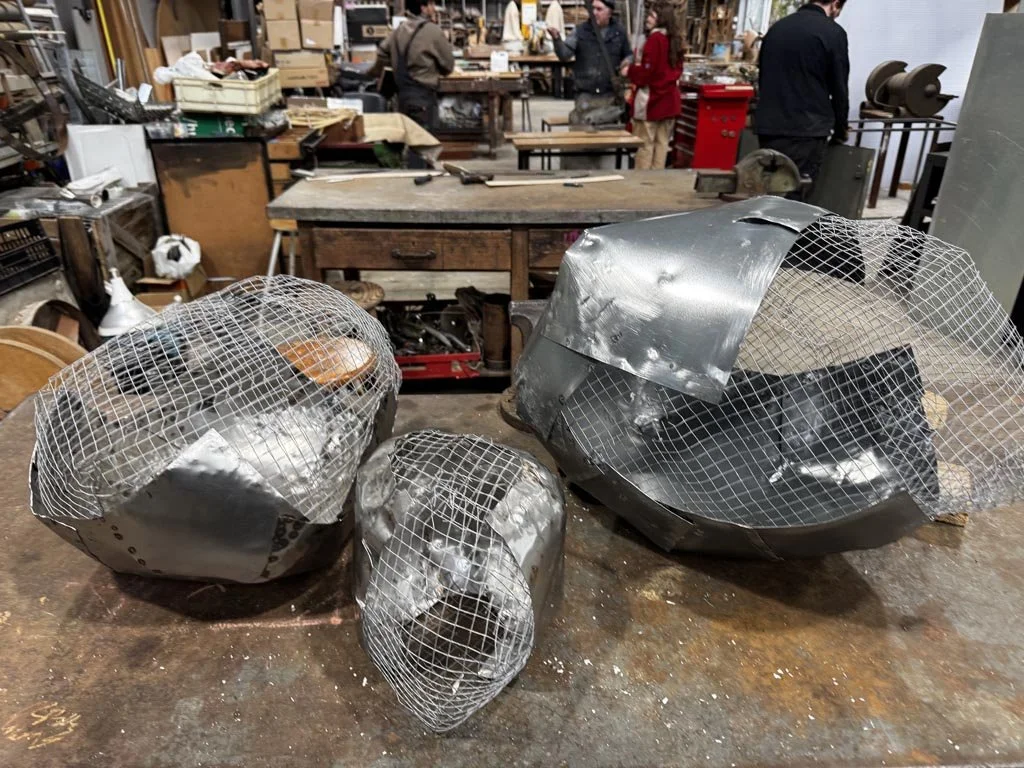
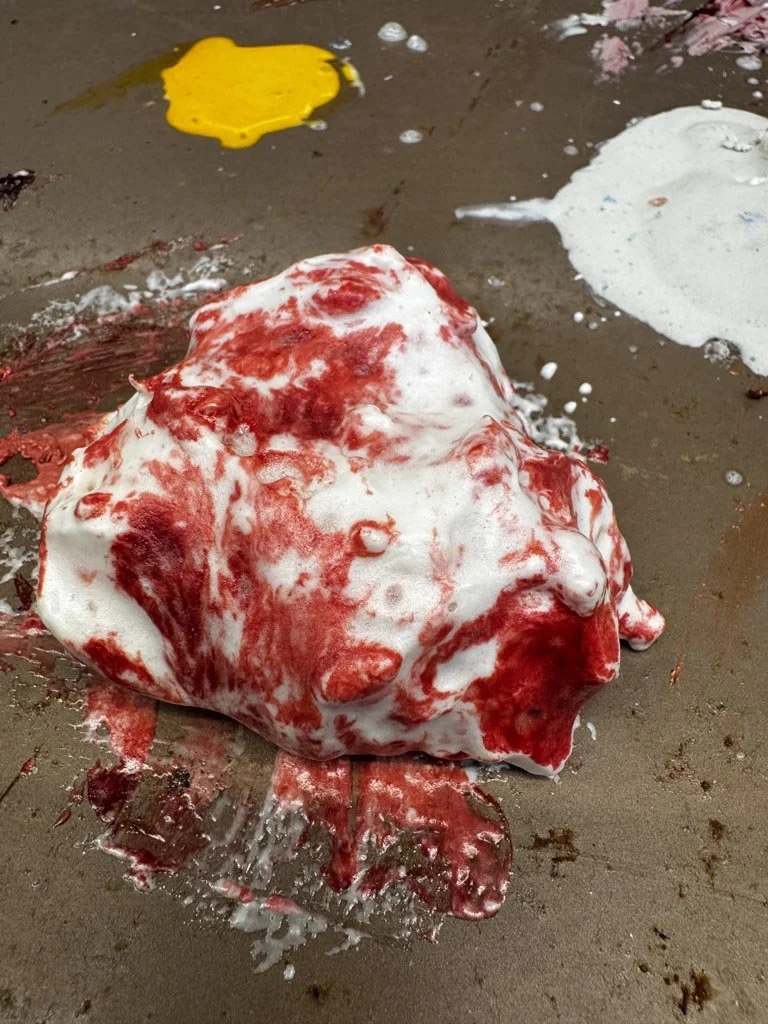
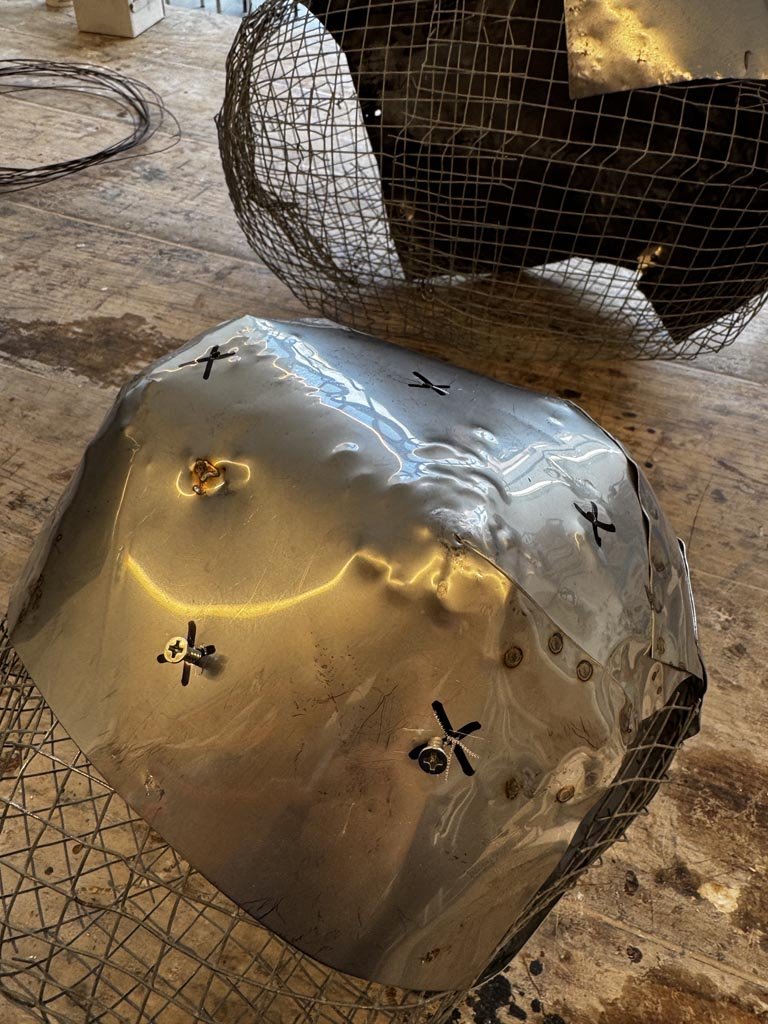
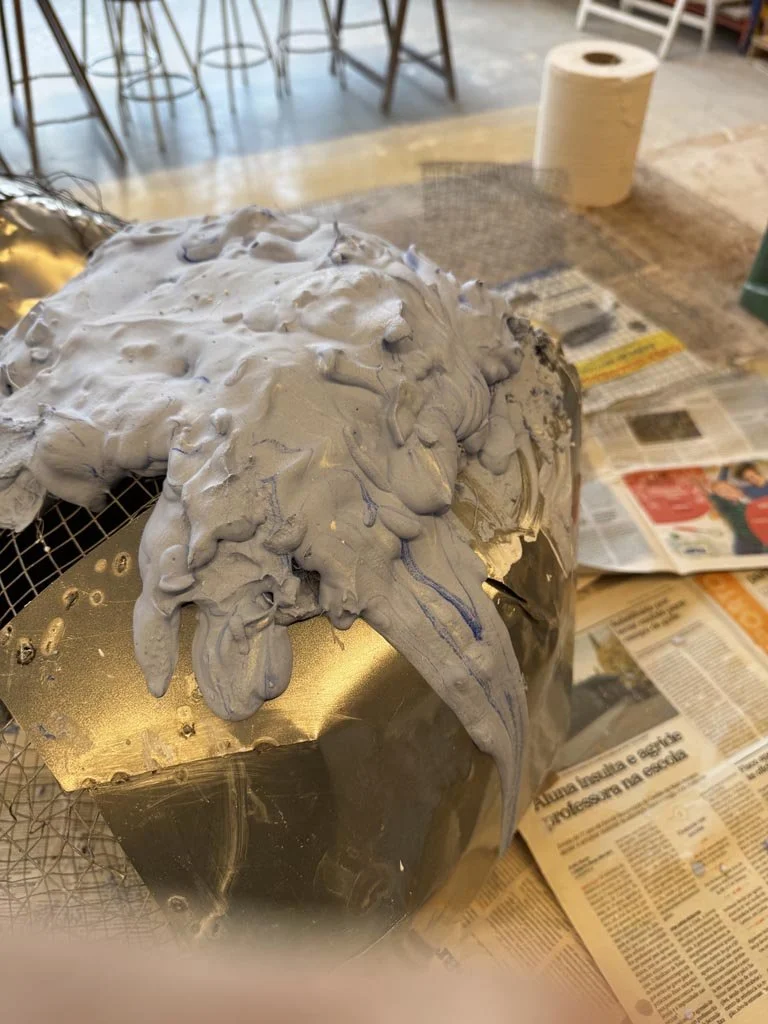
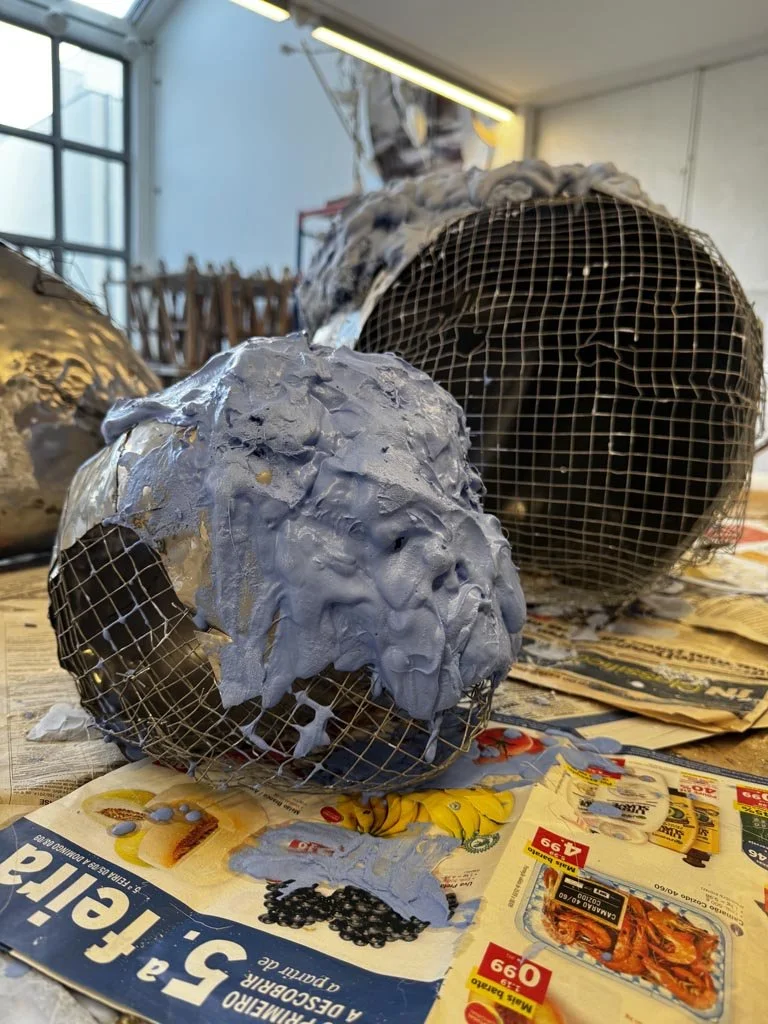
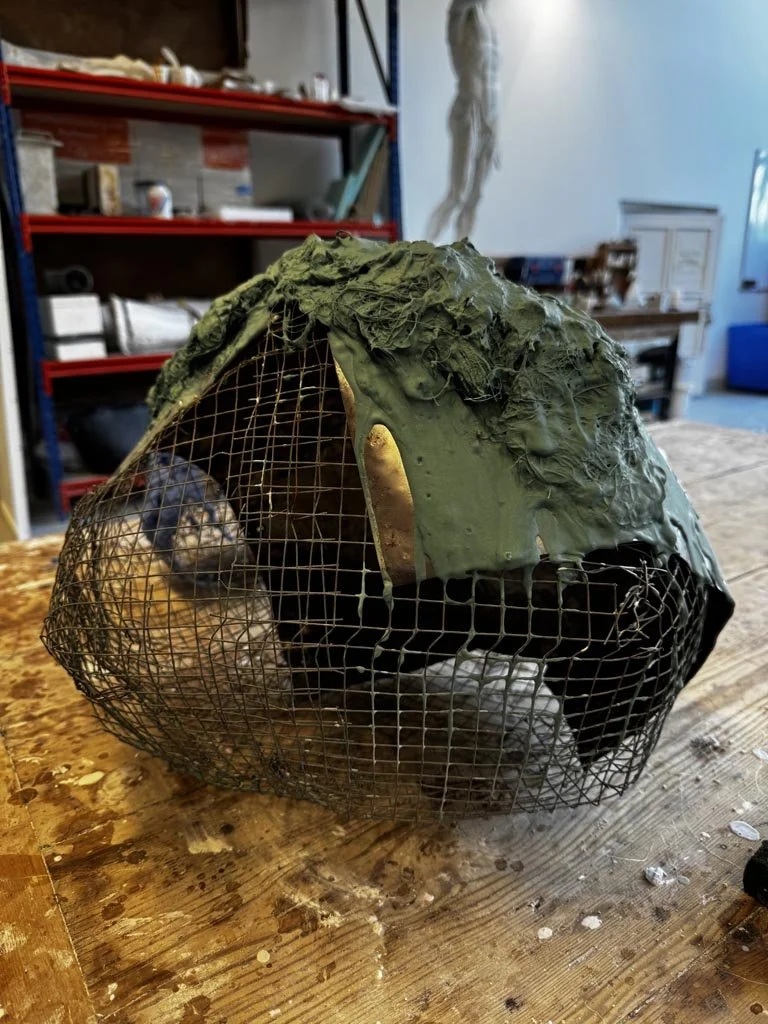
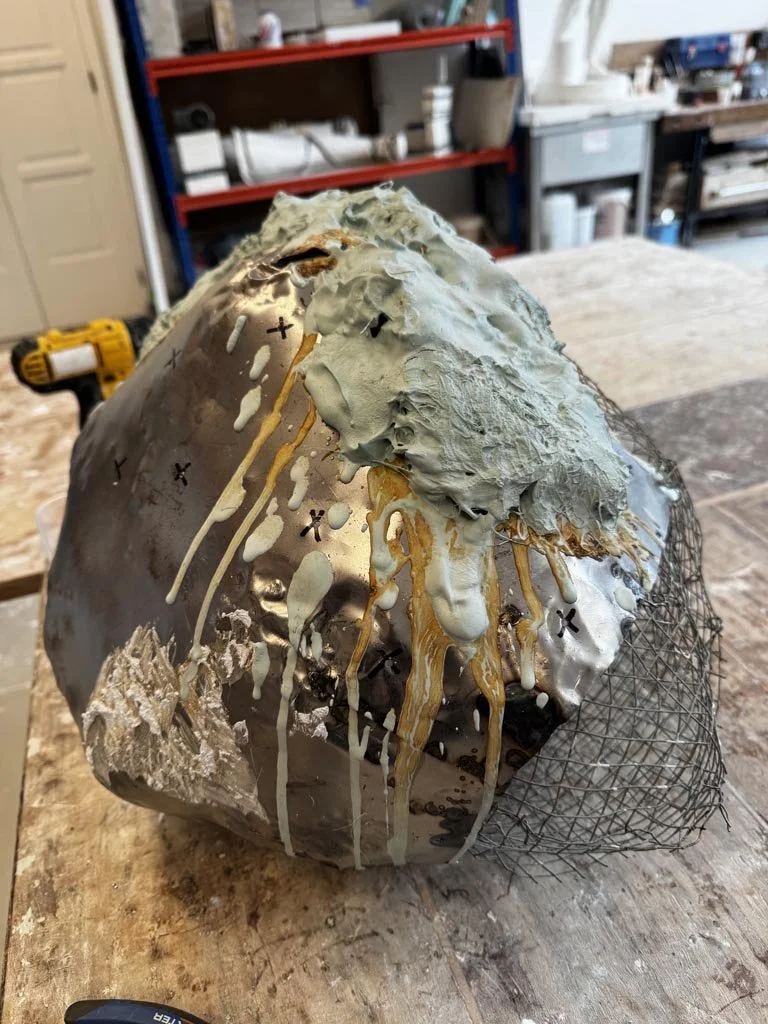
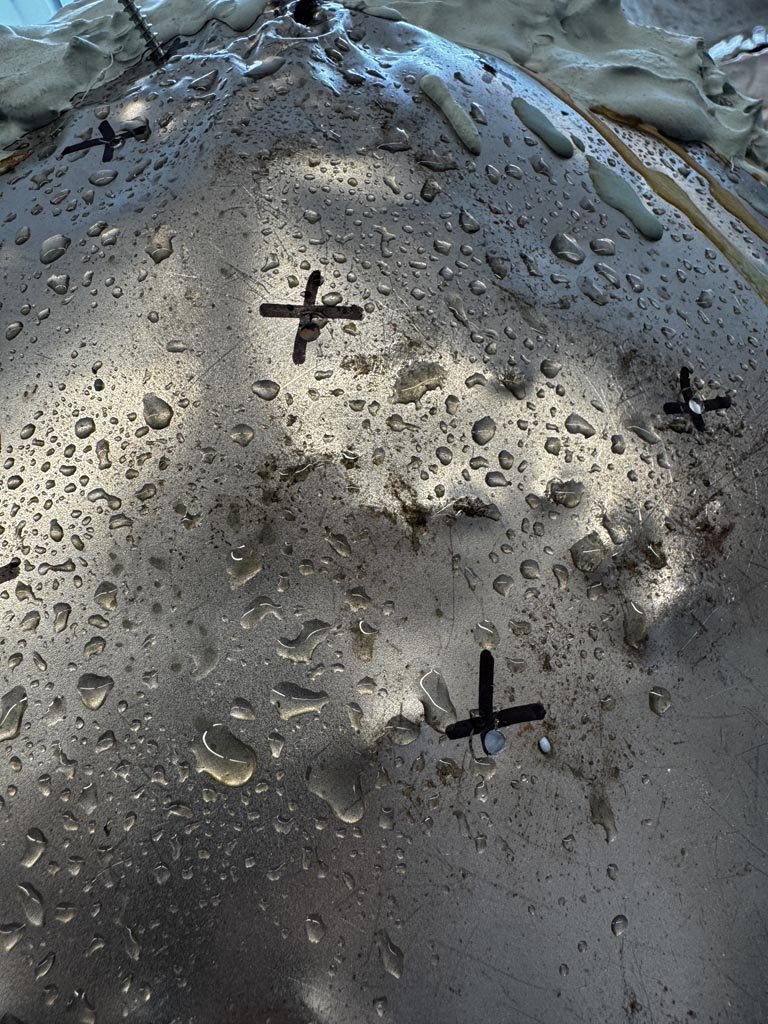
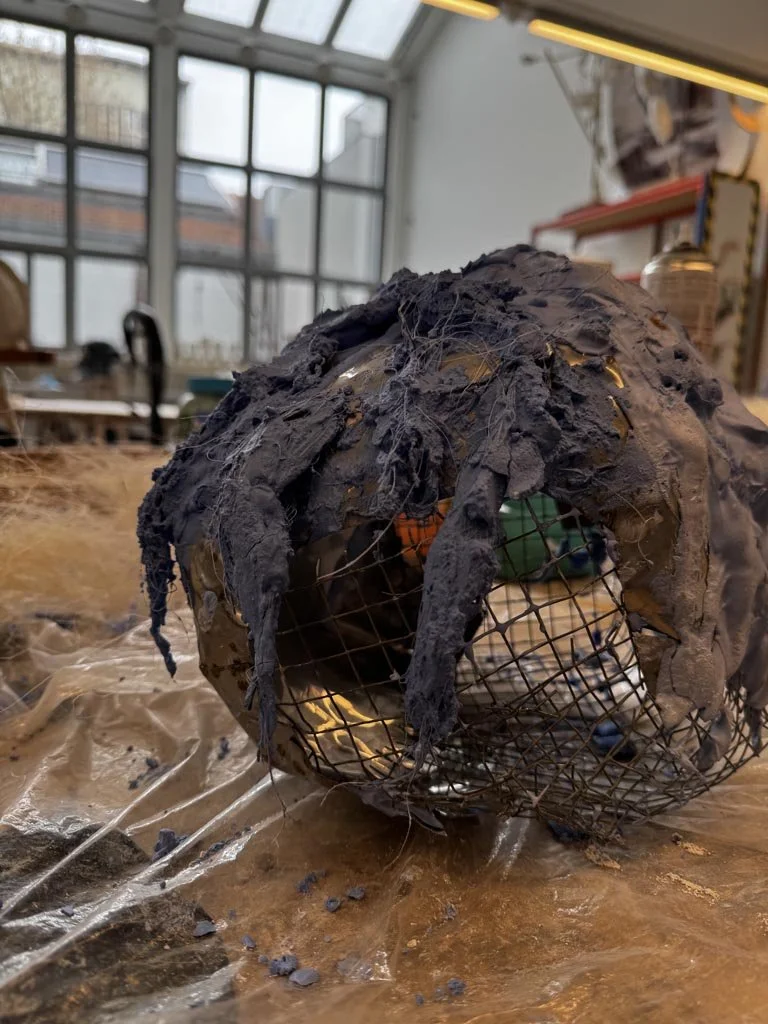
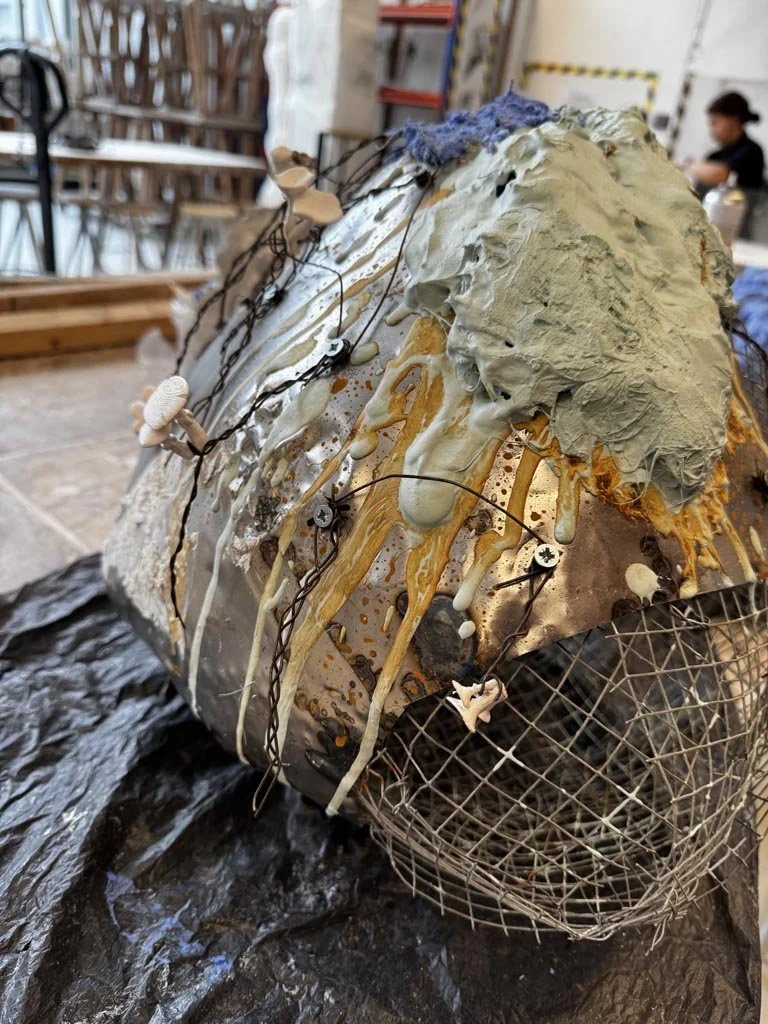
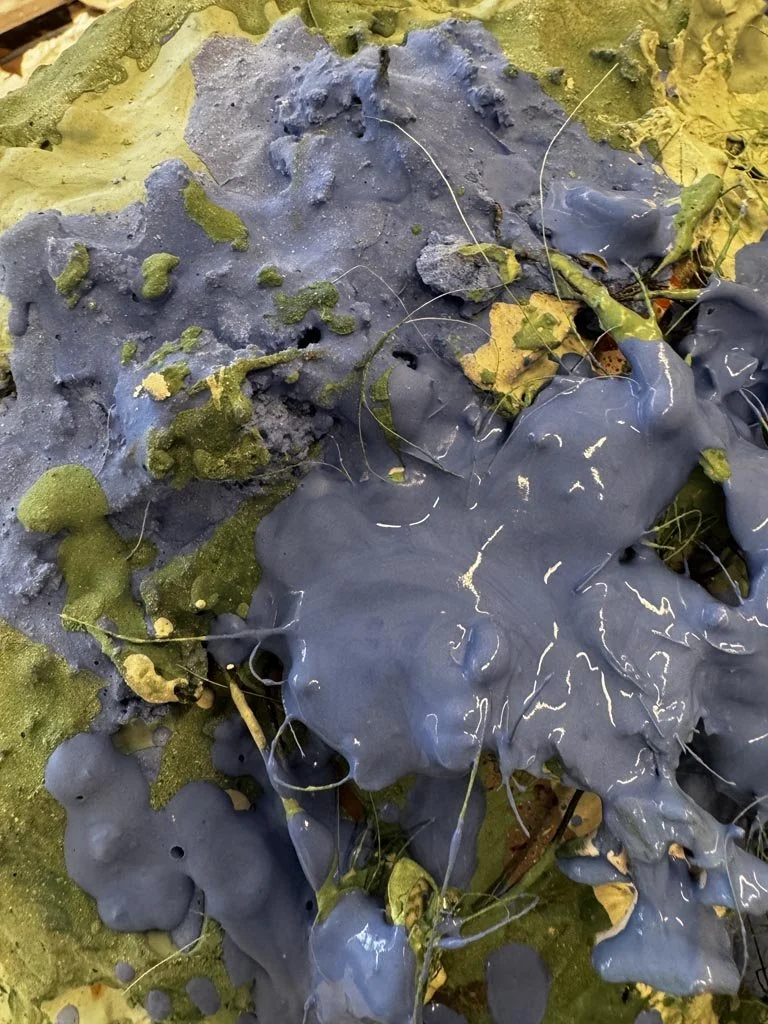
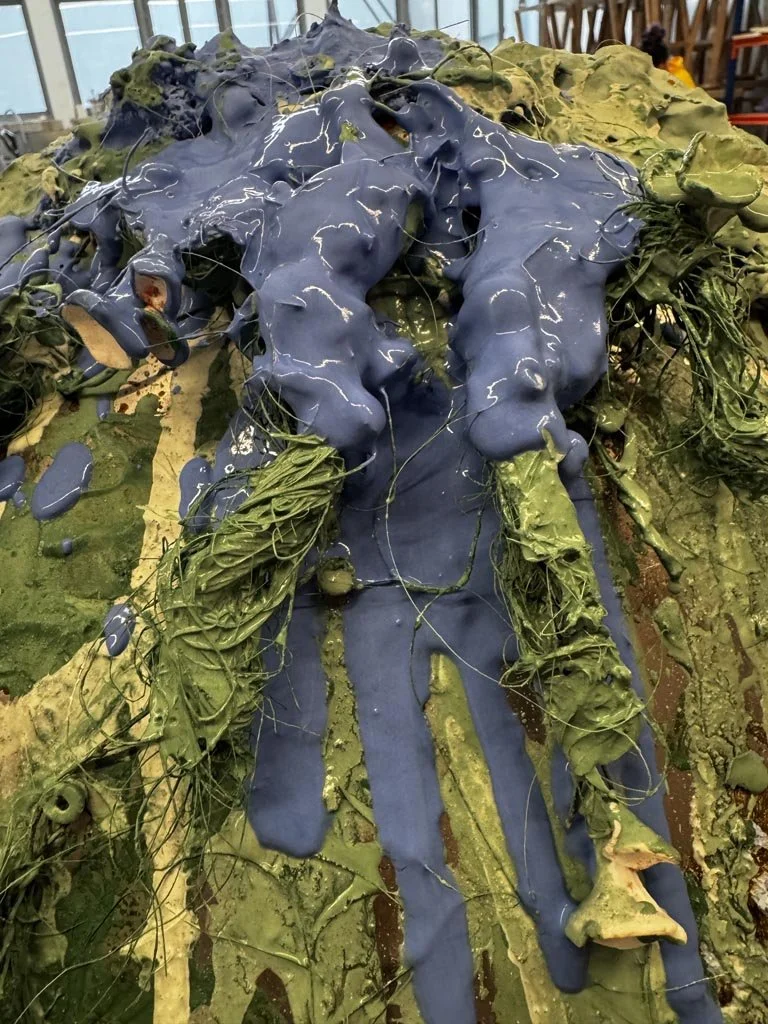
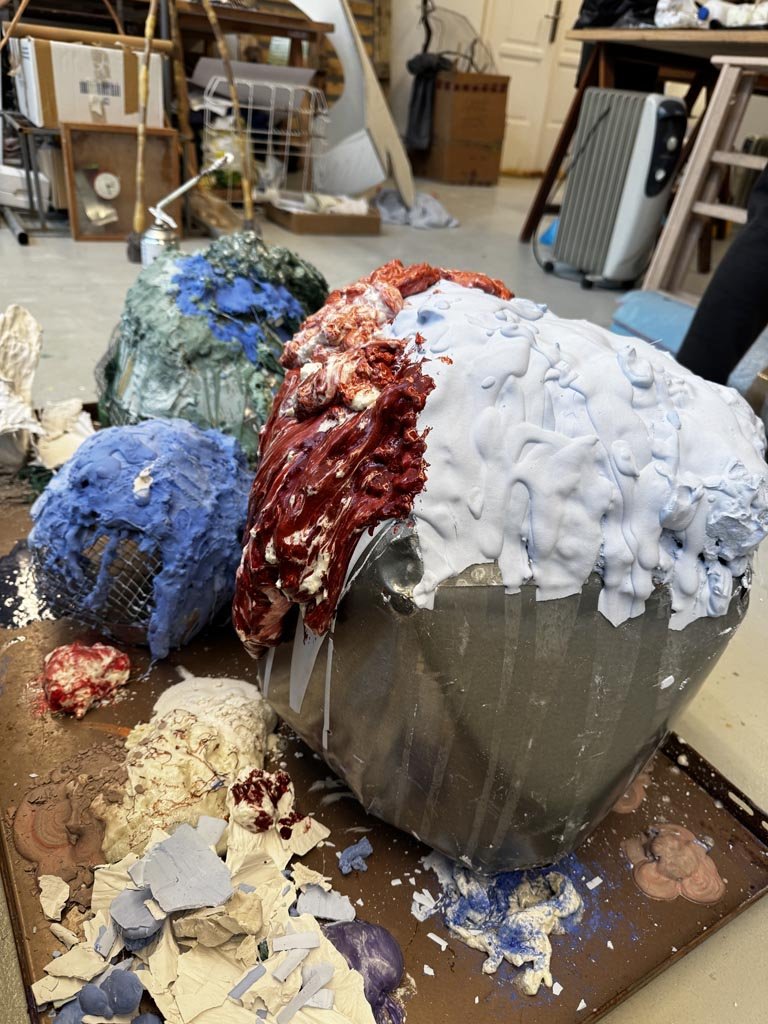
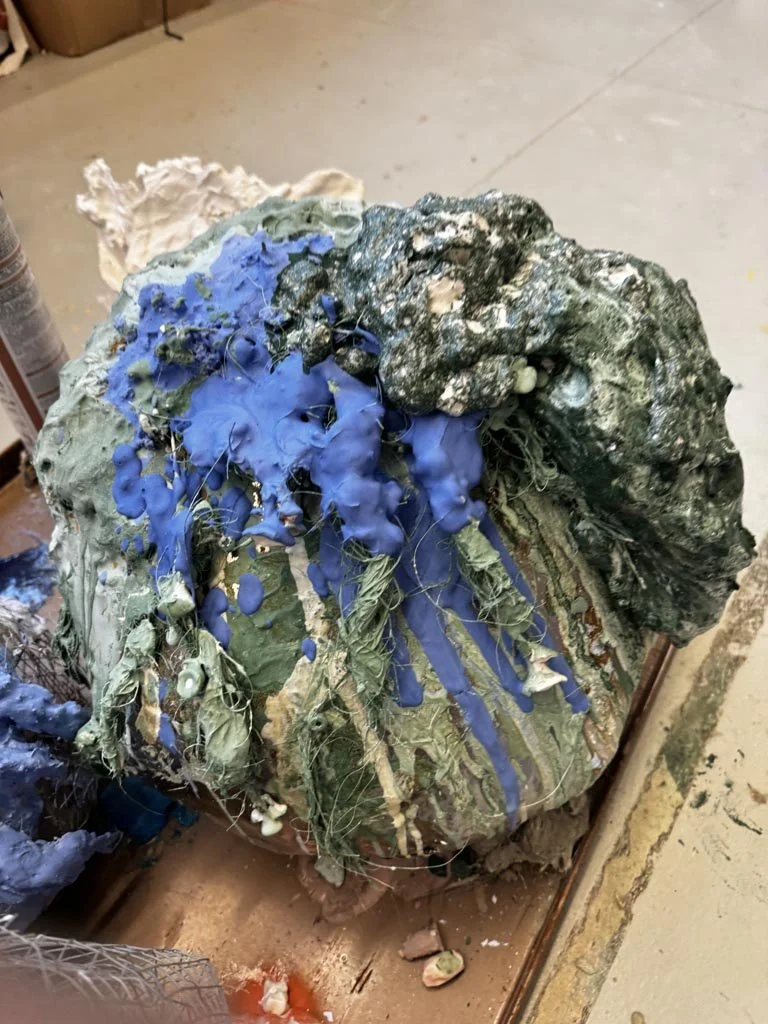
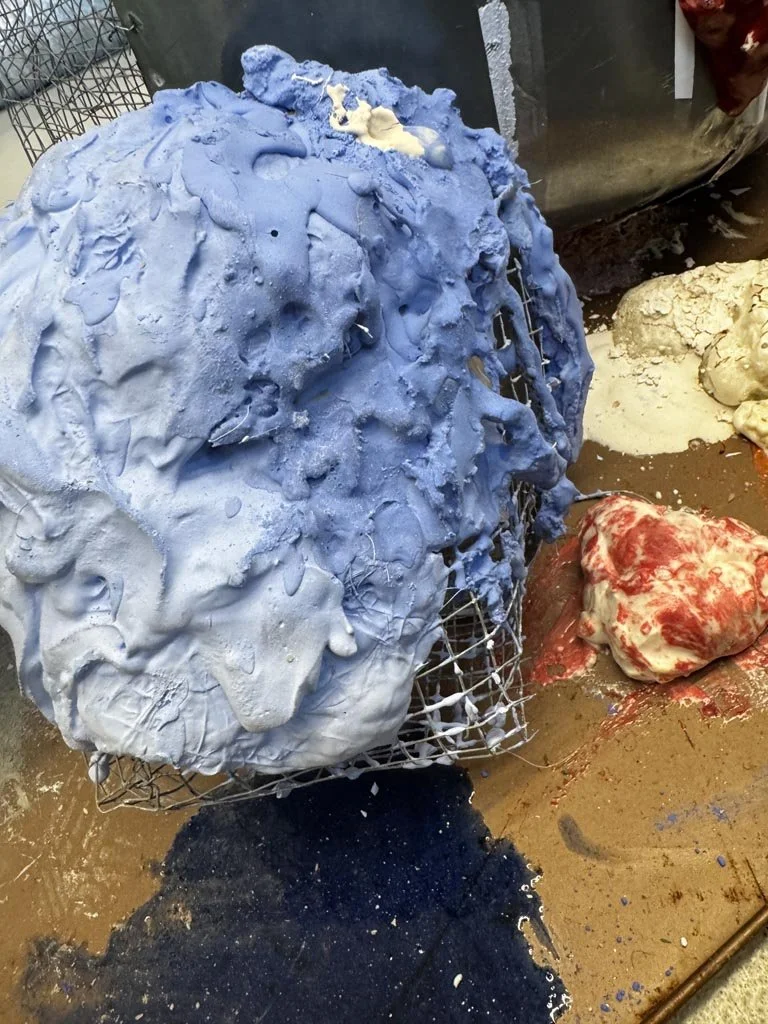
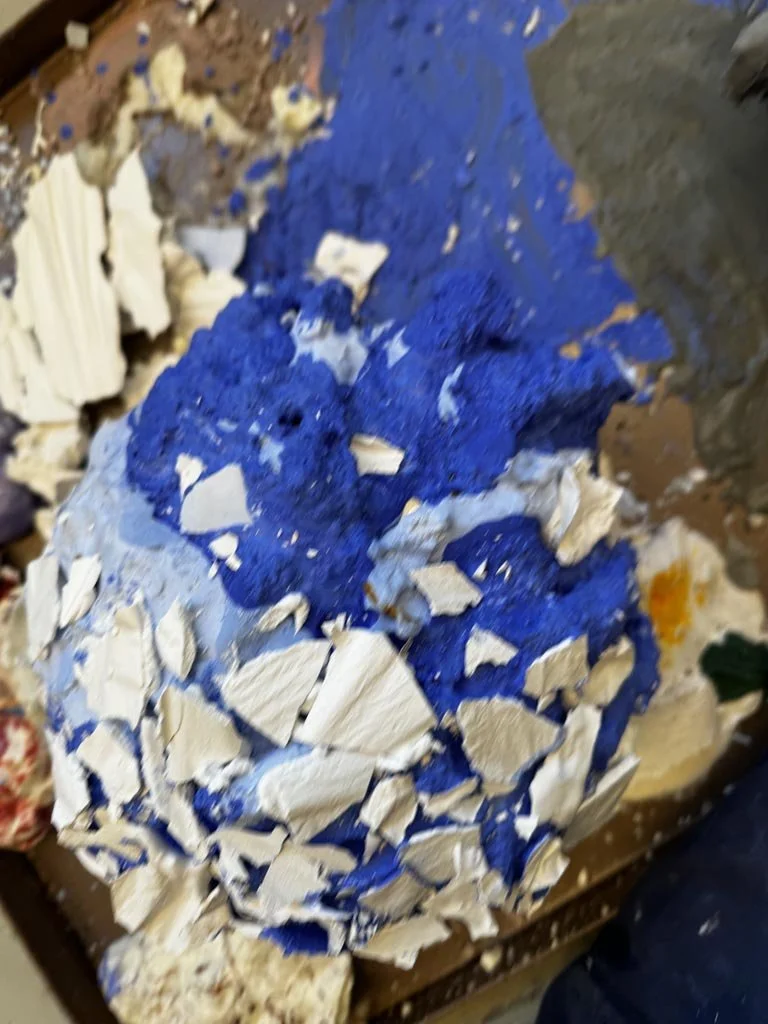
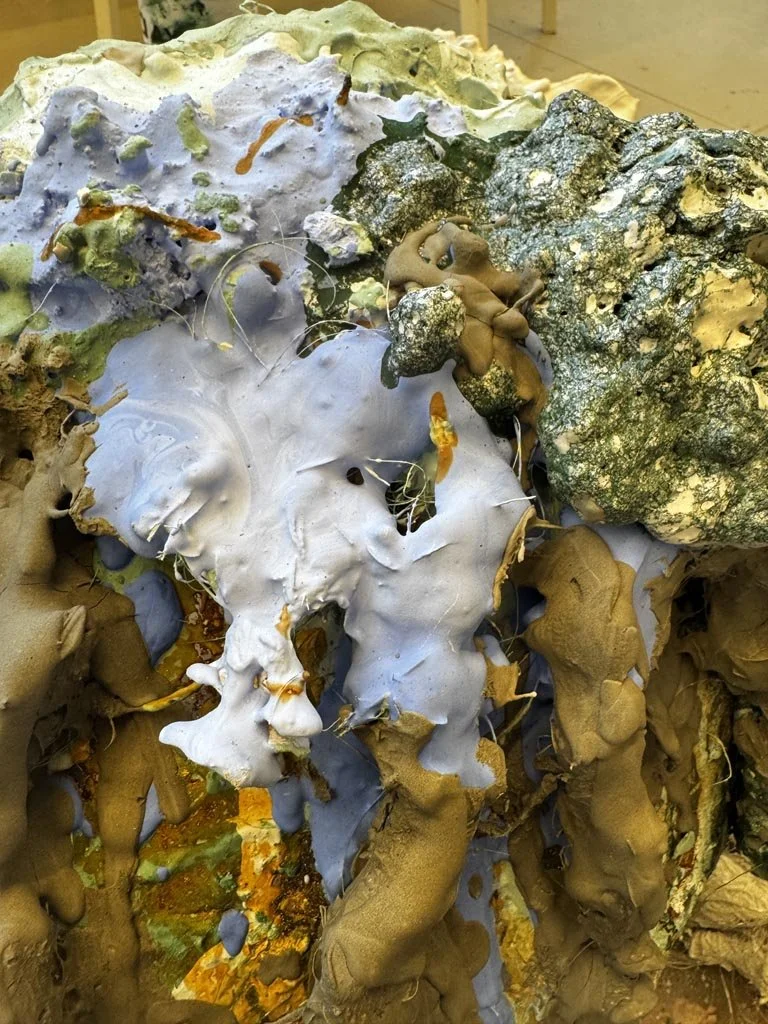
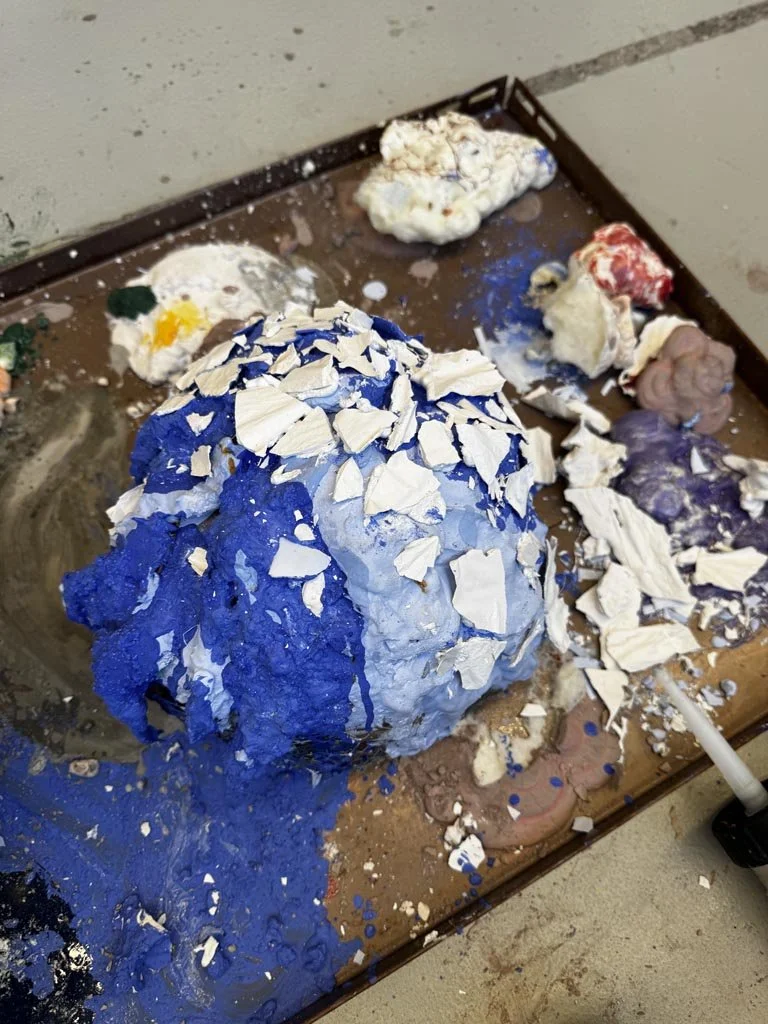
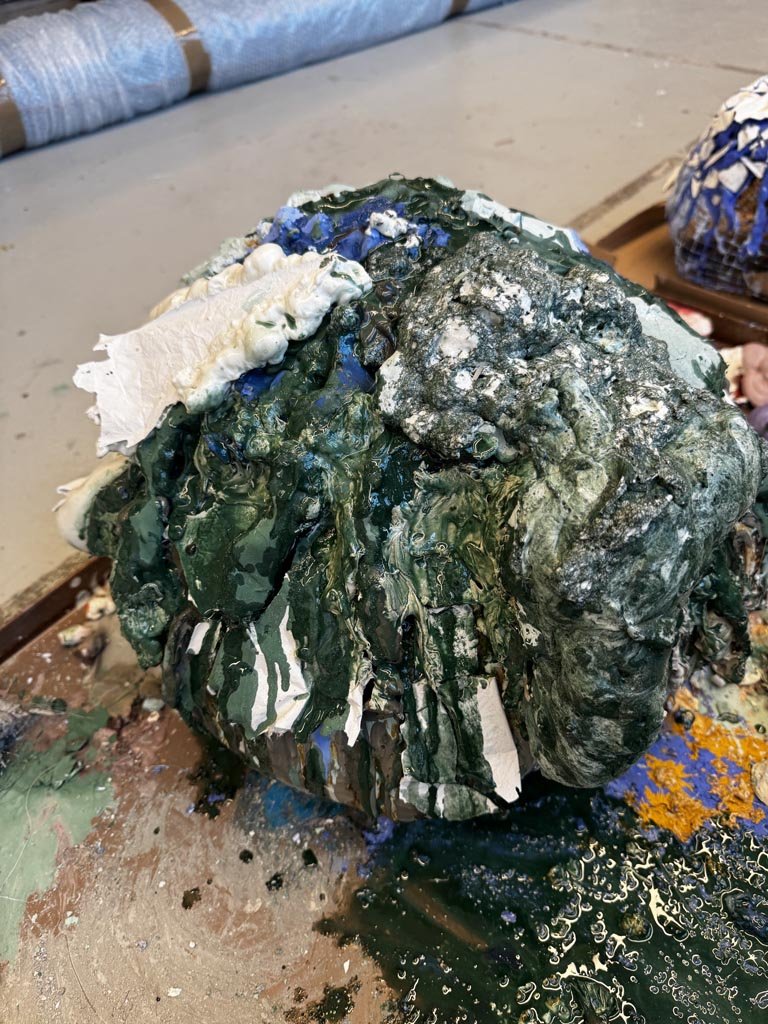
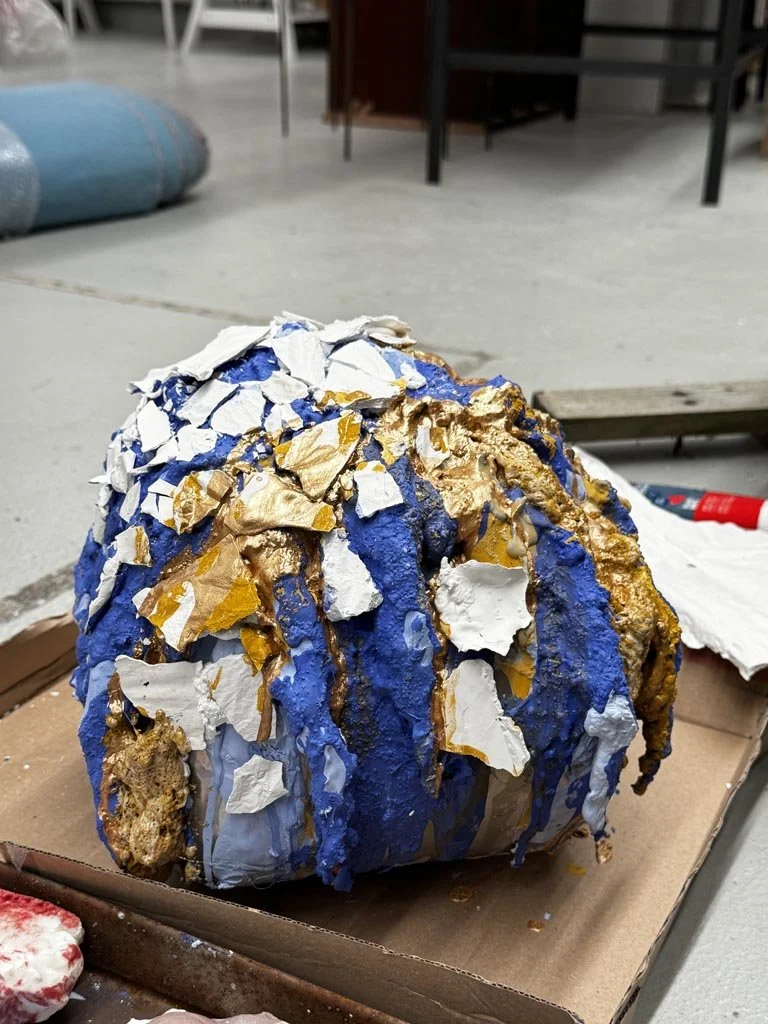
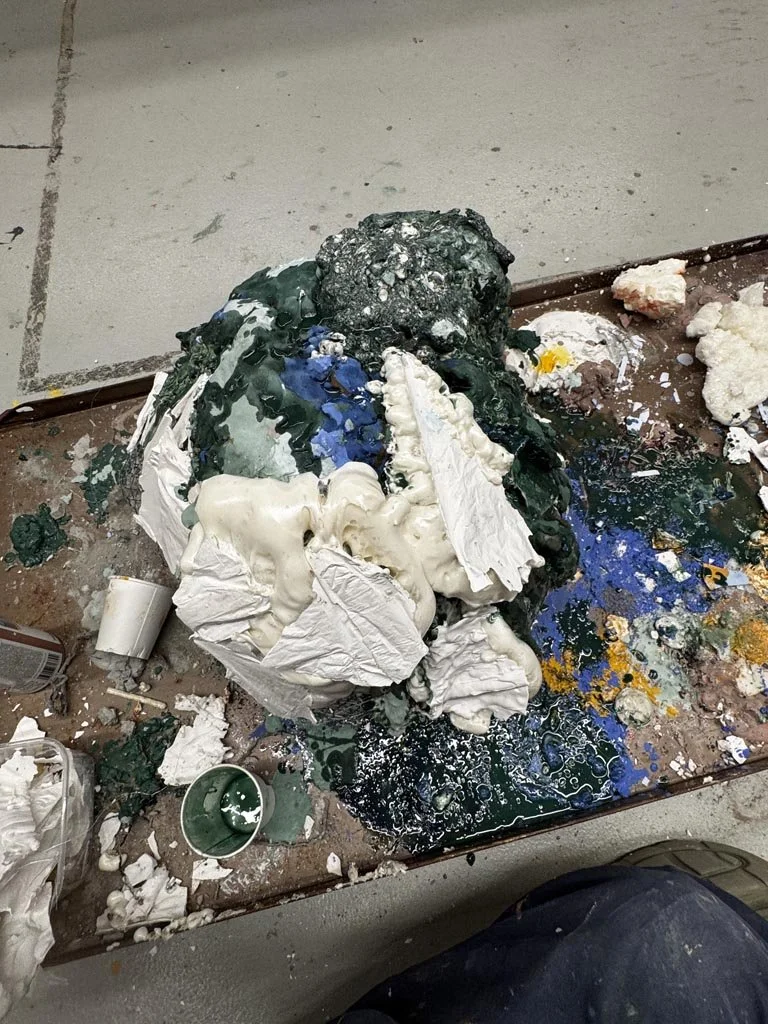
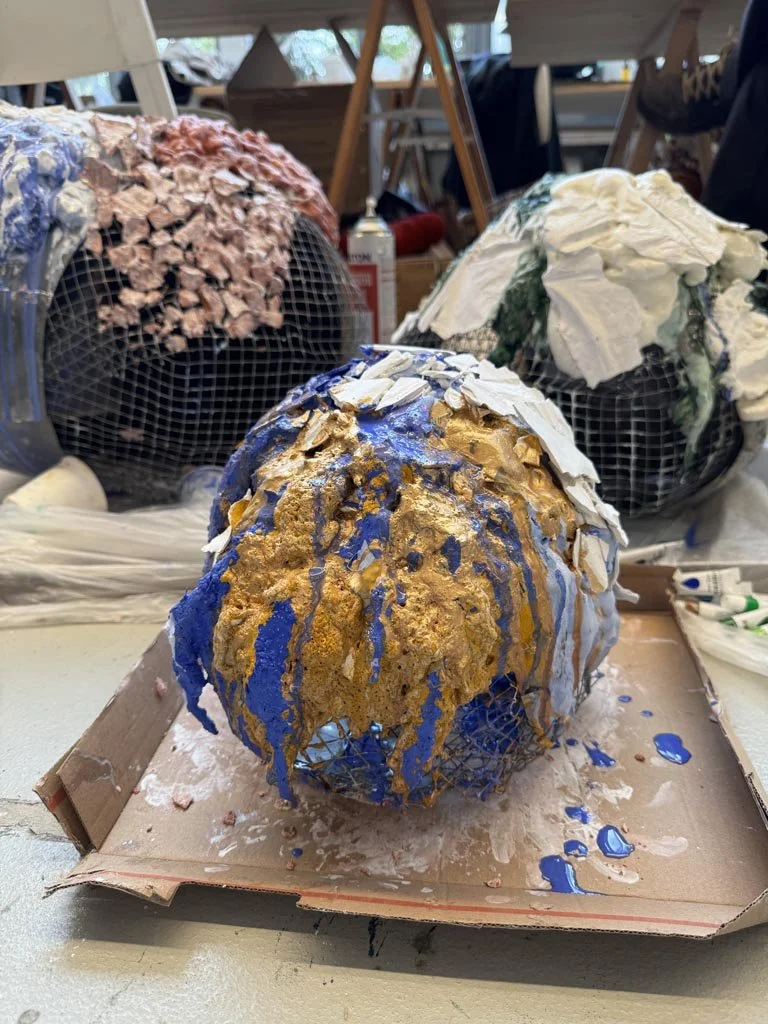
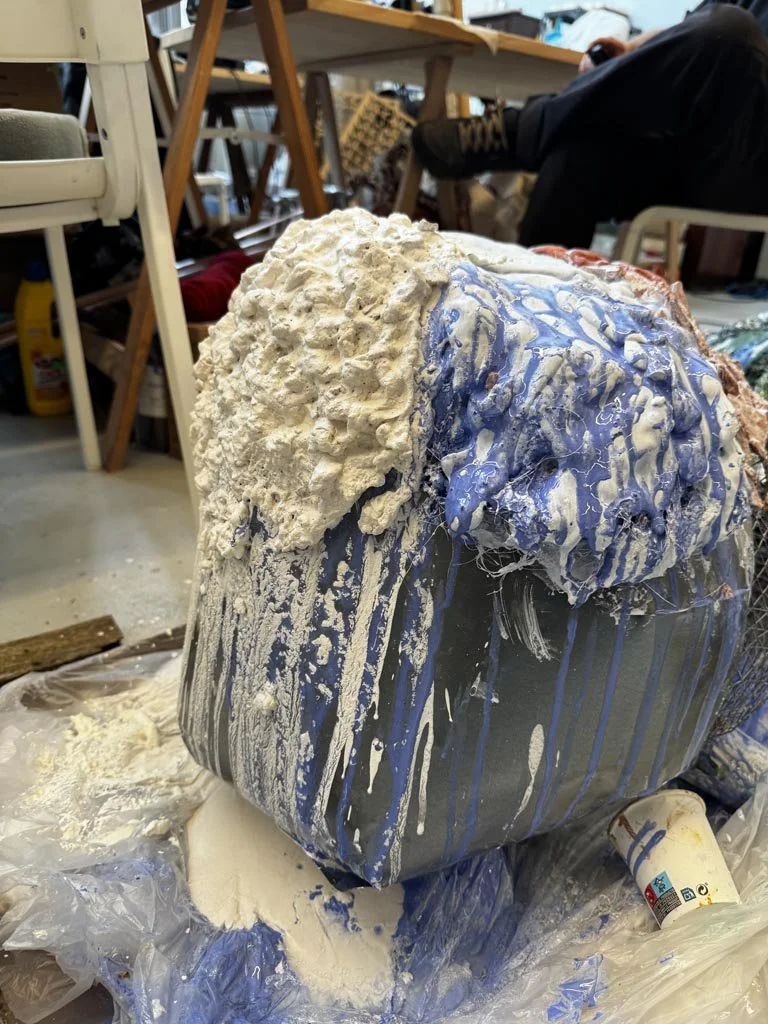
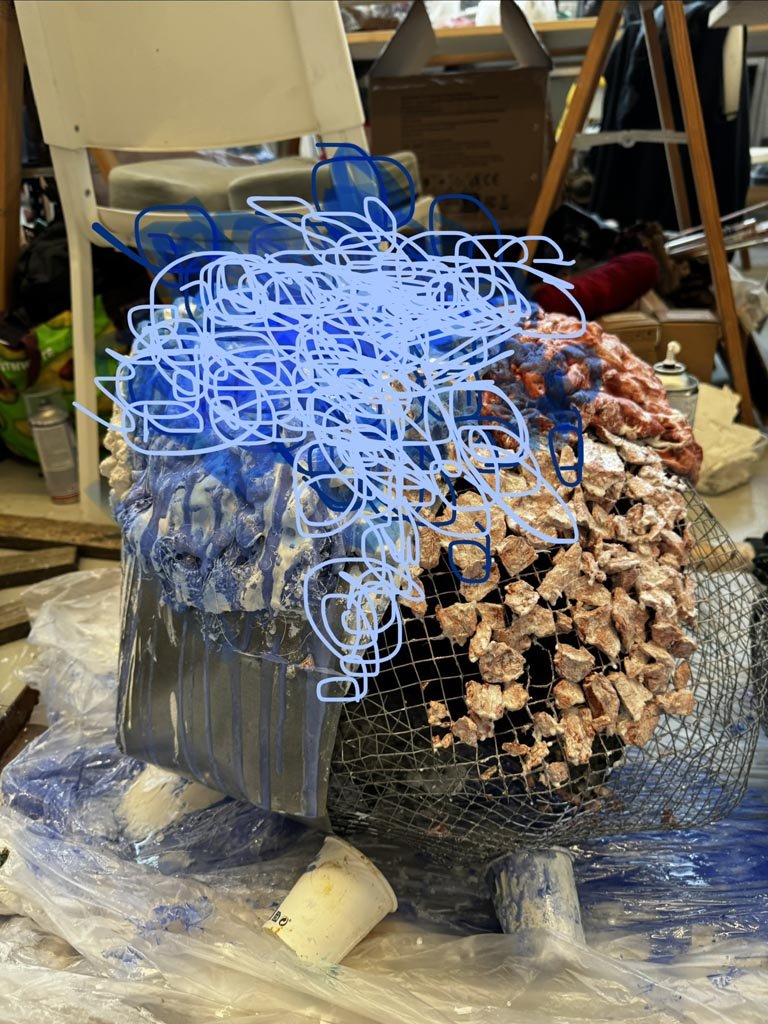
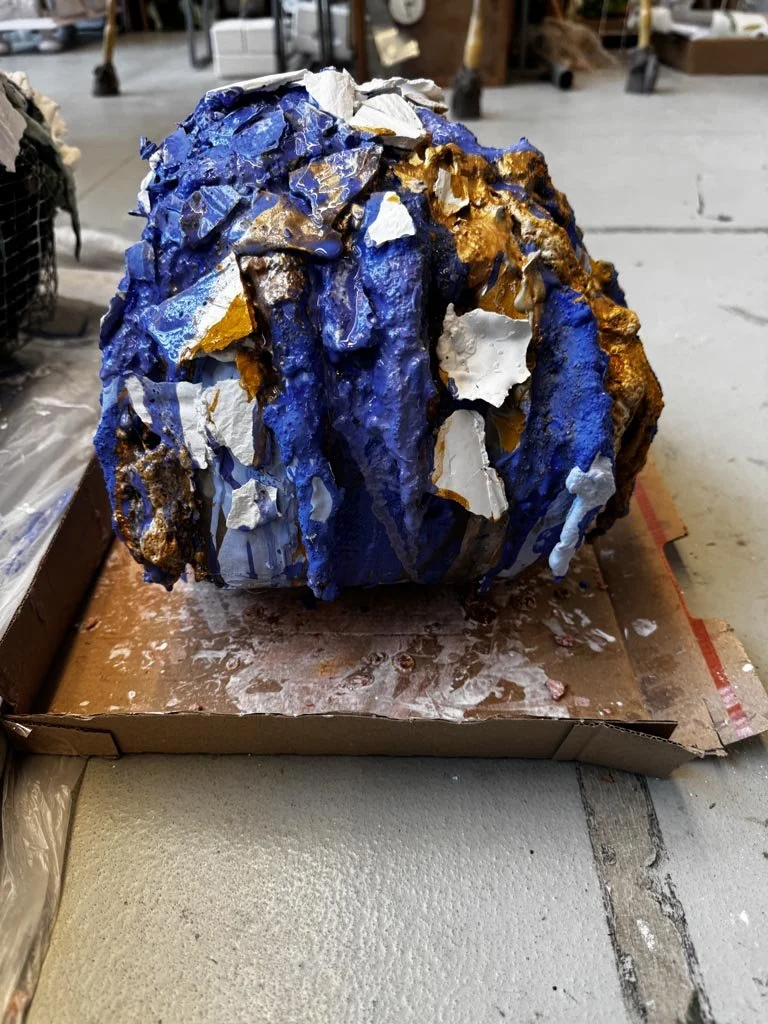
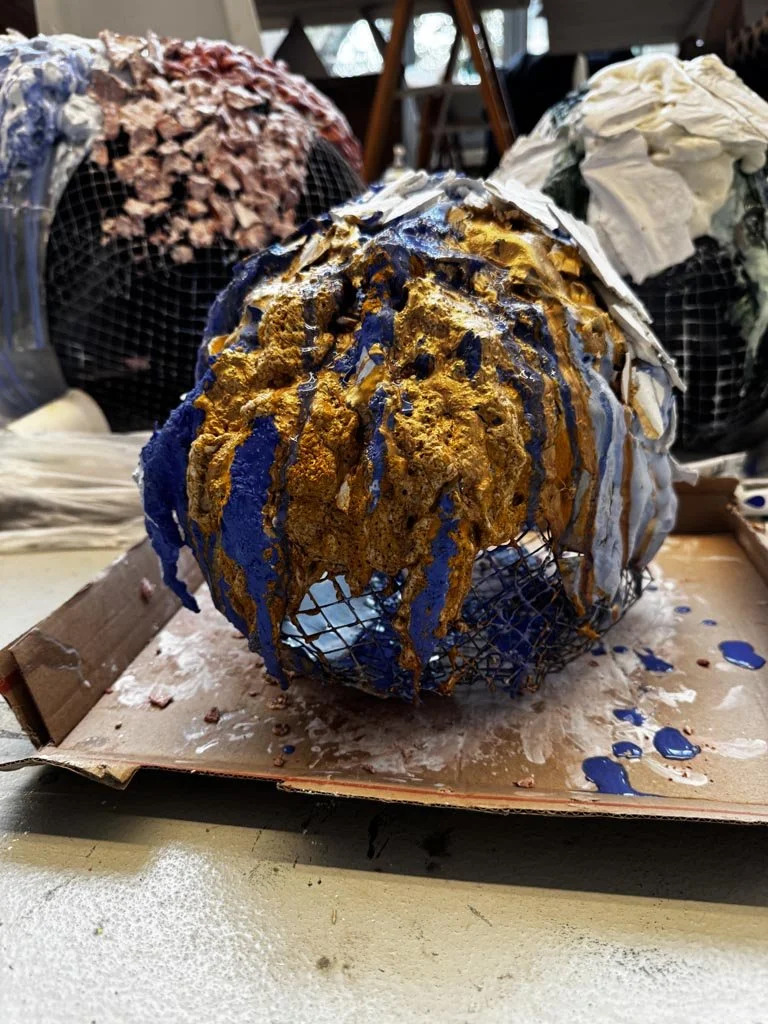
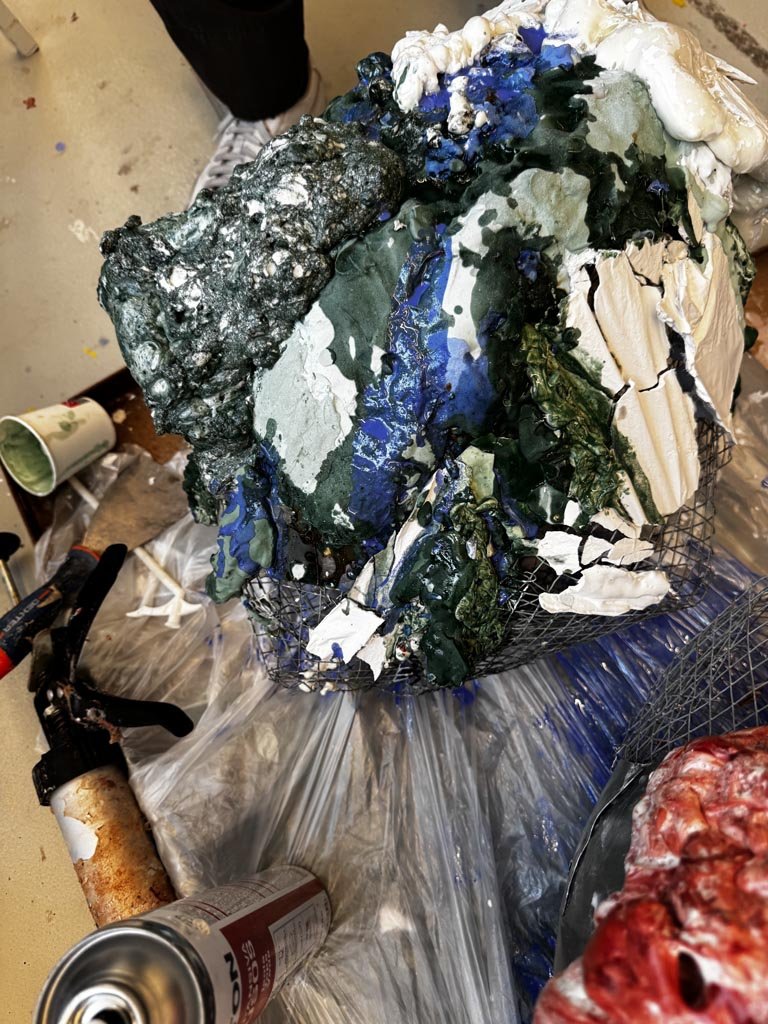
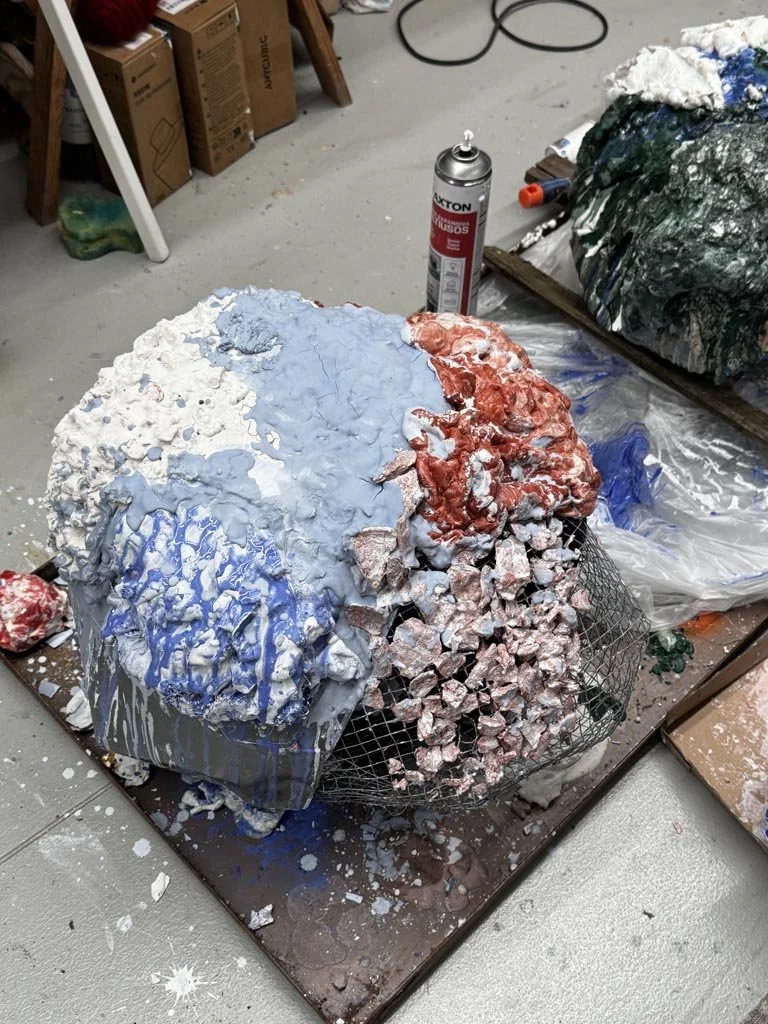
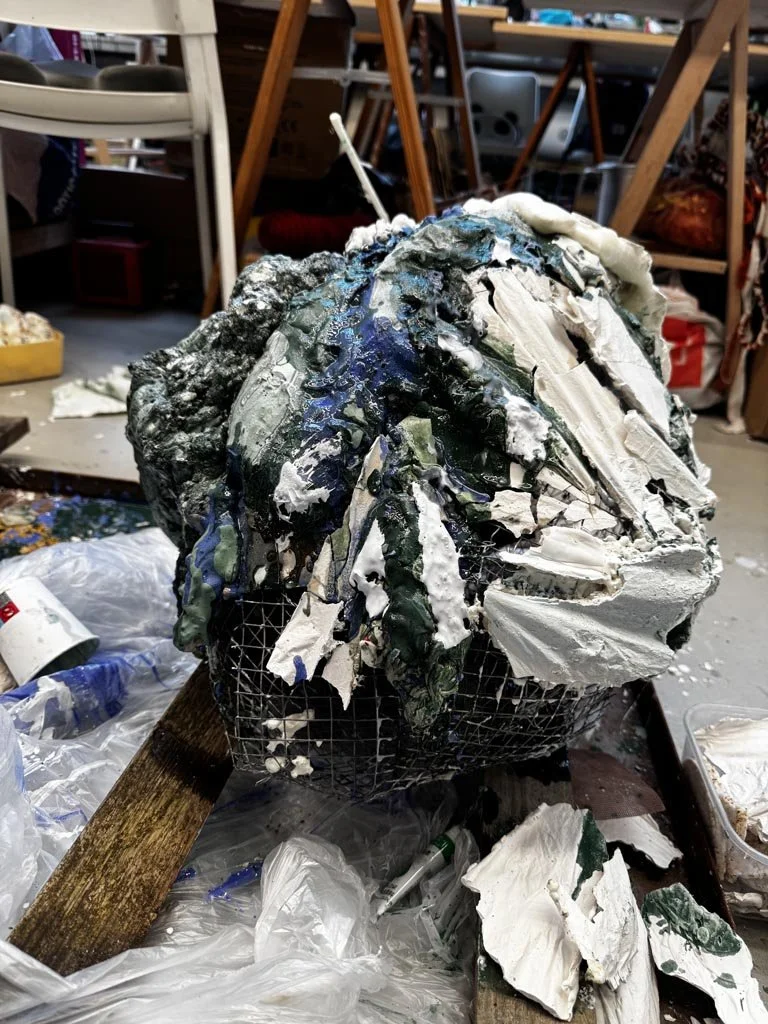
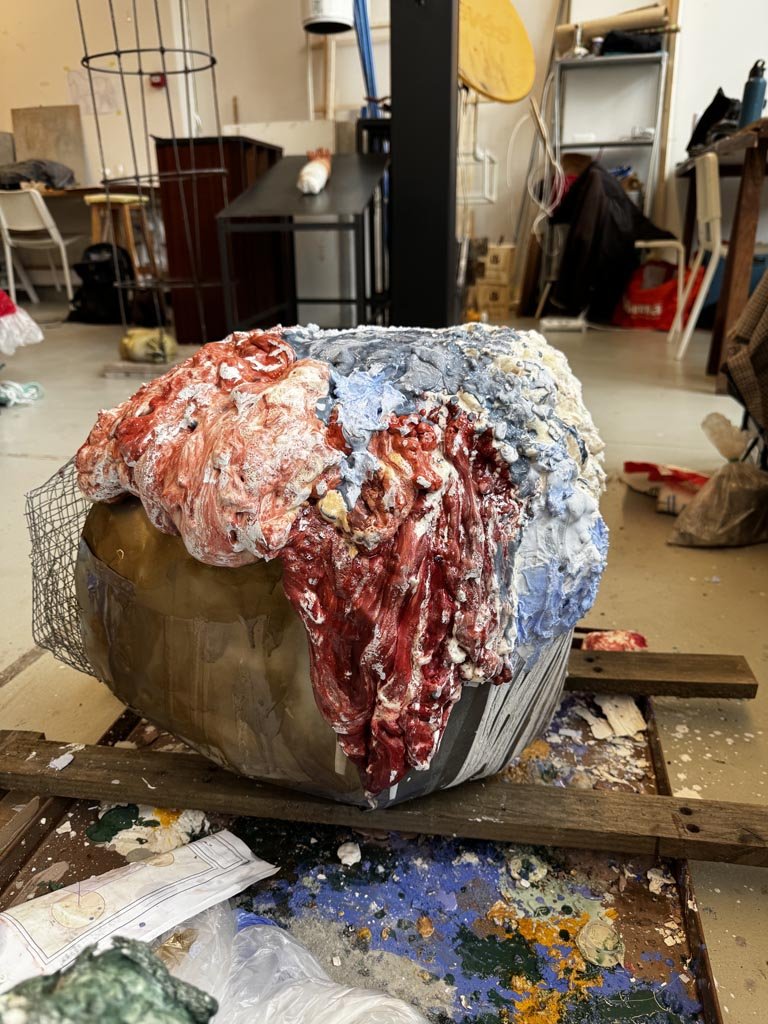
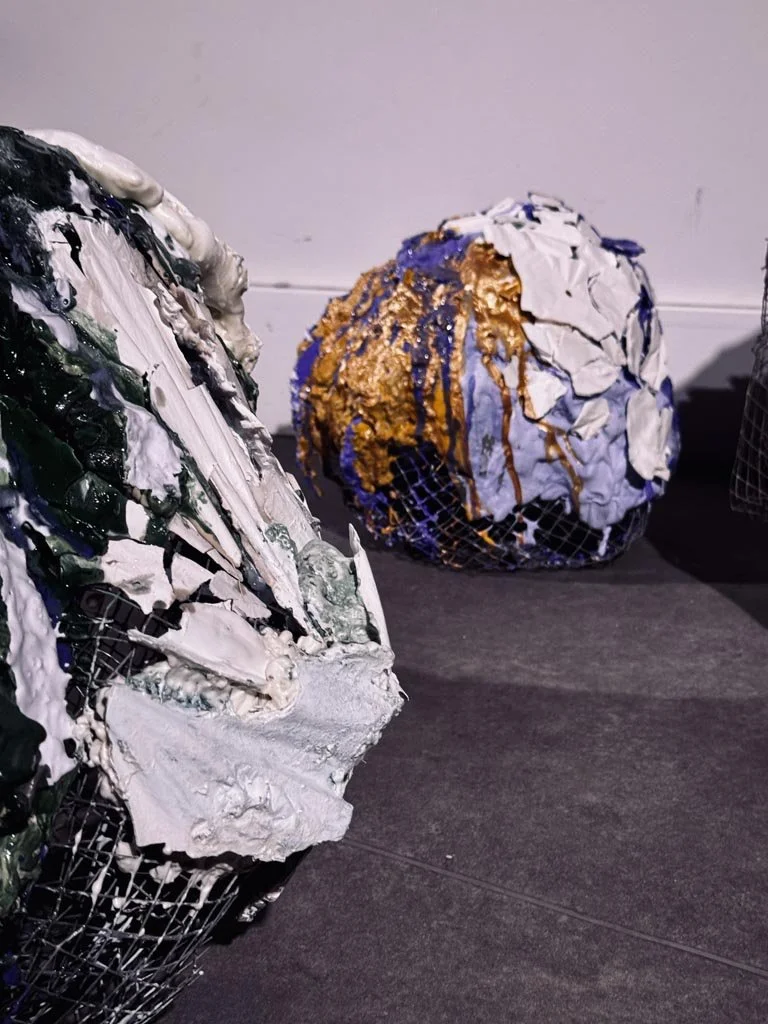
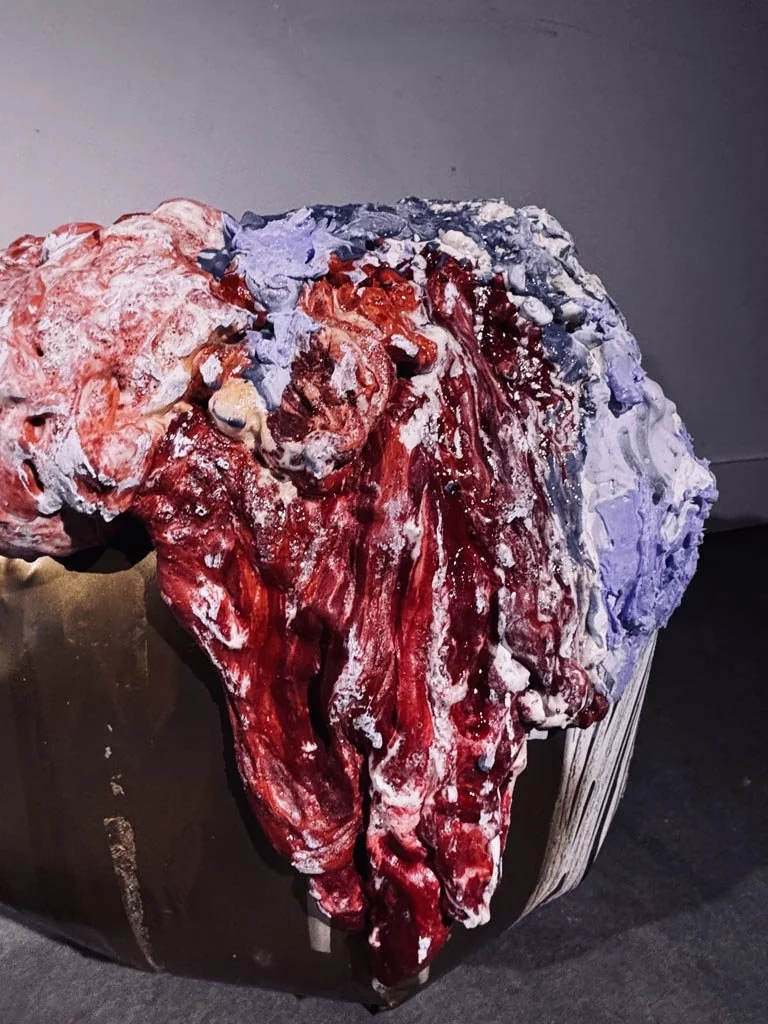
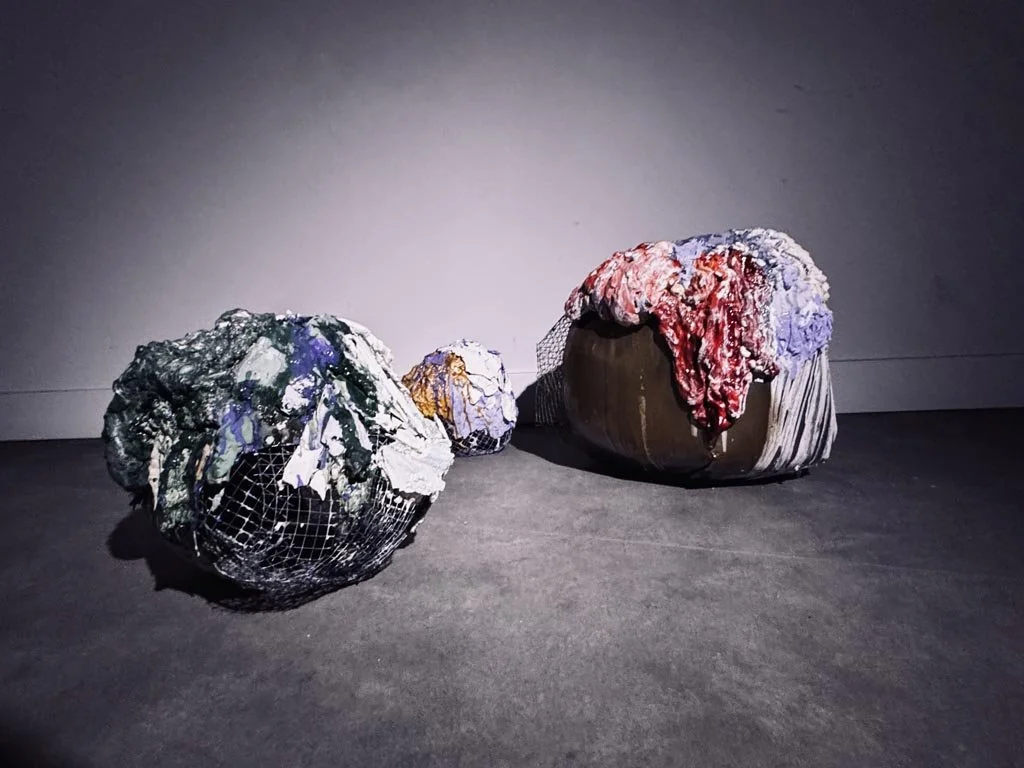
Still Warm examines the accumulated body of the mother and the worker, built upon rather than idealized. Three misshapen orbs reveal surfaces worked through layers of epoxy, resin, concrete, plaster, pigment, and broken material. The skins are excessive, cellular, viral, geological.
The title holds dual meaning: warmth as what caregiving provides without accounting, and "still" as both temporal endurance and resistance past depletion.
The orb is the organizing logic of the work. Stripped of face, orientation, and hierarchy, the sphere offers no single correct reading. But these are not perfect spheres; they are deformed, patched, irregular. The gap between the implied whole form and the ruptured surface that has grown over it is where the work's argument lives. The idealized body and the accumulated reality of inhabiting one are held in the same object.
What the Æther Holds
Materials: stainless steel wire, XPS foam, plywood, preserved moss, ultrasonic fog system, foam, essential oils, bubble solution, Arduino-controlled mechanics
What the Æther Holds is a meditation on impermanence, on feminine labor that is seen and unseen, on the poetry of capturing air. It is fog given form, breath made visible, and the invisible held just long enough to know it was there.
What the Æther Holds is a kinetic sculpture that makes the intangible momentarily tangible. Six wire frames emerge from a moss landscape, each capturing fog inside translucent soap bubbles shaped like mushroom clusters. The bubbles ascend slowly, carrying visible mist within their delicate film, releasing the aroma of the forest floor when they pop and dissolve back into the air.
This work exists at the intersection of containment and release. The æther, the ancient fifth element, the substance of breath and atmosphere, is briefly held, made visible, and given form. But holding it is temporary. Each bubble is an act of gentle futility: we shape the formless, contain the uncontainable, and then let go.
4. Research Questions
Overarching Research Question
How can sculpture make visible the invisible economies of feminine labor (the sustained, unaccounted work of caring, holding, and maintaining) and what material and formal strategies best carry that inquiry?
Sub-questions across all of my projects:
What is the relationship between material weight and the experience of emotional burden?
How does scale affect the bodily experience of encountering labor made visible?
Can ephemeral and permanent materials function as opposite expressions of the same underlying condition?
What does it mean for feminist inquiry when the research methodology is the making?
Still Warm:
Within the overarching inquiry, this project investigates feminine labor through accumulation and surface, labor that leaves excess traces, builds up, and does not dissolve.
How can metal armature and mesh be formed into volumetric bodies that support accumulated surface weight while retaining organic irregularity and imply bodies that have been added to, and show it?
• Which joining and bracing techniques allow structural stability without rigidity of form?
• How does mesh tension affect the final silhouette, and can deformation be deliberately introduced at the armature stage?
How does the sequential layering of epoxy, resin, concrete, and aggregate produce surfaces that read as biological rather than constructed, enacting the way labor accumulates on and transforms the body over time?
• What layering sequences and cure intervals produce eruptive, cellular texture?
• At what stage should aggregate be embedded to appear grown-in rather than applied?
How does the contrast between matte concrete and pooling high-gloss resin produce tension between the geological and the biological?
• How does finish variation function as a compositional tool across multiple volumes that must read simultaneously as distinct bodies and as a collective?
What palette relationships across substrates allow each volume to read as individual while belonging to a group?
• How does the finish variation map onto three distinct states of the laboring body (accumulating, eruptive, depleted)?
What the Æther Holds:
Within the overarching inquiry, this project investigates feminine labor through disappearance and atmosphere, the labor that leaves no trace.
How can sequential electronic choreography (timing, rhythm, staggered release) produce an experience of presence and disappearance, enacting the rhythm of care given and withdrawn?
• What timing intervals create rhythm rather than mechanical repetition?
• How does staggered release across six stations affect perception of individual versus collective presence?
How does the physical behavior of soap film and fog (surface tension, membrane formation, controlled lifespan) function as a material metaphor for the temporary and unacknowledged nature of emotional labor?
• What solution compositions produce the most stable fog-filled membrane?
• How does controlling the moment of rupture affect the emotional reading of the work?
How can functional infrastructure disappear inside aesthetic form, and what does that concealment mean in a work about invisible work?
• What fabrication methods allow channels and mechanics to be fully absorbed into the landscape?
• Does visible infrastructure undermine or reinforce the conceptual argument?
How does the life cycle of scent mirror the experience of care itself: present, transforming, and eventually gone, but lodged somewhere in the body's memory?
• Which scent compounds most reliably trigger involuntary memory response?
• How does concentration affect the transition from presence to trace and can that threshold be controlled?
5. Theoretical Context
Still Warm builds on feminist sculpture's long engagement with the body as material site, in conversation with Lynda Benglis, whose poured and congealed forms collapsed the boundary between making and bodily excess, and Lee Bul, whose grotesque hybrid figures challenge idealized femininity through surface and accumulation. The work engages contemporary discourse around emotional labor and invisible domestic work, particularly the writing of Arlie Hochschild and Sara Ahmed on the affective economies that structure caregiving, asking what it looks like to give that labor physical form: not metaphorically, but materially, as texture, as crust, as weight.
Still Warm is an evolving body of work. The current iteration of three misshapen steel and mesh volumes encrusted with epoxy, resin, concrete, and aggregate is understood as a first generation of forms. Future development will expand the work in scale and material range, introducing ceramics and additional metal fabrication techniques to deepen the investigation into accumulation, surface, and the laboring body. The work grows as the inquiry grows.
What the Æther Holds explores what cannot be held: breath, scent, the quality of air after someone leaves. Mushroom-clustered bubbles rise from a mossy landscape filled with scented mist, lasting 15–30 seconds before releasing the fragrance of damp earth and forest floor back into the air. The work investigates feminine labor, specifically the sustained, unaccounted work of holding: nurturing, containing, eventually letting go. Drawing on Griselda Pollock's theorization of the aesthetic as a space of transformational encounter, the piece locates its tension between what is temporarily present and what has already begun to disappear.
6. Process and Documentation
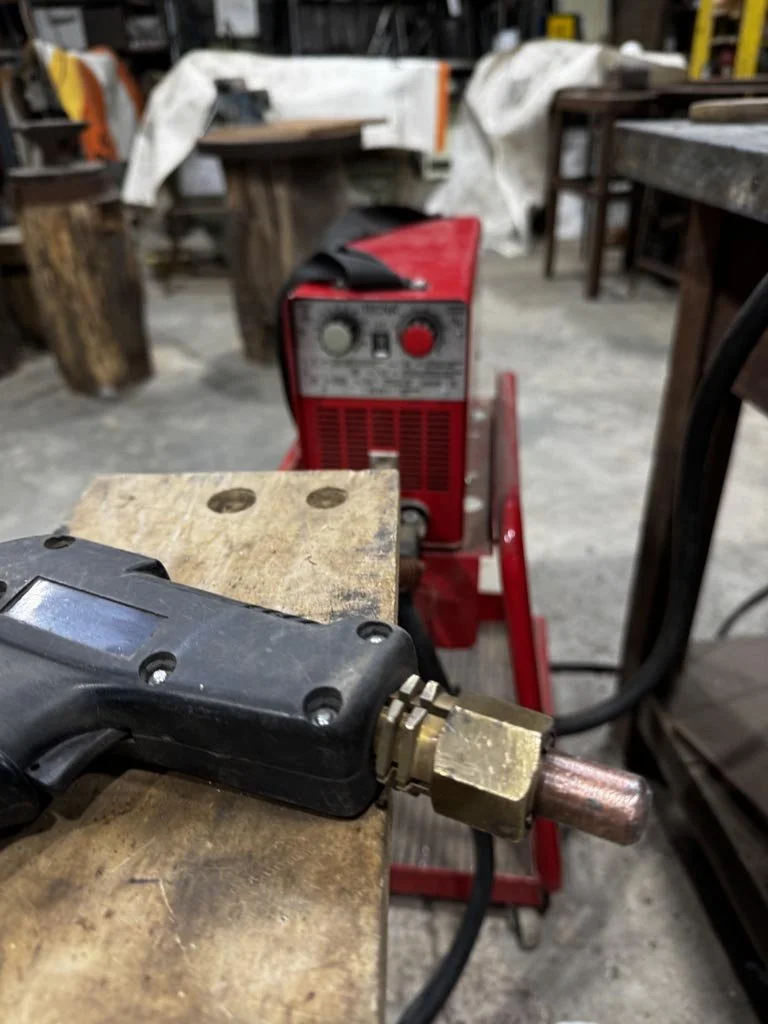
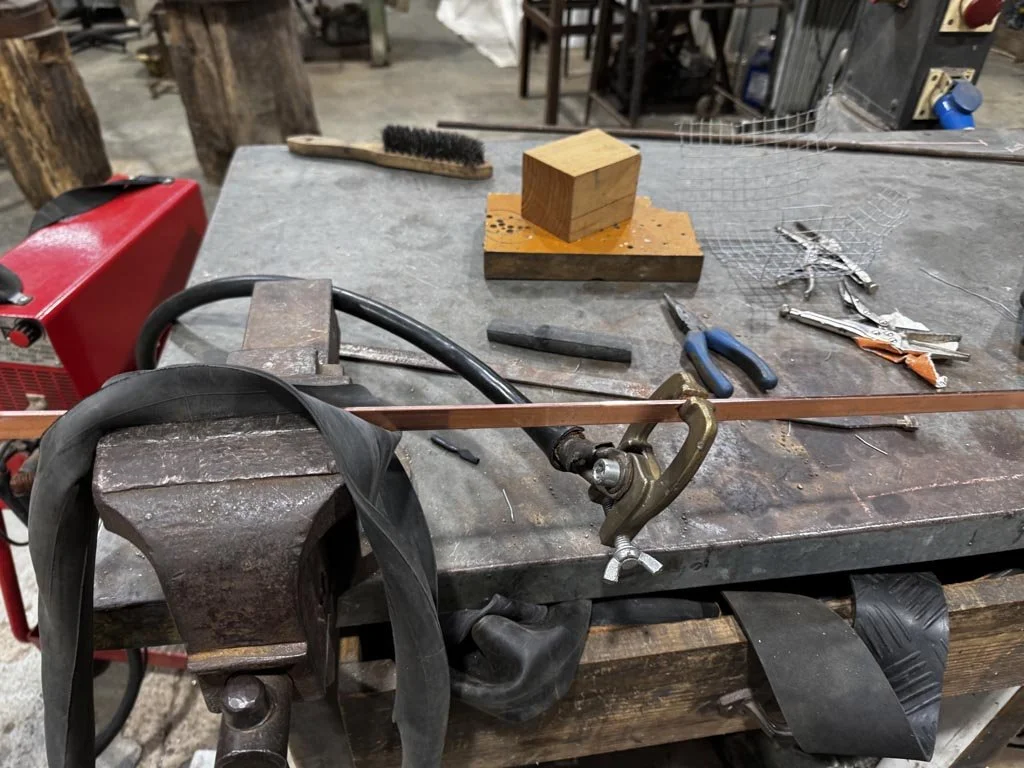
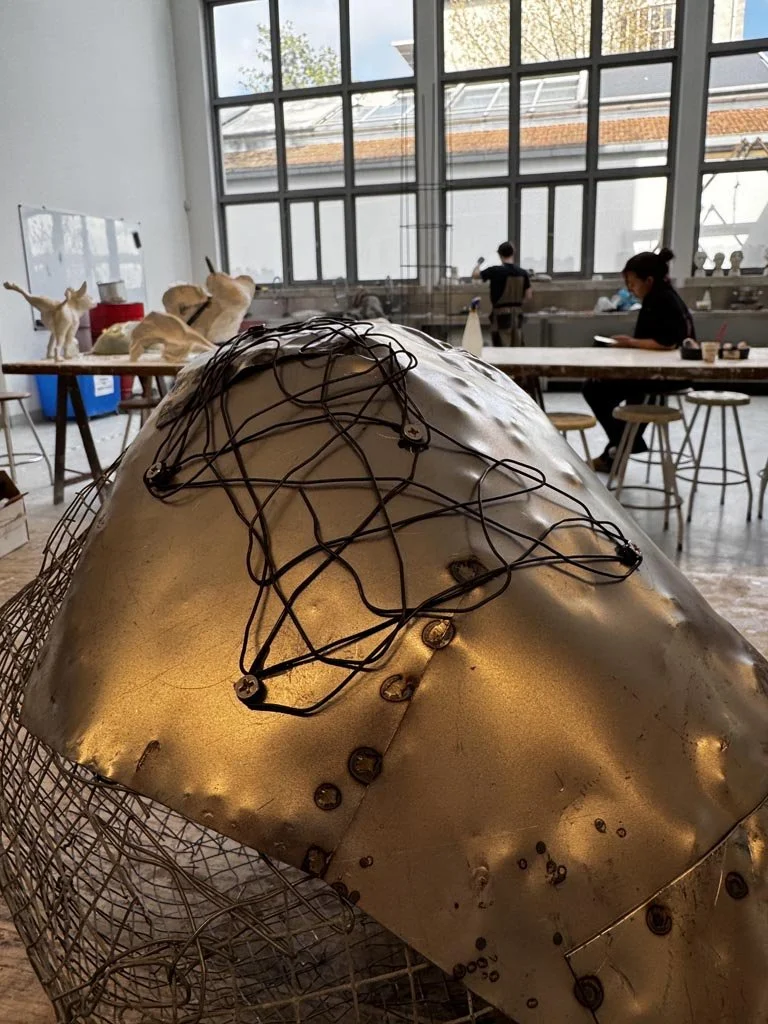
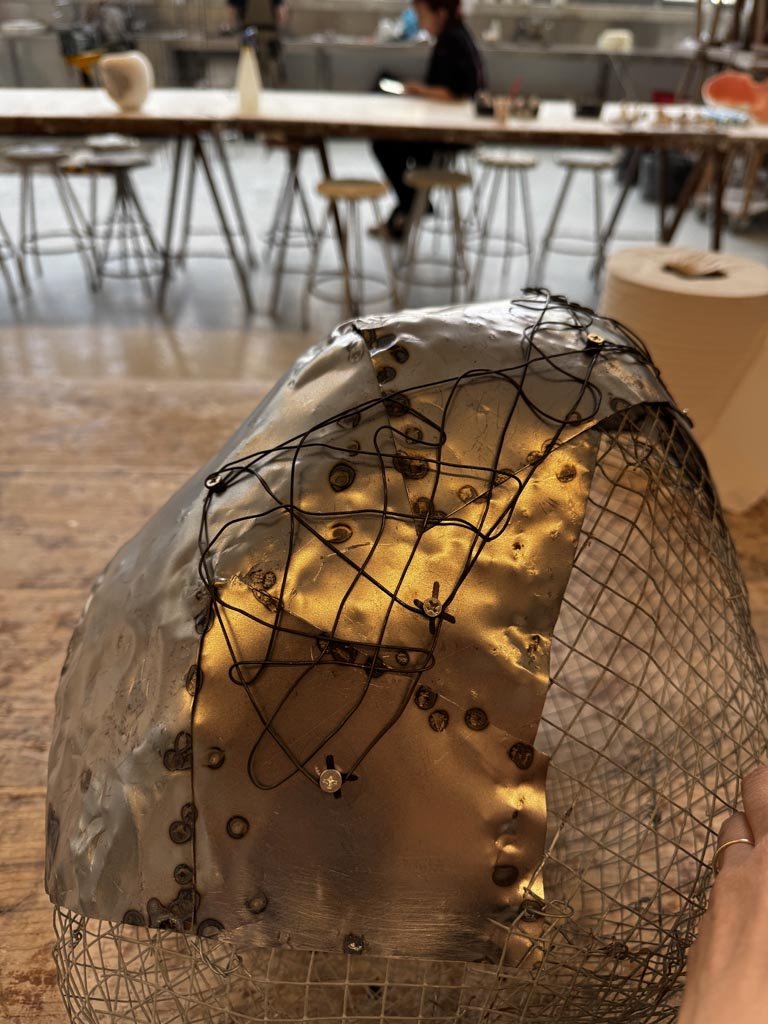
Still Warm is currently in active fabrication. The first phase of the work focused on armature construction: forming and welding galvanized steel, stainless steel, and metal mesh into three volumetric bodies of varying scale. Each form is built to be structurally capable of supporting heavy layered surface treatments while retaining the organic irregularity that is central to the work's argument.
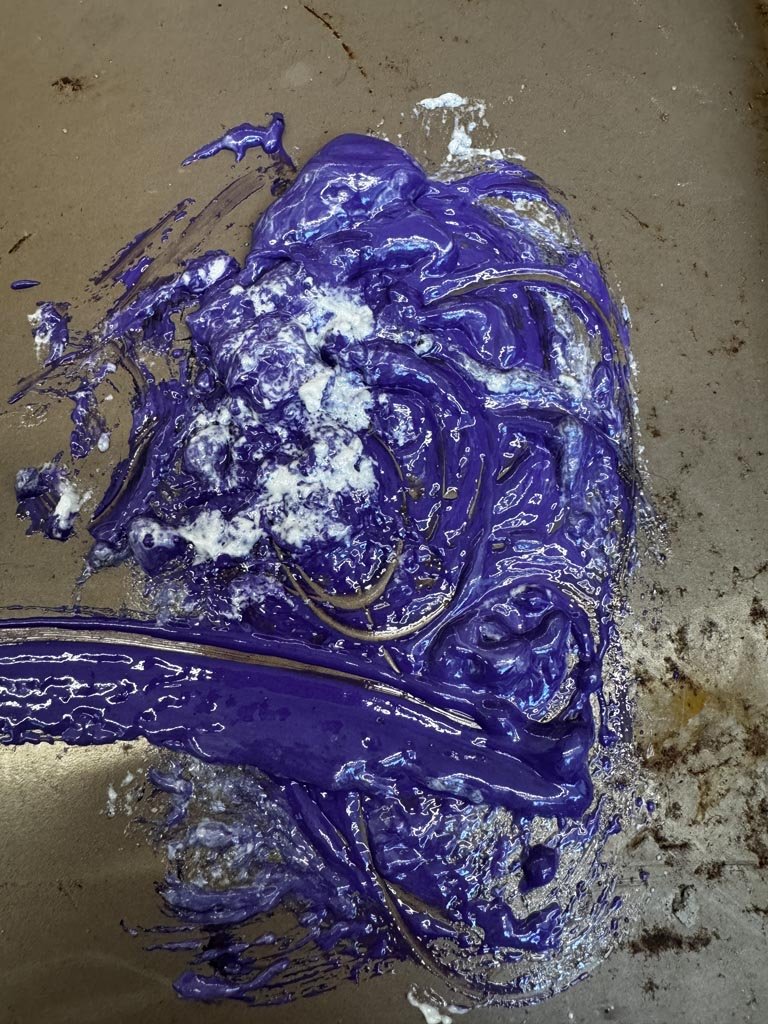
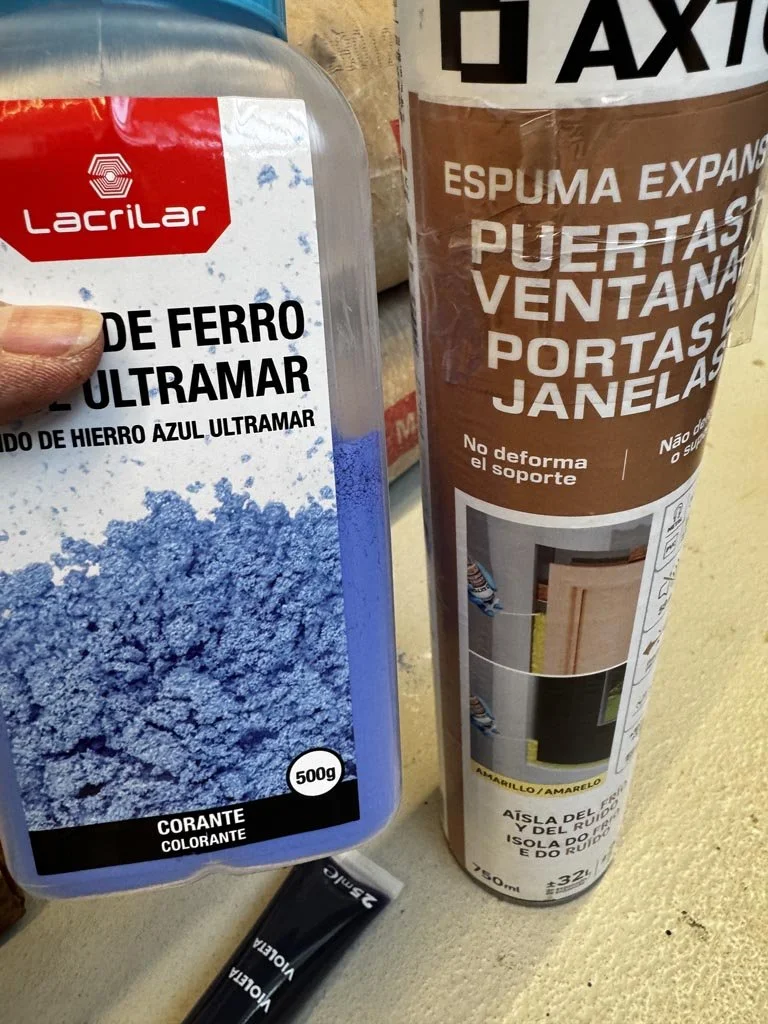
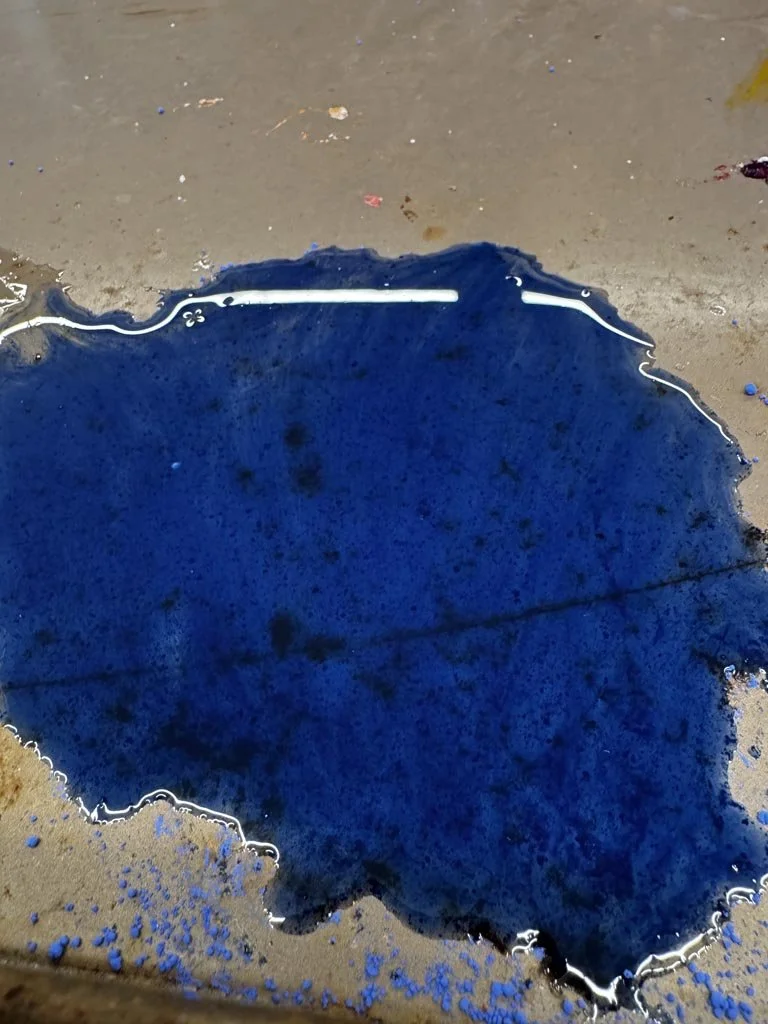
Surface development proceeded through material experimentation: testing layering sequences, cure intervals, and the behavior of embedded aggregate across epoxy, resin, concrete, plaster, and paint. The investigation seeks textures that read as biological and accumulative, as cellular, eruptive, grown rather than applied, with unexpected contrasts between matte concrete and pooling high-gloss resin, producing tension between the geological and the organic.
Color and finish developed across the three volumes as a compositional tool, allowing each body to carry its own material history while functioning as part of a collective. Finish variation maps onto the work's conceptual logic: three bodies, three states, one shared condition.
Documentation of material tests, fabrication process, and surface development is ongoing. Future phases will expand the work into larger scale and introduce ceramics and additional metal fabrication, extending the investigation into how accumulated material can carry the weight of accumulated labor.
7. References
Ahmed, Sara. The Cultural Politics of Emotion. Edinburgh: Edinburgh University Press, 2004.
Benglis, Lynda. Adhesive Products. 1971. Poured latex. Paula Cooper Gallery, New York.
Bul, Lee. Cyborg series. 1997–2011. Mixed media sculptures. Various collections.
Hochschild, Arlie Russell. The Managed Heart: Commercialization of Human Feeling. Berkeley: University of California Press, 1983.
Mendieta, Ana. Silueta Series. 1973–1980. Earth-body works documented in photographs. Estate of Ana Mendieta and Galerie Lelong & Co., New York.
Nakaya, Fujiko. Fog Sculpture #47258 "F.O.G." 1982. Live fog installation. Various exhibitions internationally.
Pak, Sheung Chuen. Breathing in a House. 2006. Installation with video, 6 min. 22 sec. Performed and documented in Busan, Korea. Displayed: Tokyo Photographic Art Museum 2F Exhibition Gallery, February 2–18, 2024.
Pollock, Griselda. After-affects/After-images: Trauma and Aesthetic Transformation in the Virtual Feminist Museum. Manchester: Manchester University Press, 2013.
Estúdio de Escultura 2025-26 • Projeto do 1.º Semestre
Rubric:
Title/Subject
Keywords
Presentation/Description
Development
Bibliography
Reference Authors
1. Series Title/Topic:
Title: Mycelia Materna: Networks of Expectation and Resistance
Caption: Fungal Discourse and Material Investigations of Women's Performative Competence Through Sculpture
2. Keywords:
Mycelium
Superwoman
Manufactured Incompetence
Transformation
Emotional Scaffolding
Decomposition
Competence
3. Presentation/Description:
In Paul Stamets' Mycelium Running, oyster mushrooms (Pleurotus ostreatus) are described as persistent, capable, able to break down organic matter, process toxins, adapt to any substrate, and fruit in waves despite various environmental conditions. They simply do the work, over and over. I see a parallel to how women are expected to embody this same relentless competence, to become "superwomen" who can handle everything thrown at them. As Laurie Anderson's "O Superman" suggests in her measured spoken word delivery, "Here come the planes / They're American planes," there is an automatic expectation that women will catch what falls, and always be the ones with their "arms open."
But this expectation has created a trap. The more capable women become, the more those around them retreat into manufactured incompetence, a strategic helplessness that ensures women remain the default fixers, managers, and emotional crutches. The invisible labor Arlie Hochschild describes as the "second shift" is not just unseen, it is actively produced by a system, partially created and certainly perpetuated by women themselves, that requires women to prove their strength by carrying increasingly impossible loads.
This body of work explores competence as a material condition—something that can be seen, touched, held, and suspended. Through bronze-cast mushrooms emerging from decomposing wood, I examine the moment between capability and collapse, the metallic pause where everything is held together, barely. These pieces ask: What happens when competence becomes a cage? When the ability to handle everything becomes the reason you must? What knowledge lives in the body when the mind has gone blank?
4. Works in the Series
Initial Work: Pleurotus Materna
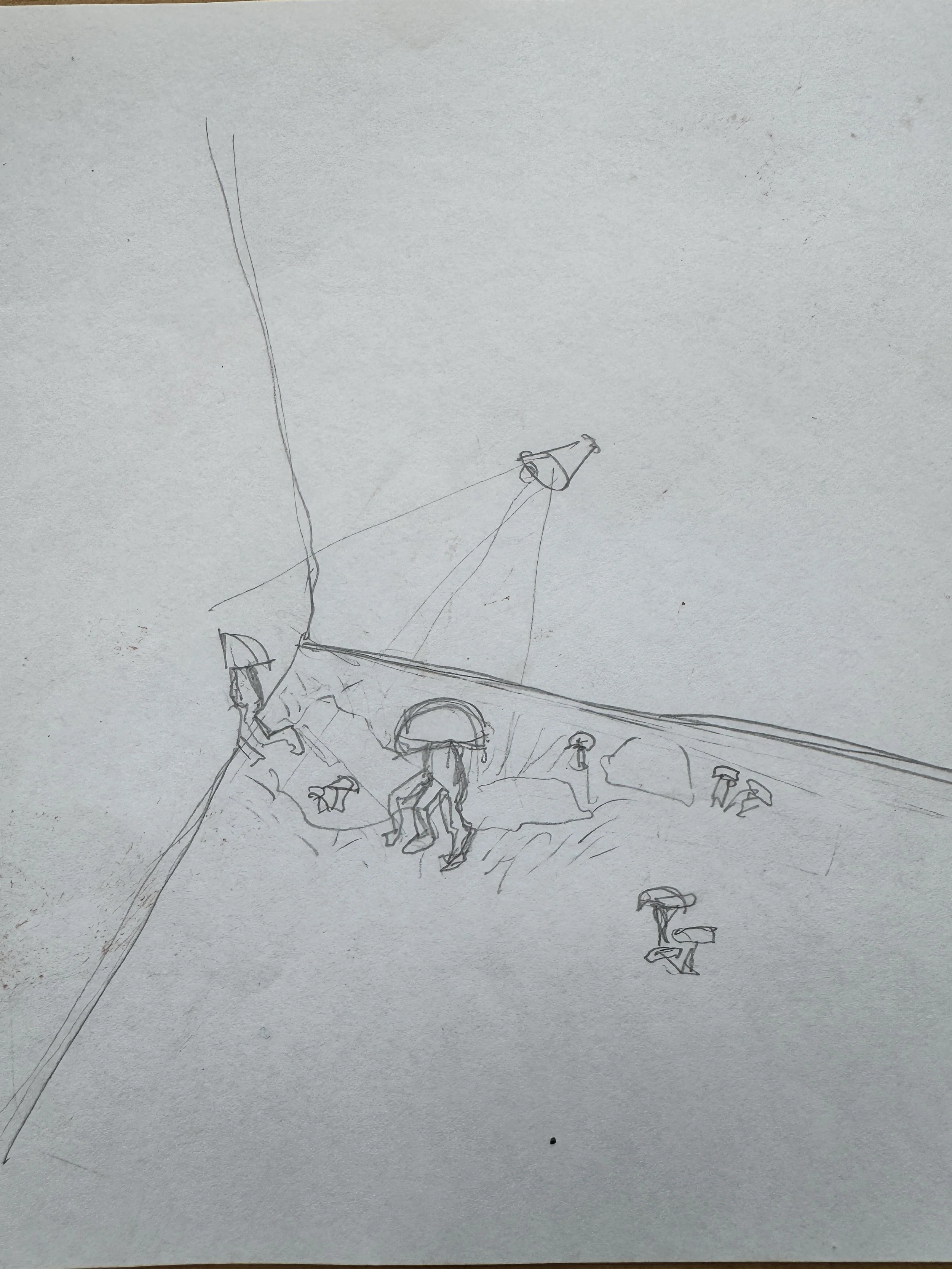
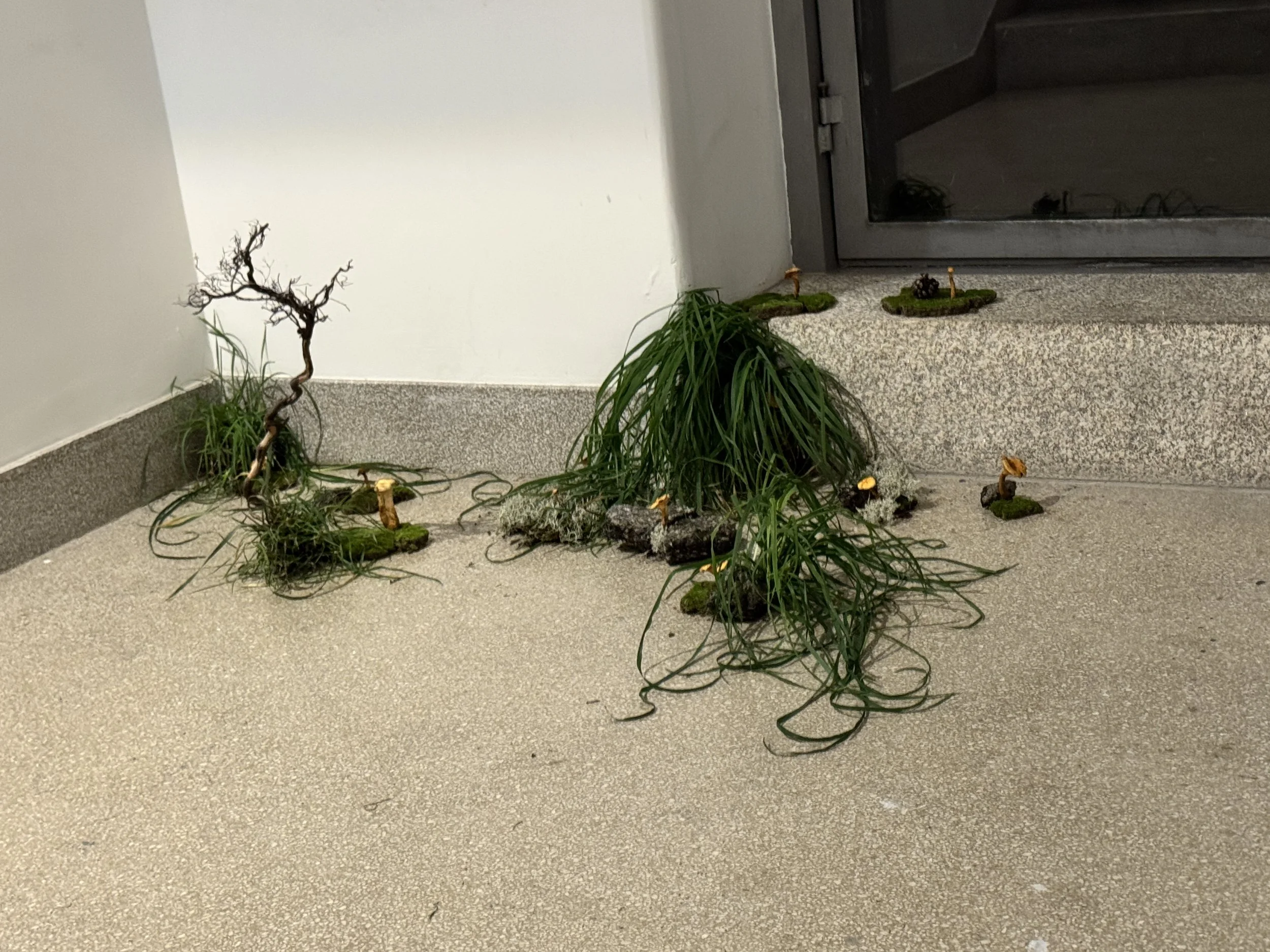
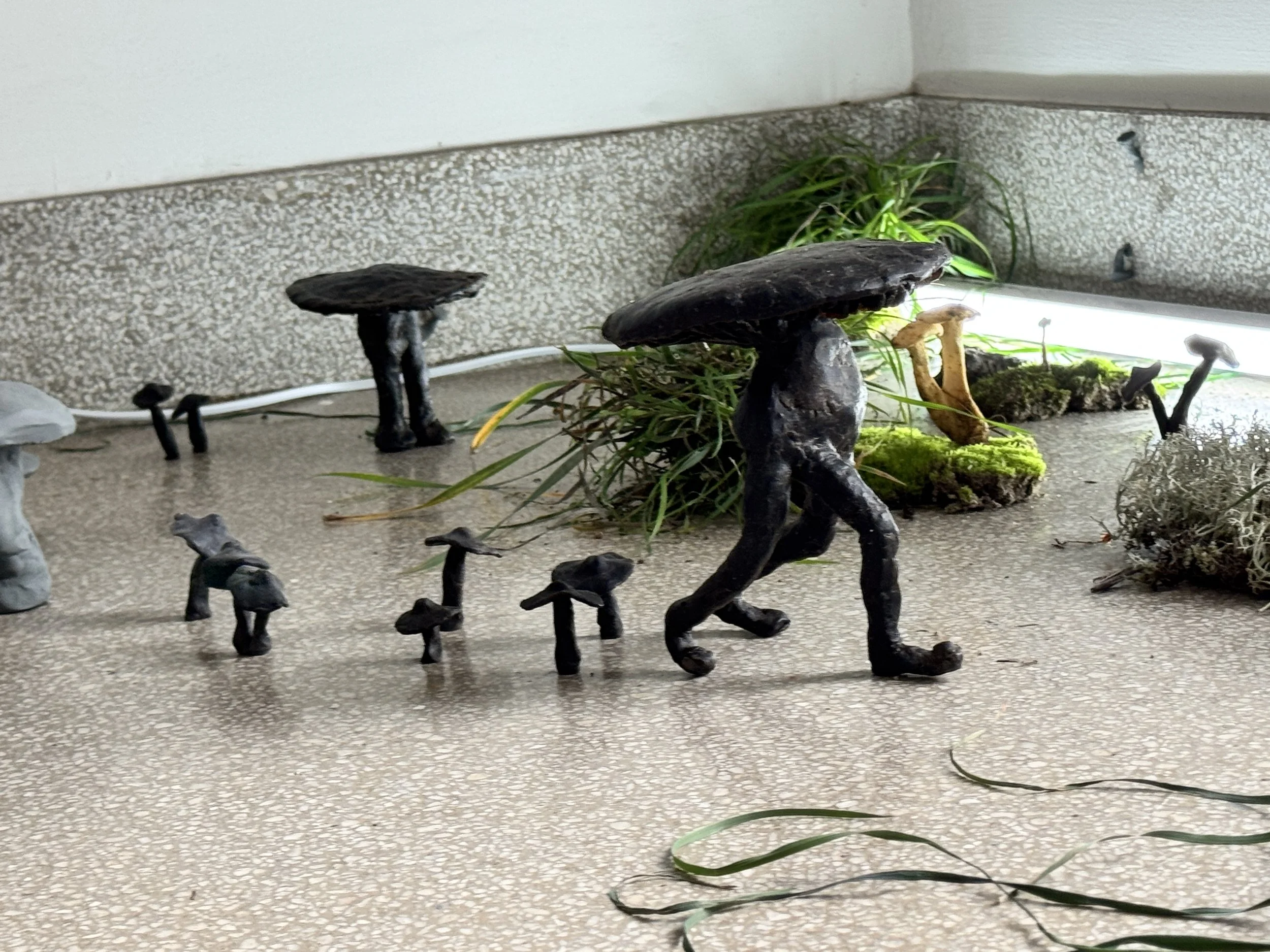
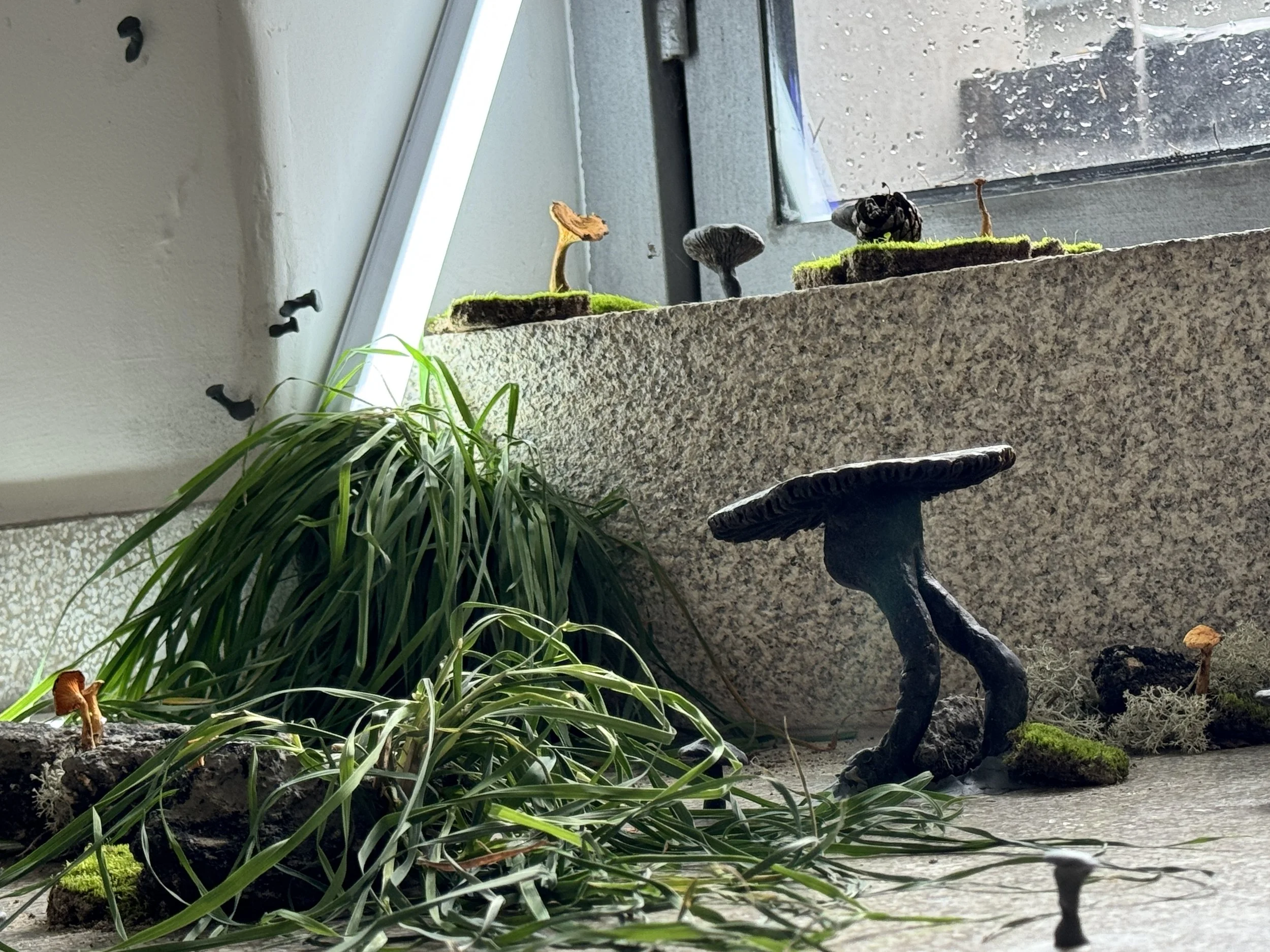
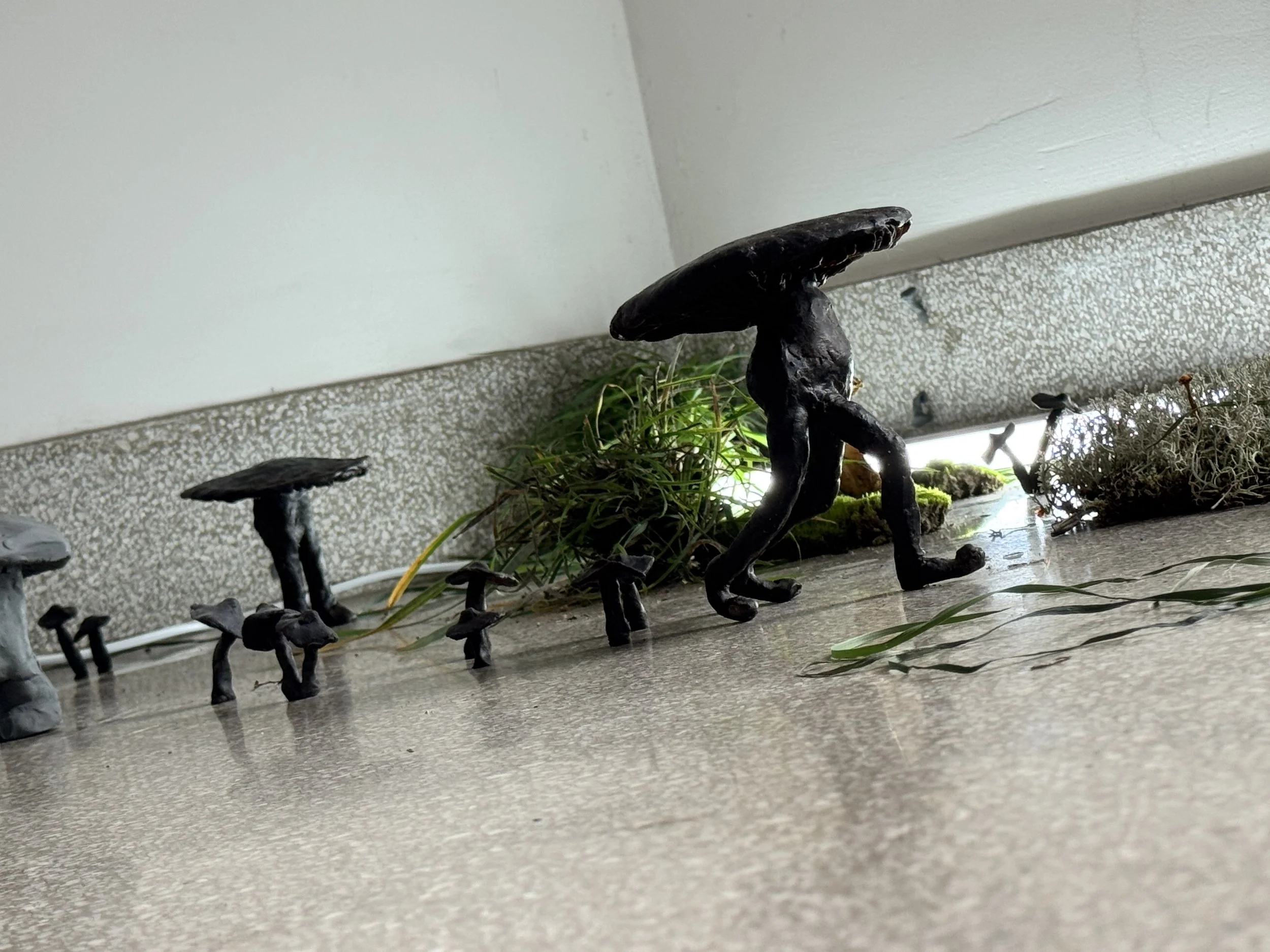
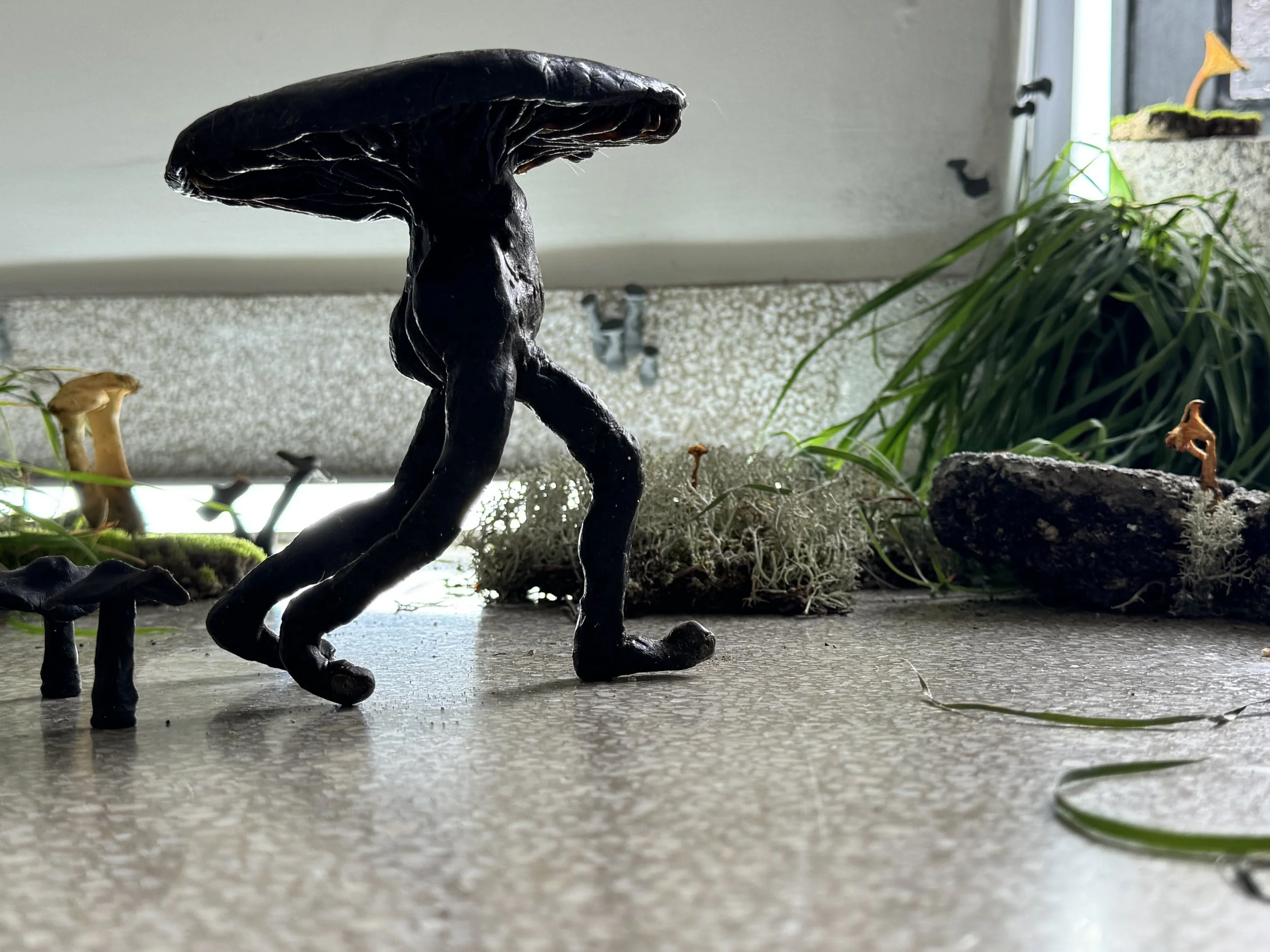
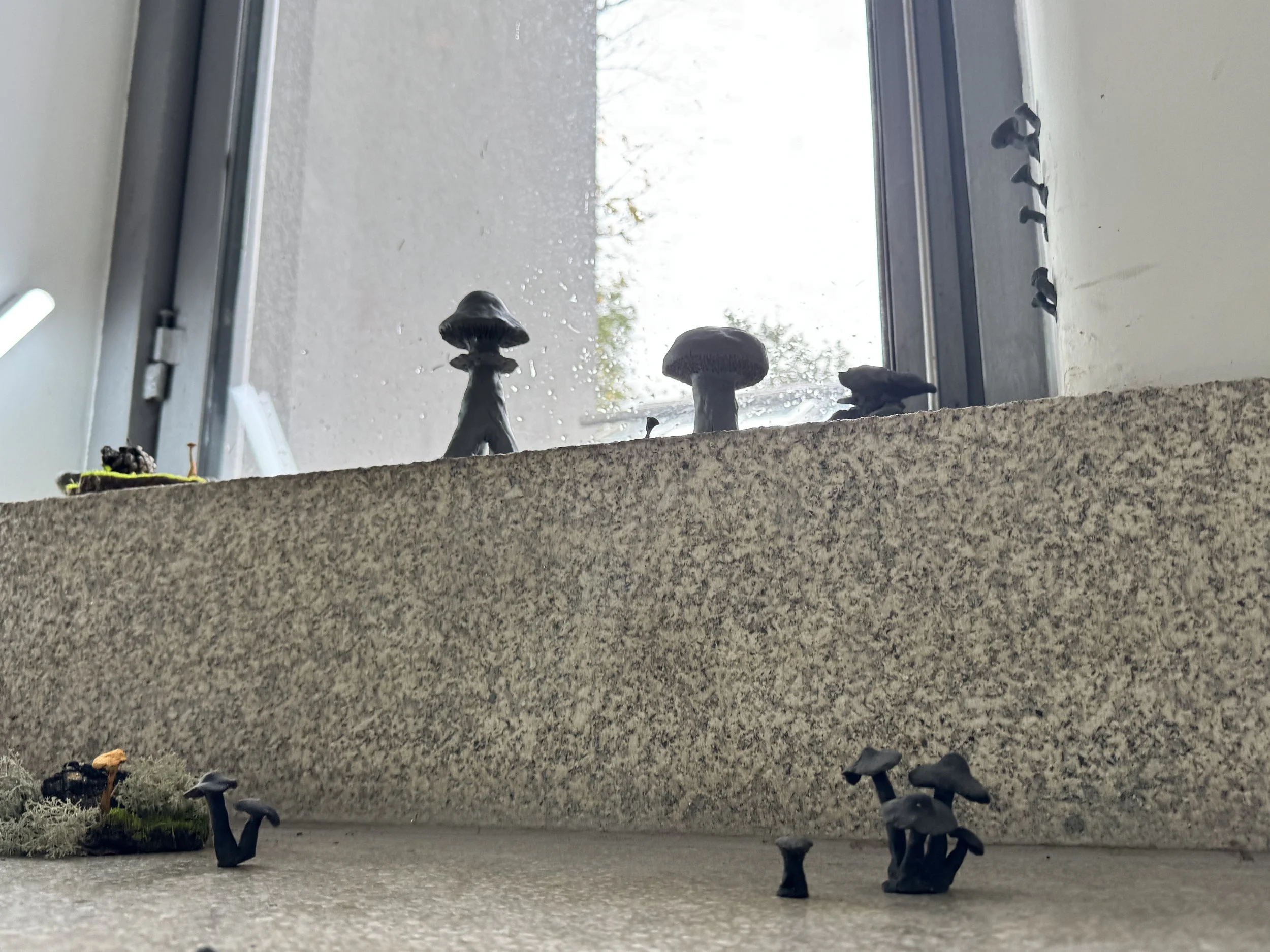
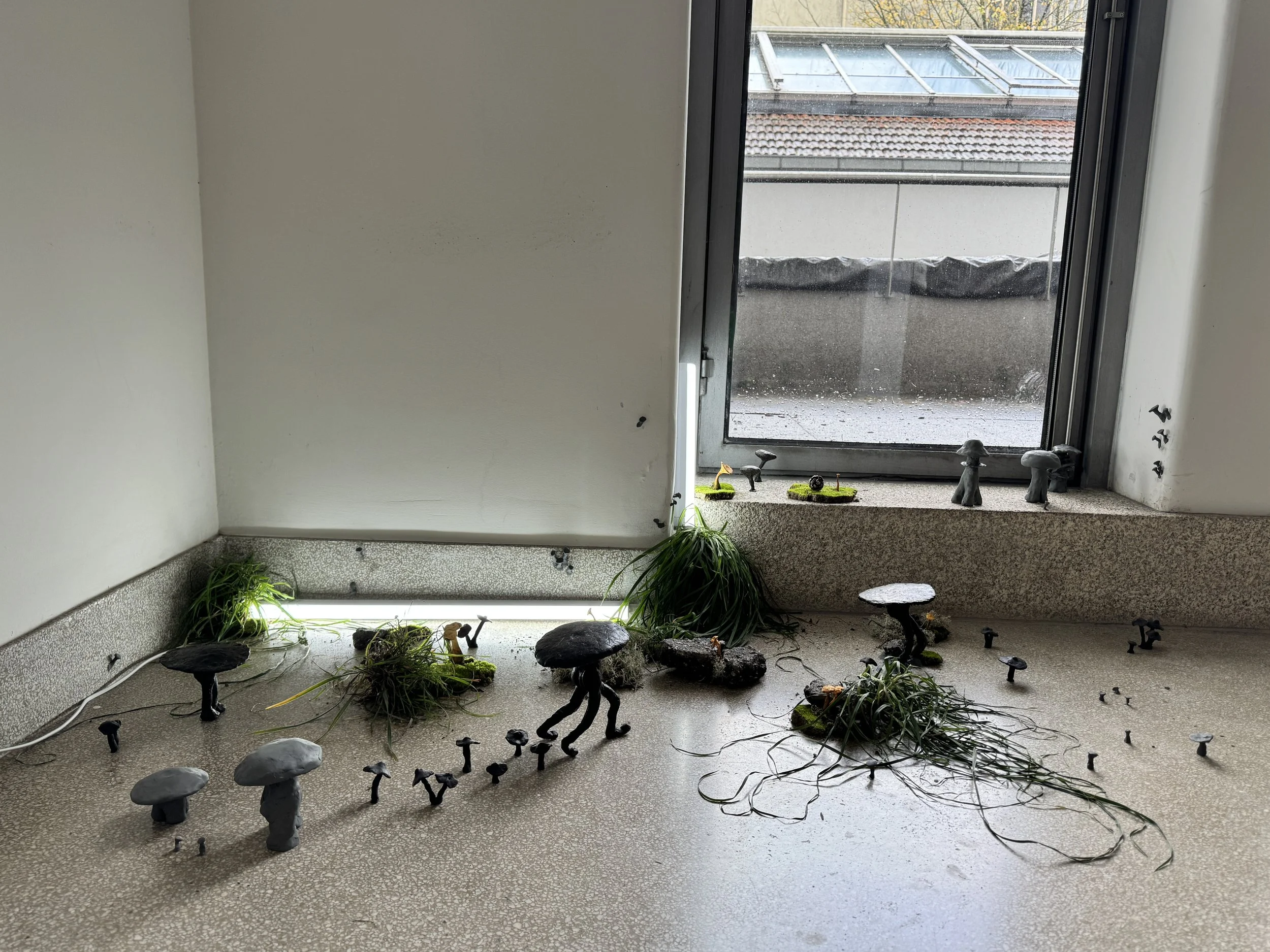
This first work is a small group of wax and clay mushroom forms with fabricated legs, creatures that feel strange and precarious. One has three legs and looks as if it is caught mid-step, perhaps escaping or just moving forward because it has to. When they are clustered together, they suggest collective strength, but also reflect the exhausting sense that women have to be constantly mobilized, always ready, always capable. They reference the biological resilience of oyster mushrooms and the superwoman myth—someone who processes everything, adapts to anything, and never collapses. But their small scale and awkward charm push back against any heroic commentary. They are not winning, they are surviving.
Core Works: Bronze and Wood Series
The project evolved from these initial wax forms into a series of cast bronze works that use decomposing wood as substrate, making the structural labor that holds systems together visible. Each piece in this series explores a different aspect of competence, endurance, and the body's memory of care work.
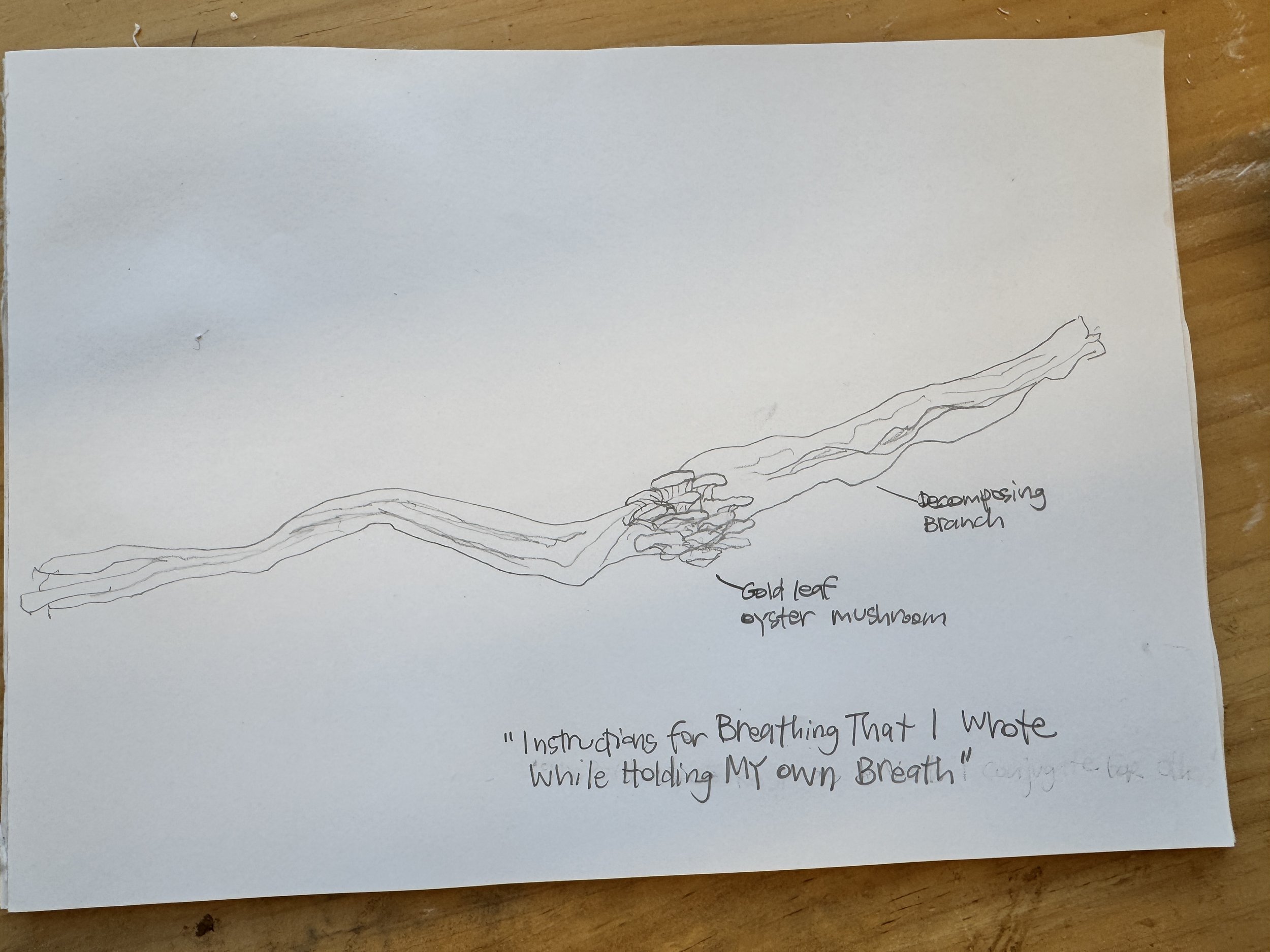
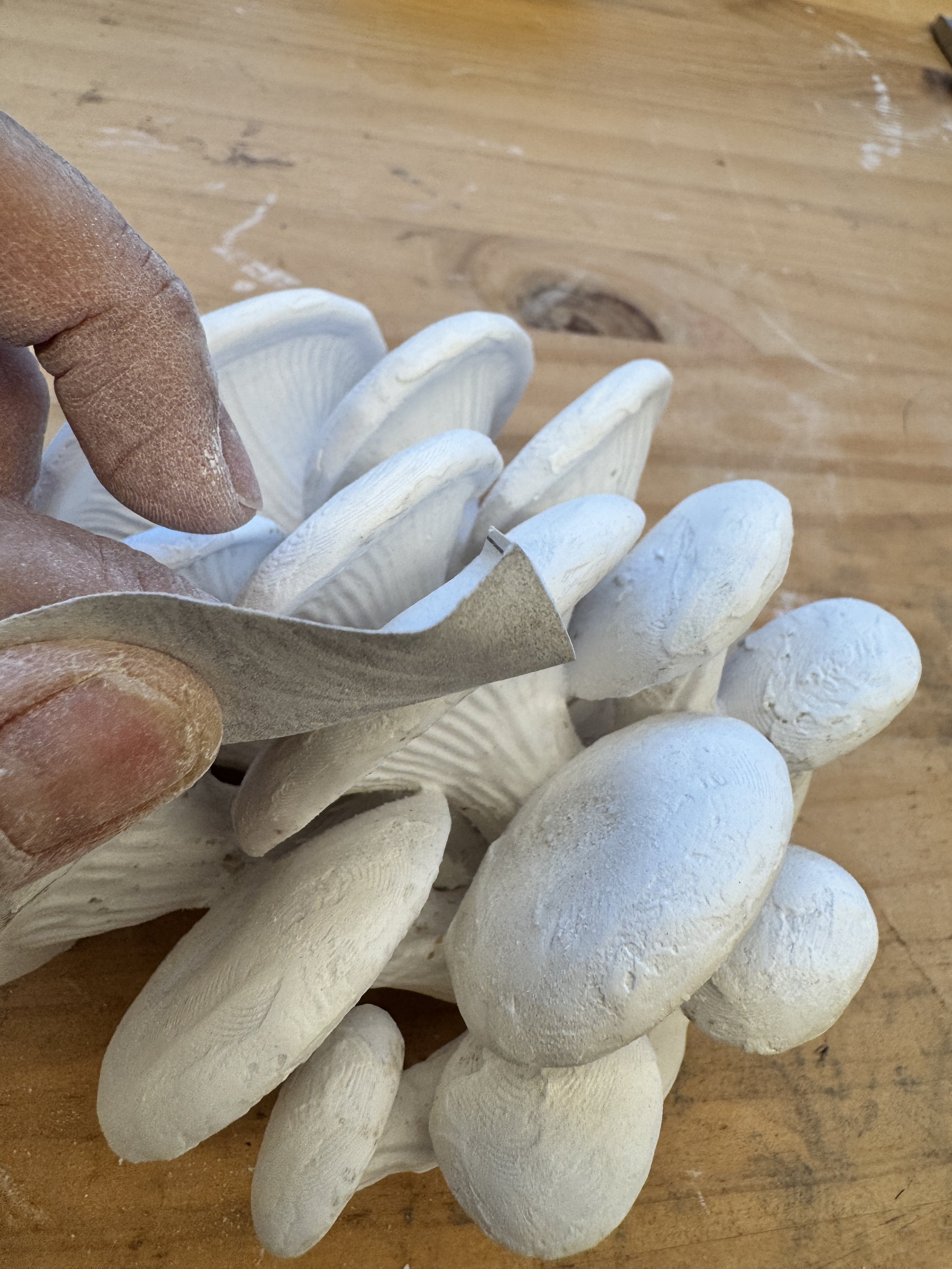
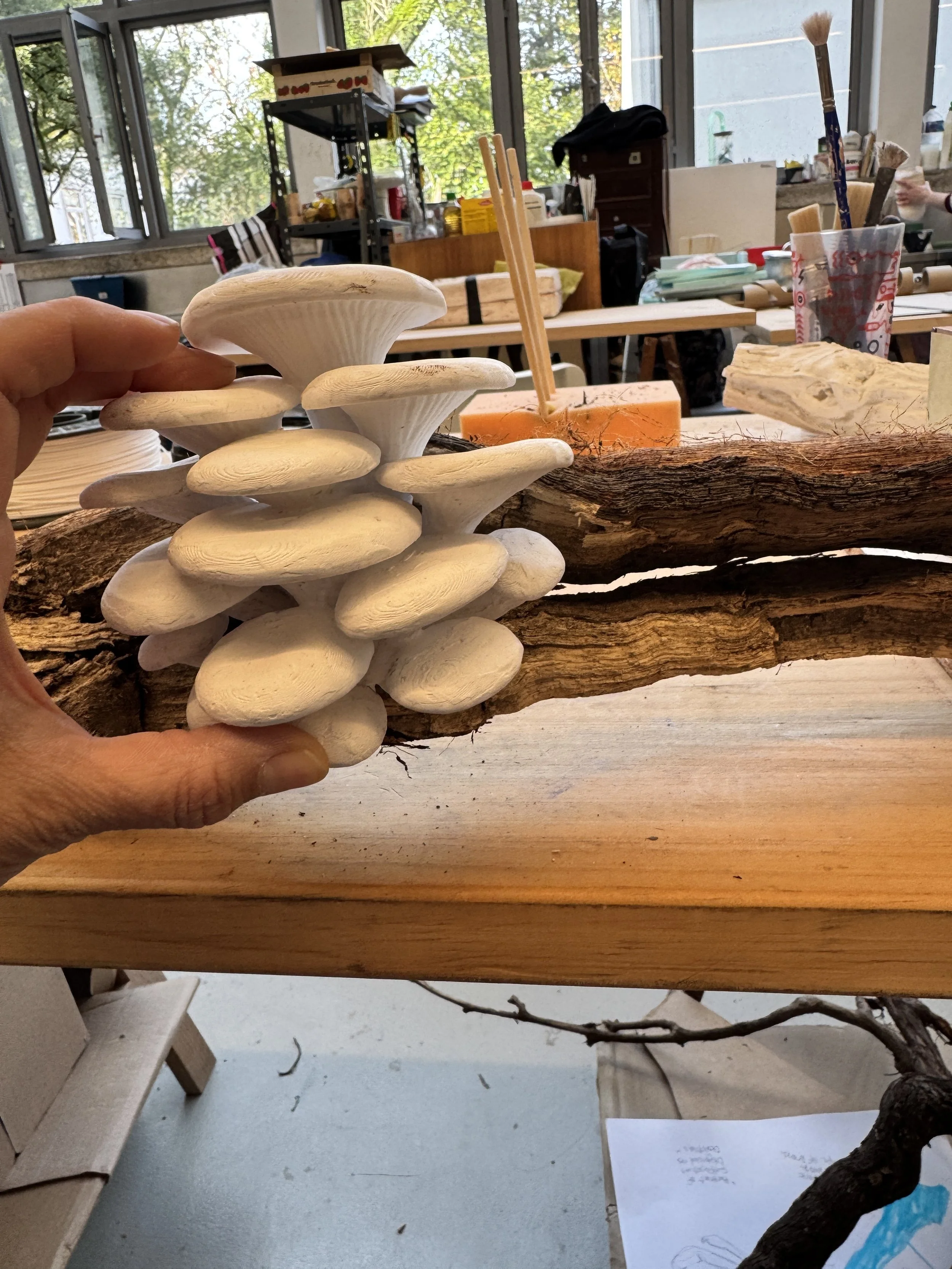
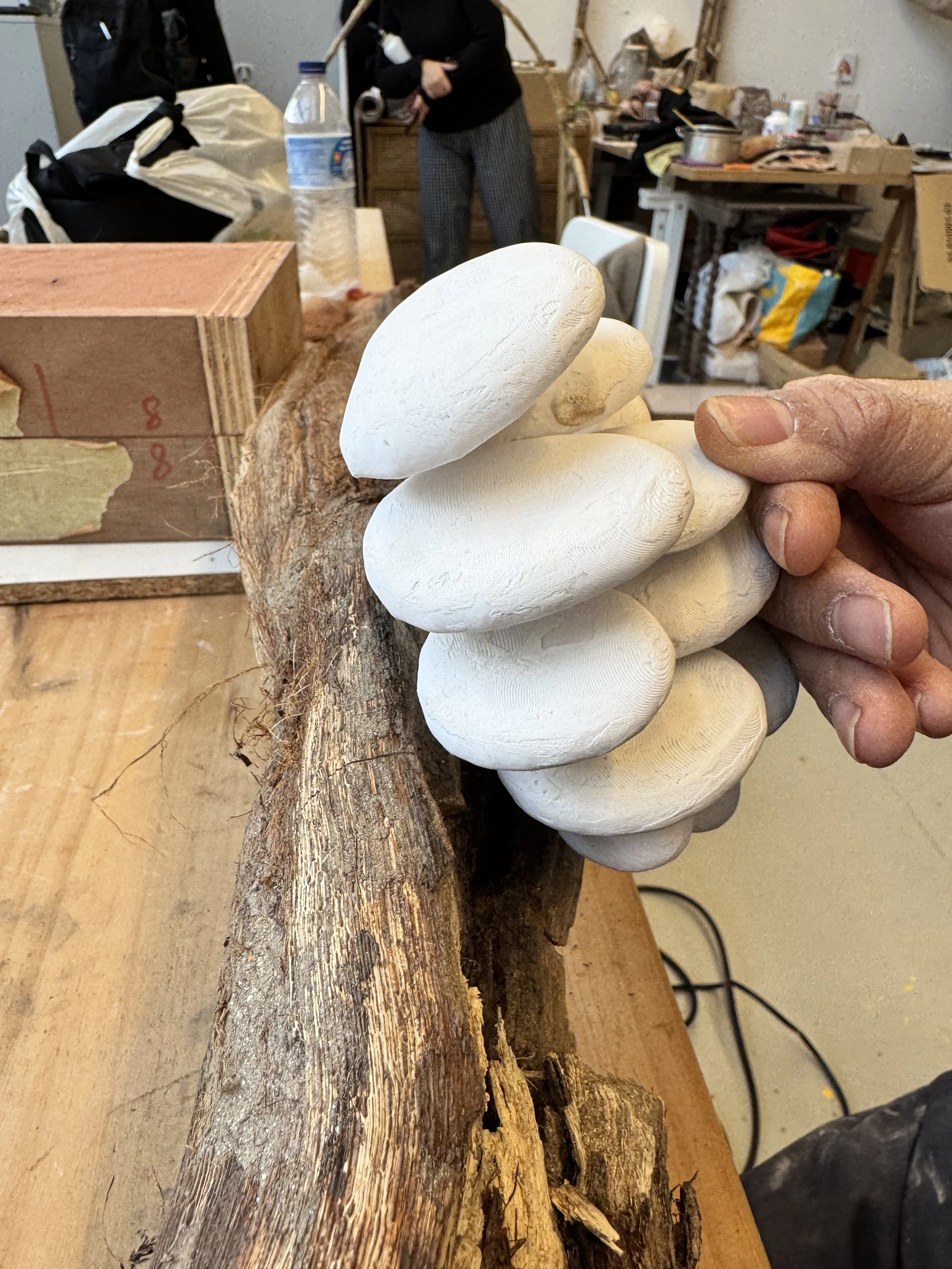
"Instructions for Breathing That I Wrote While Holding My Breath"
Decomposed grapevine, 3D printed PLA, automotive paint, epoxy resin
120 cm × 12 cm × 12 cm
2025
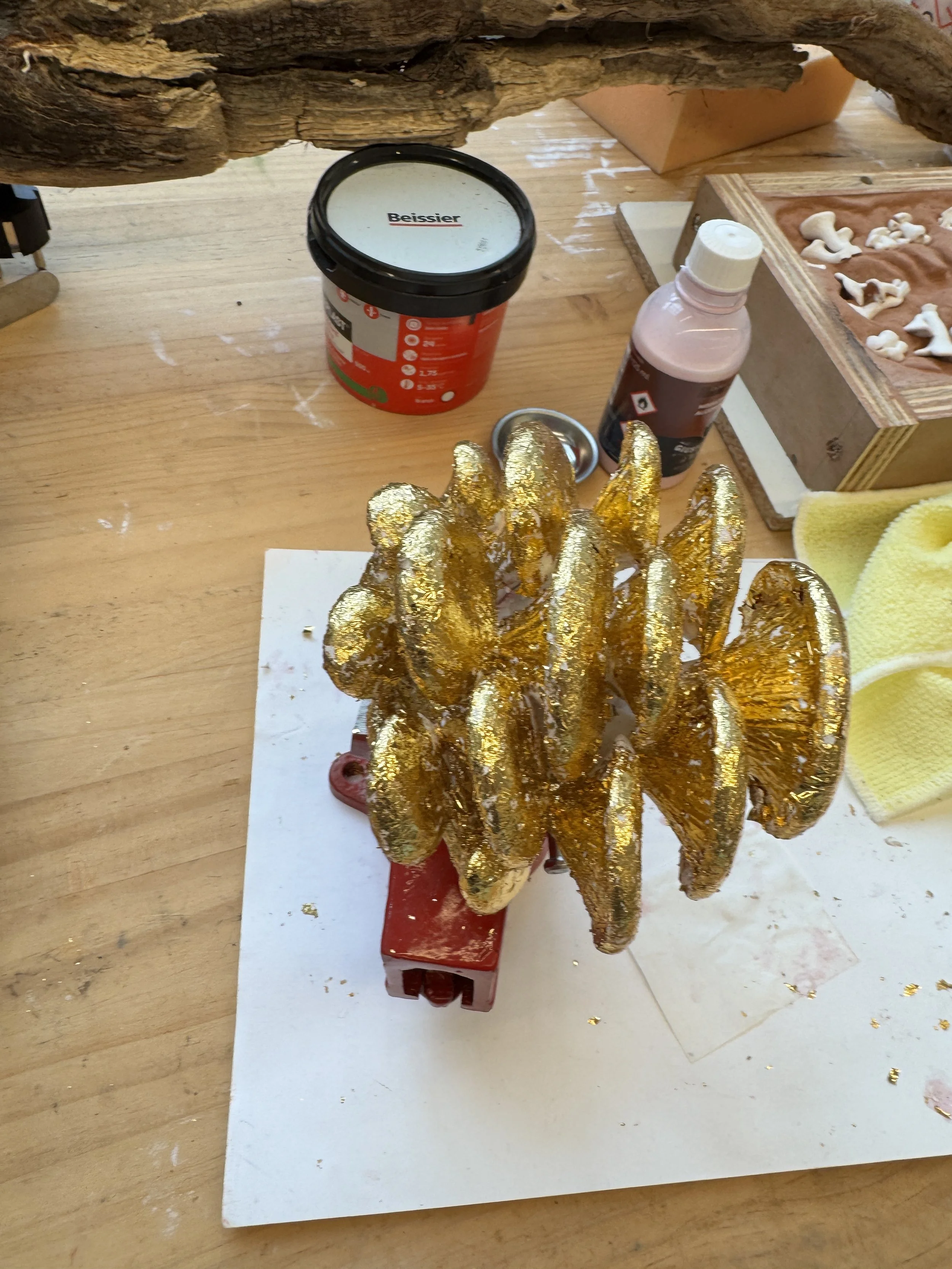
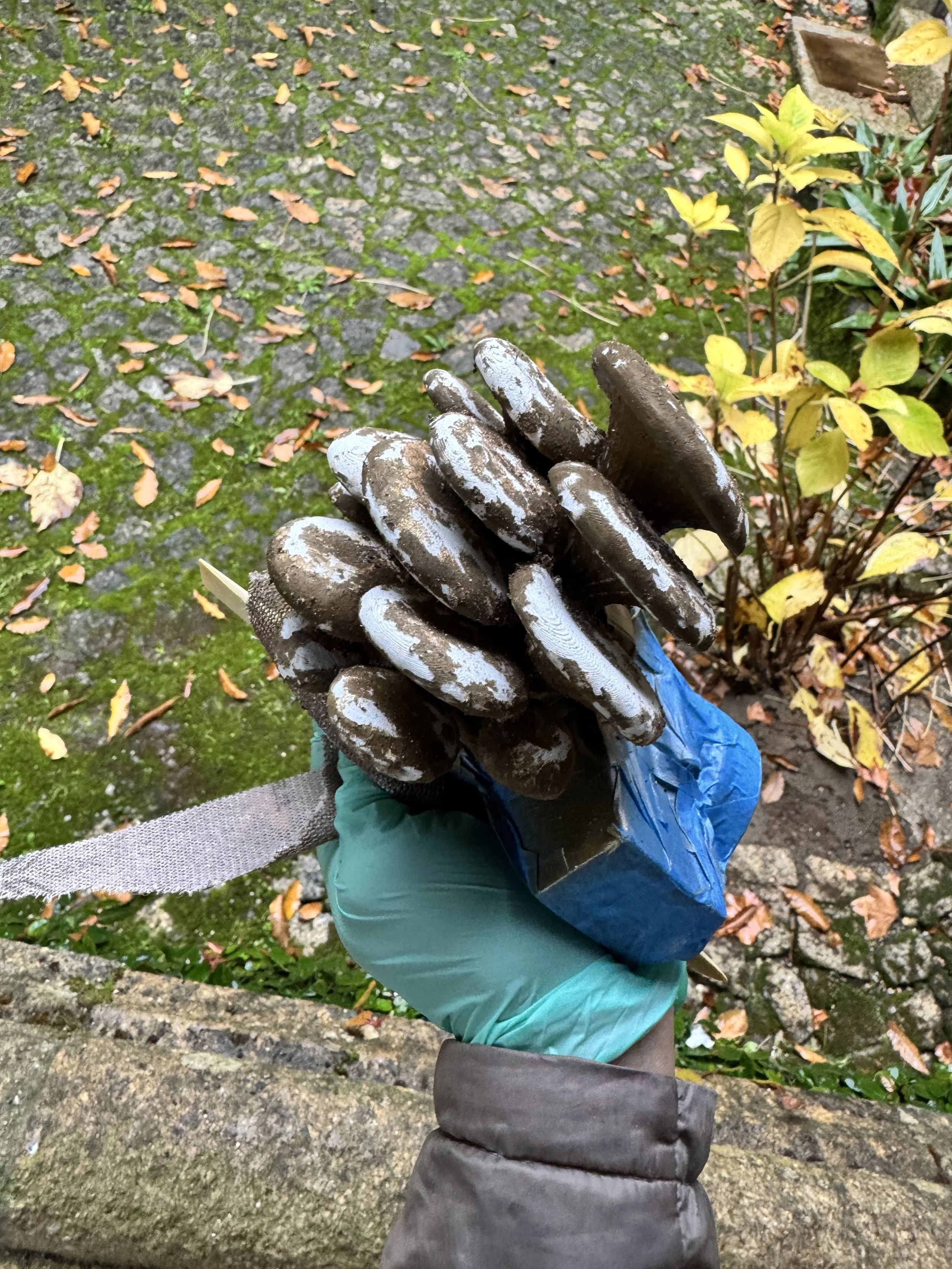
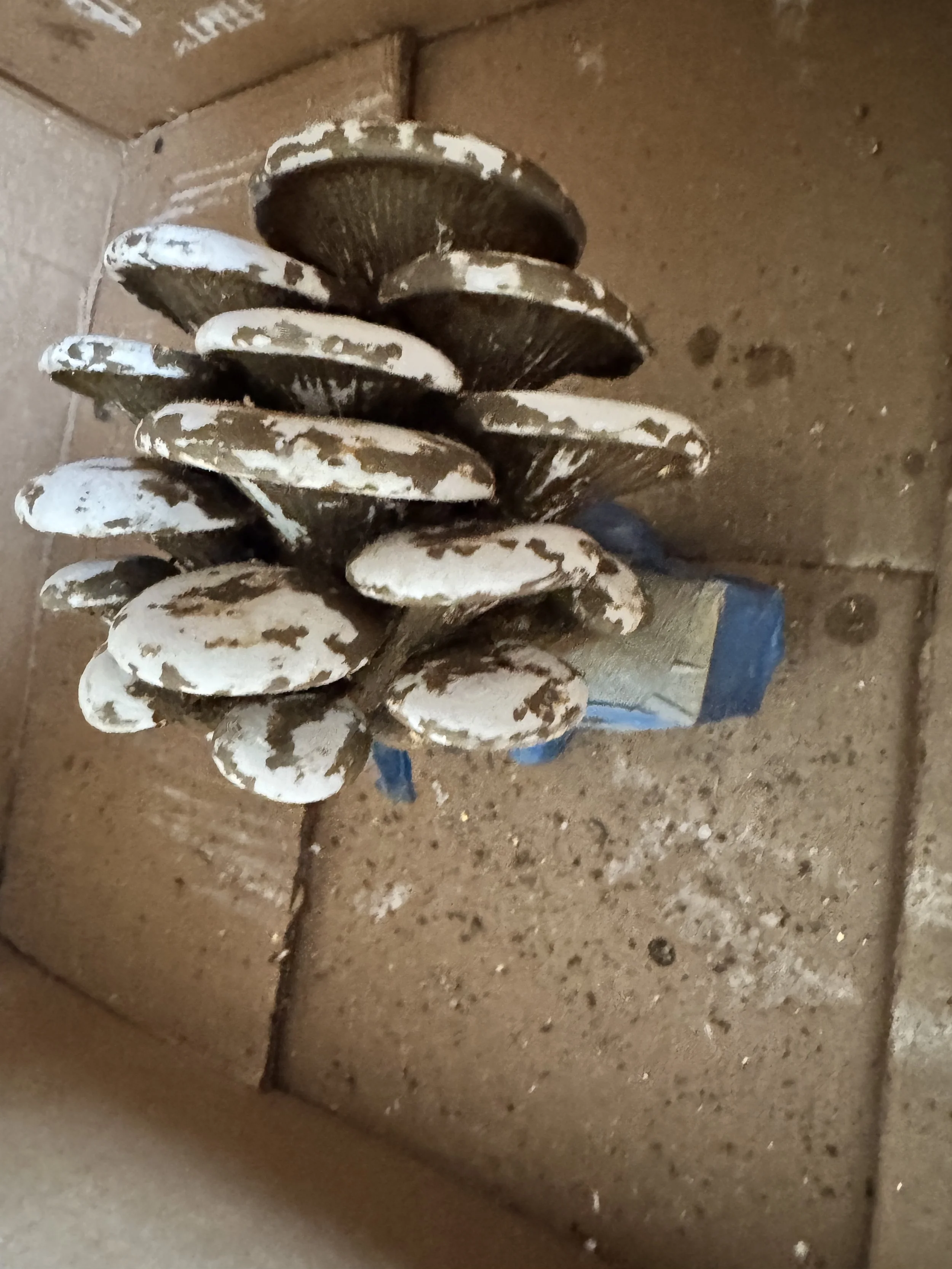
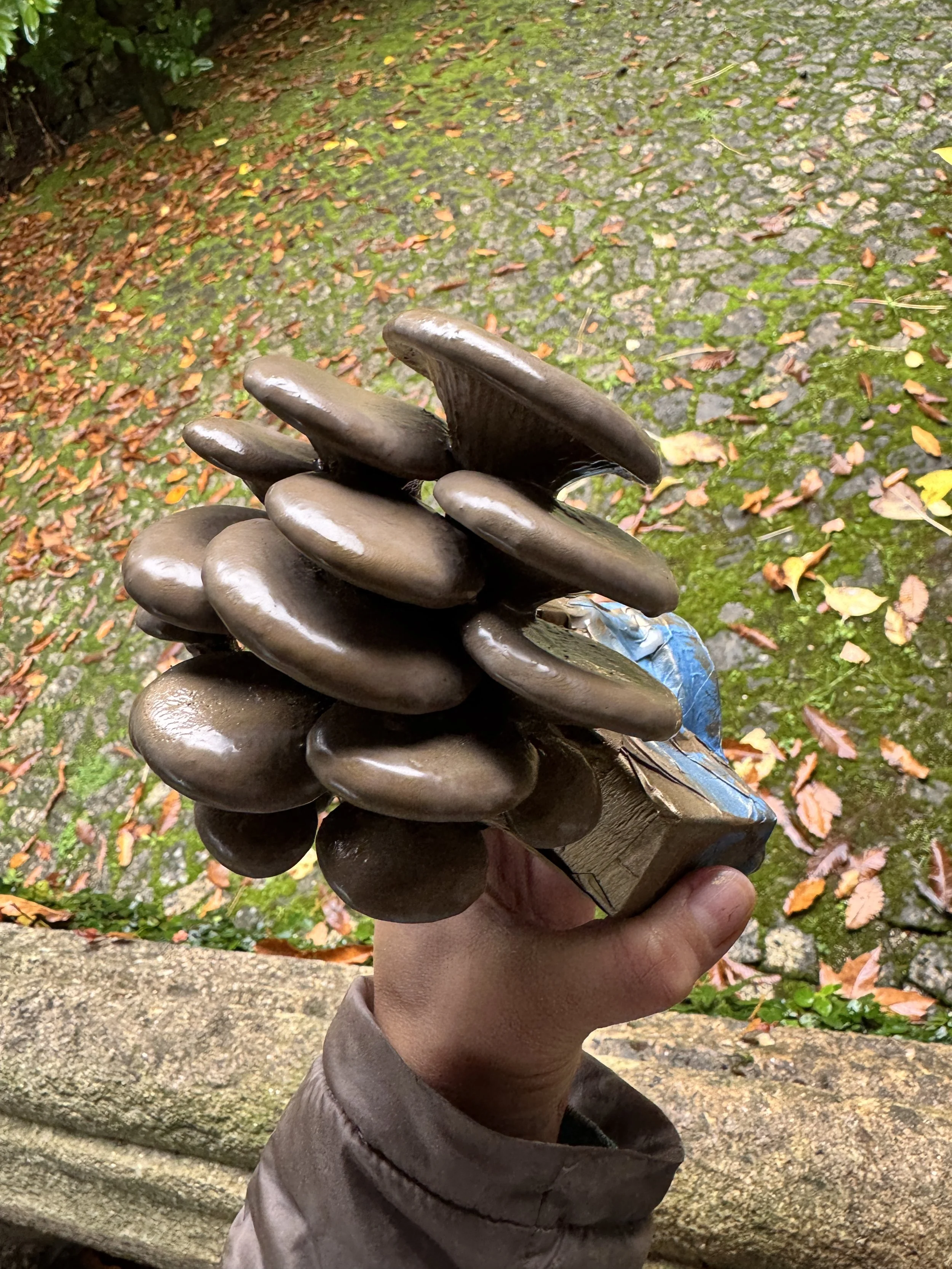
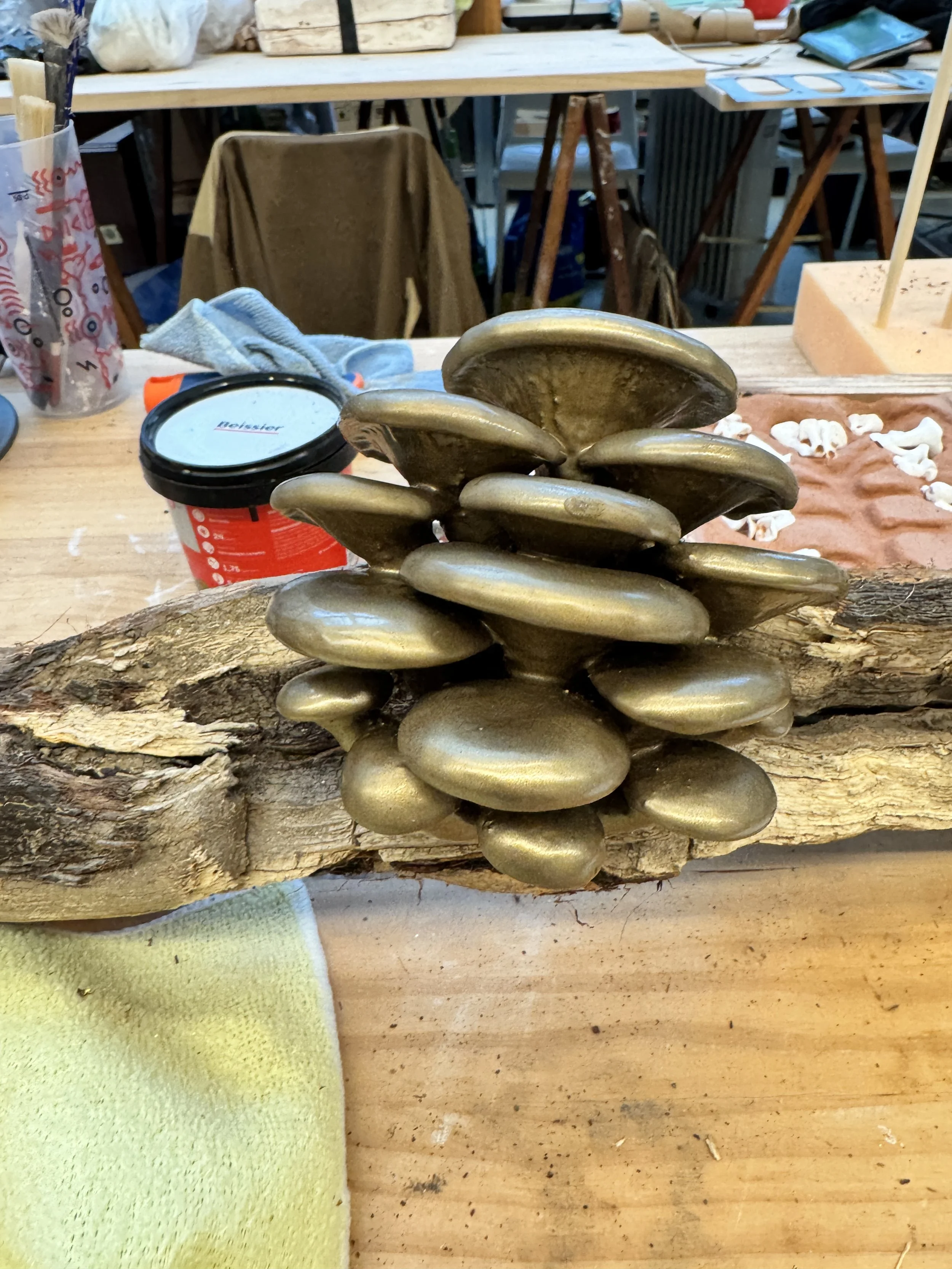
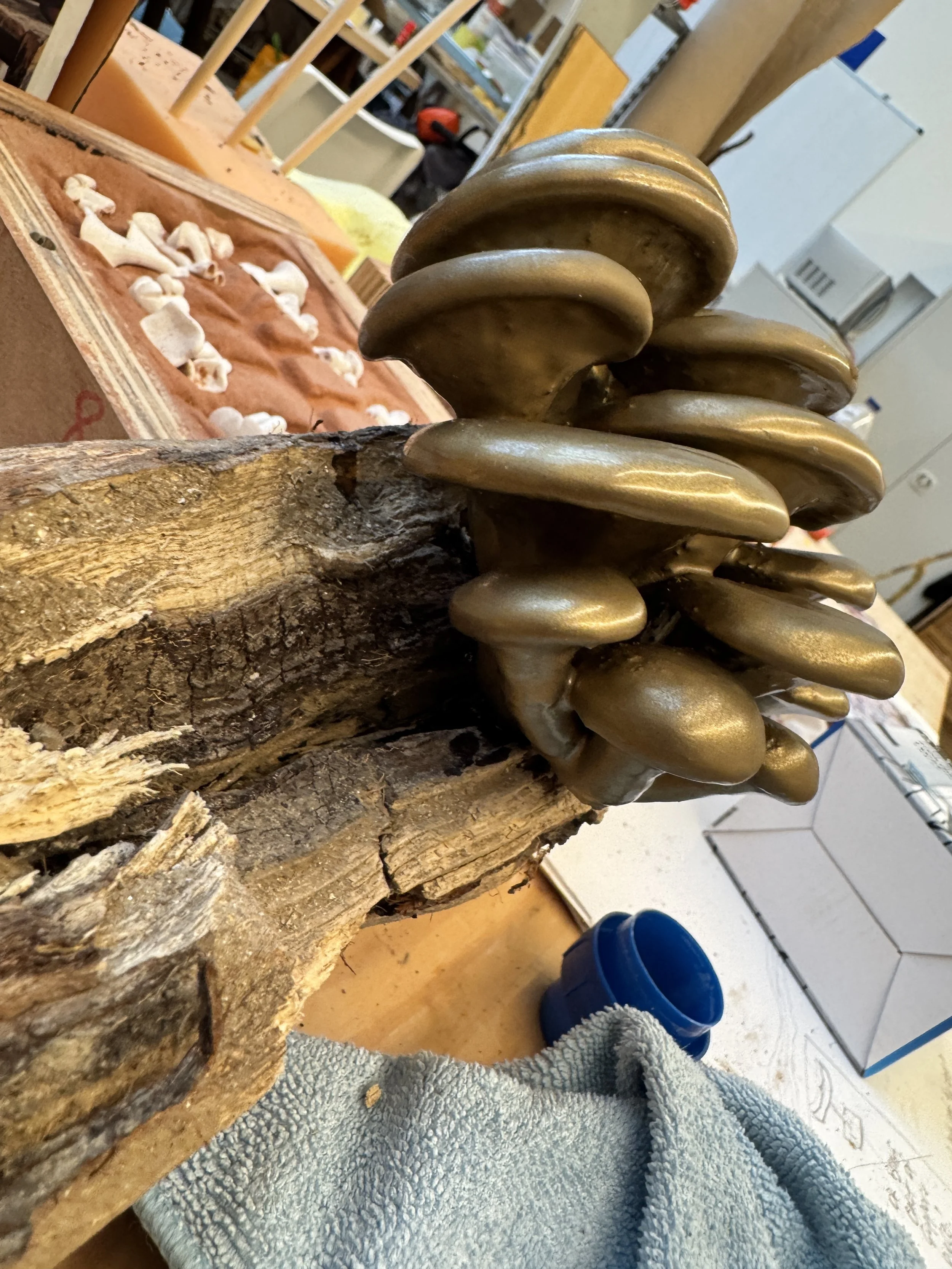
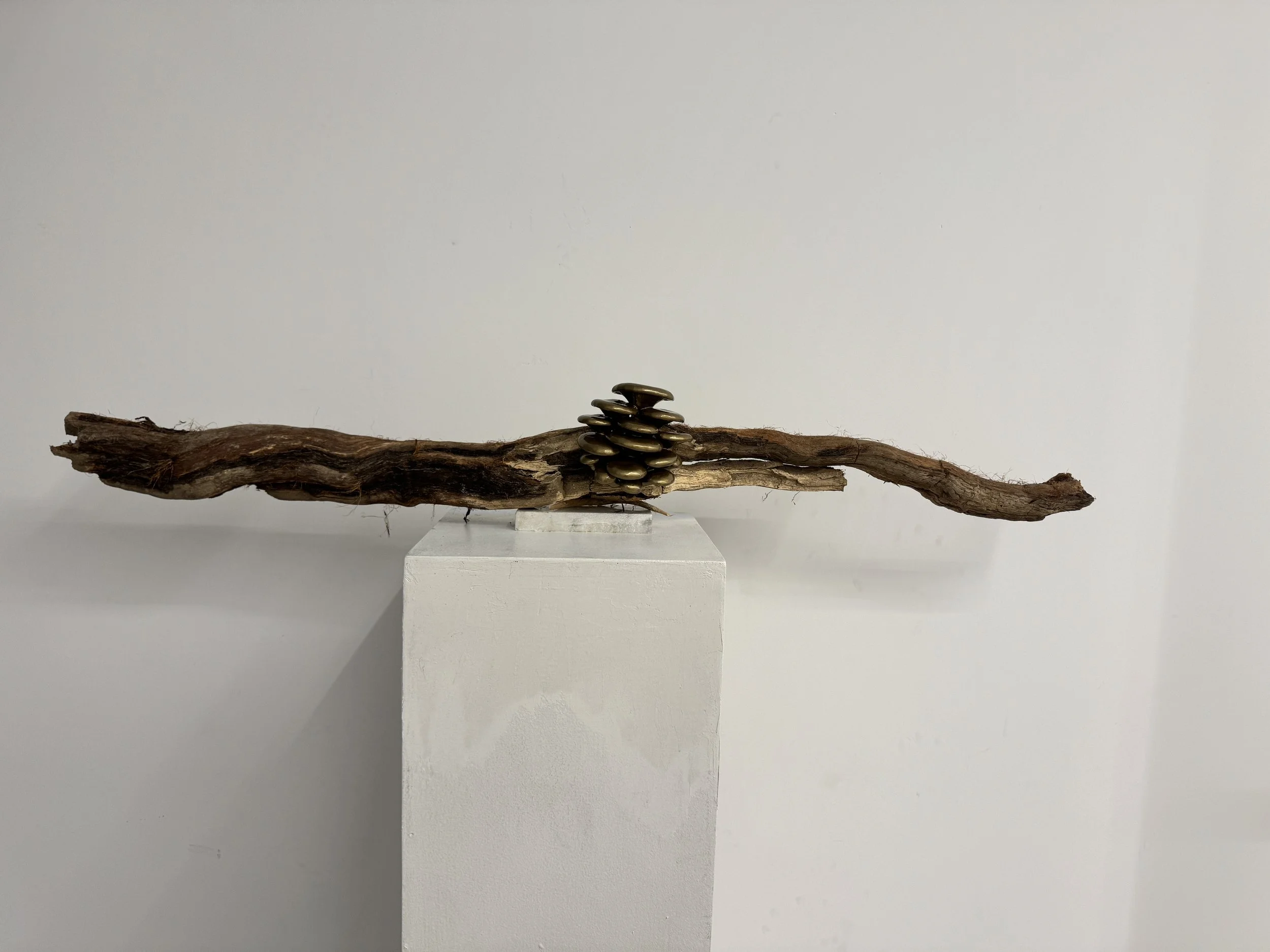
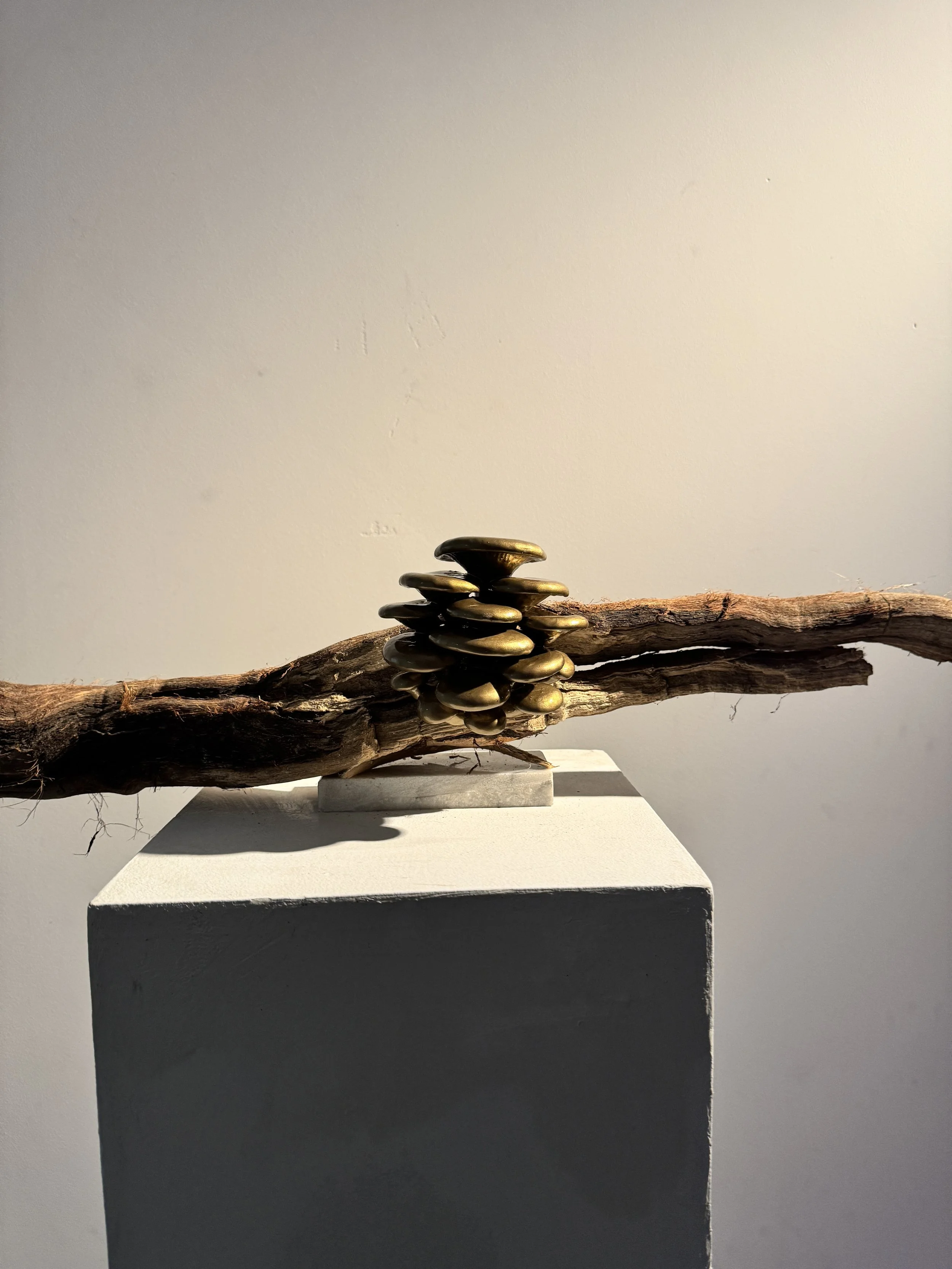
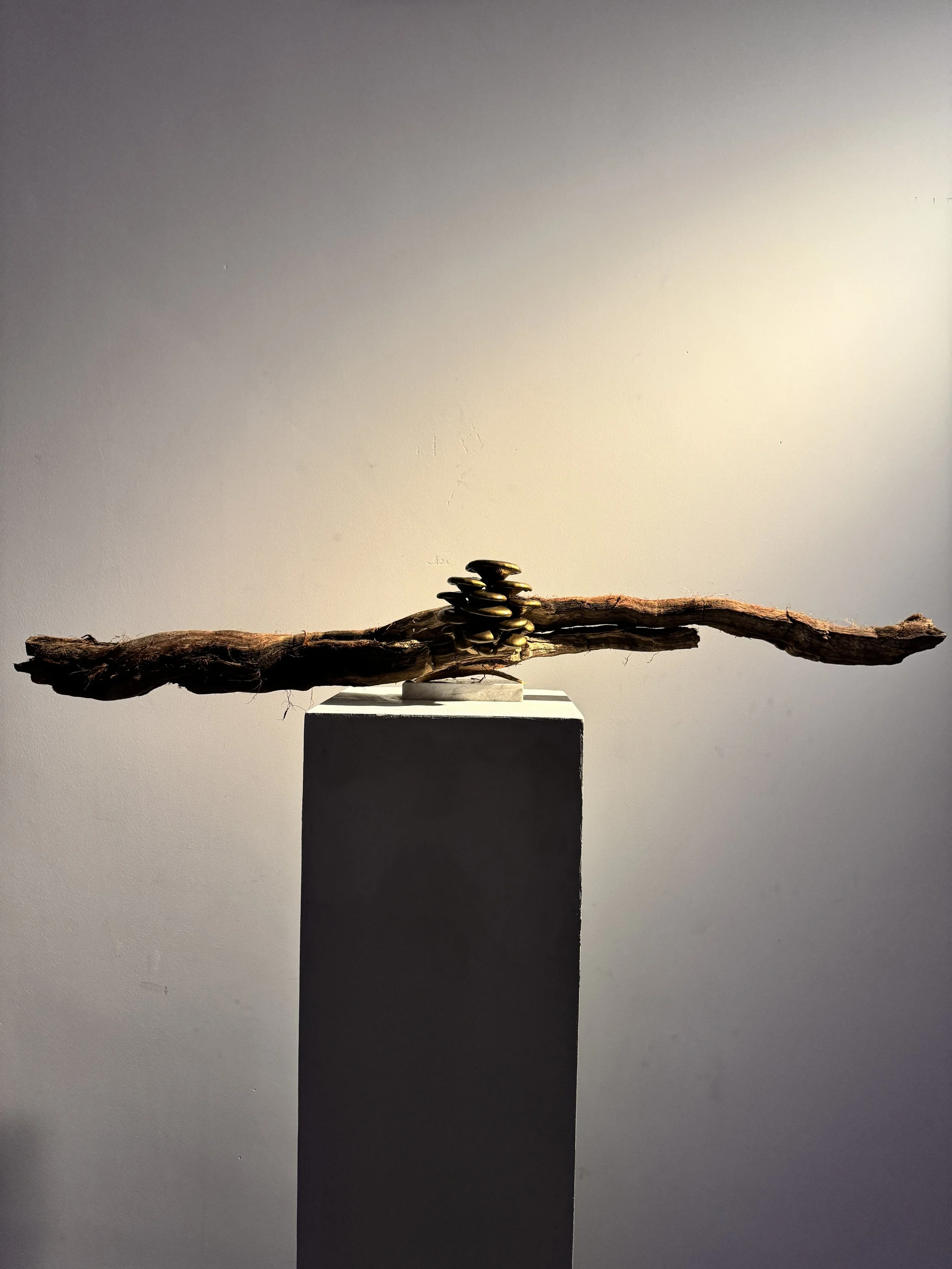
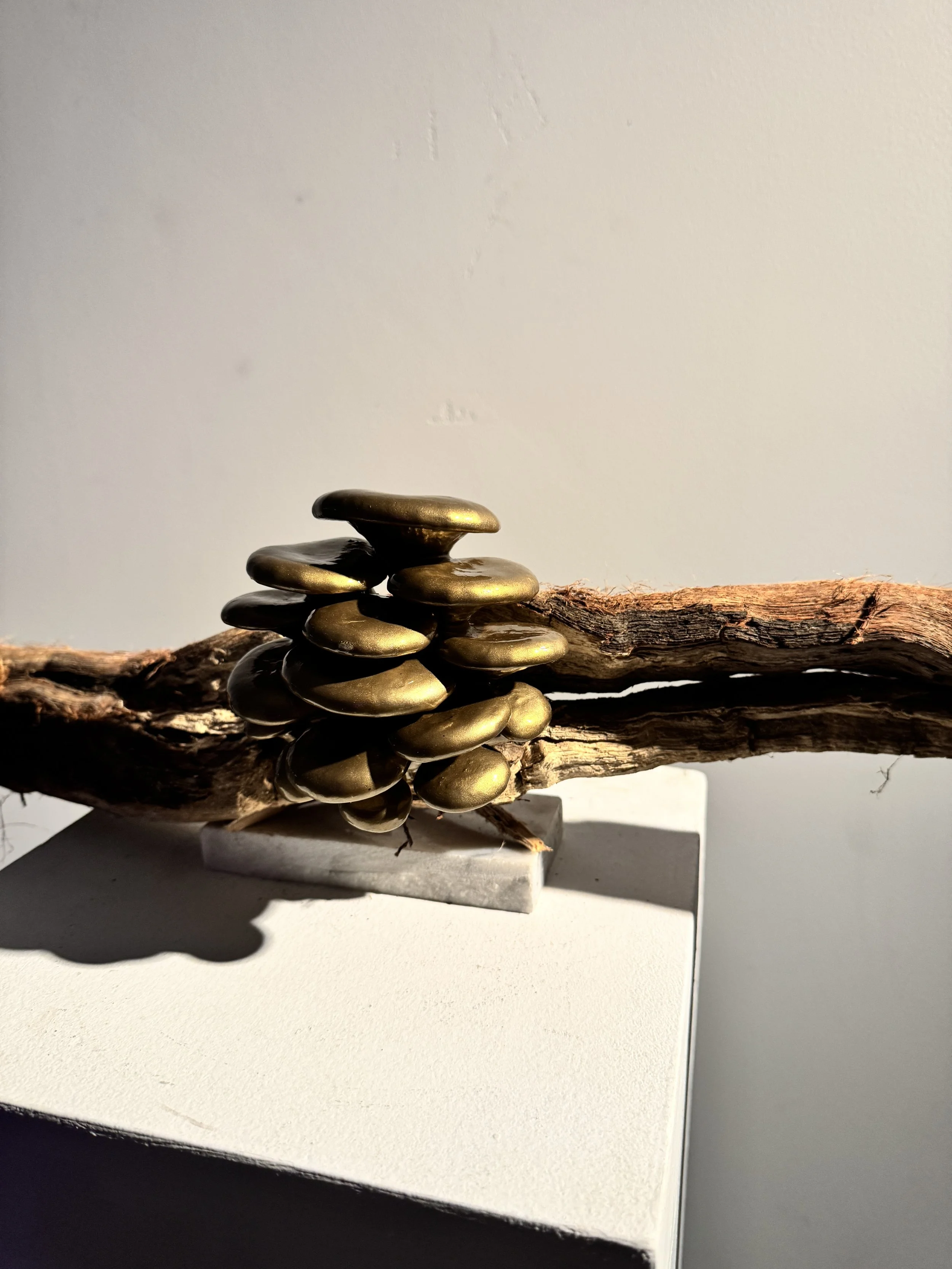
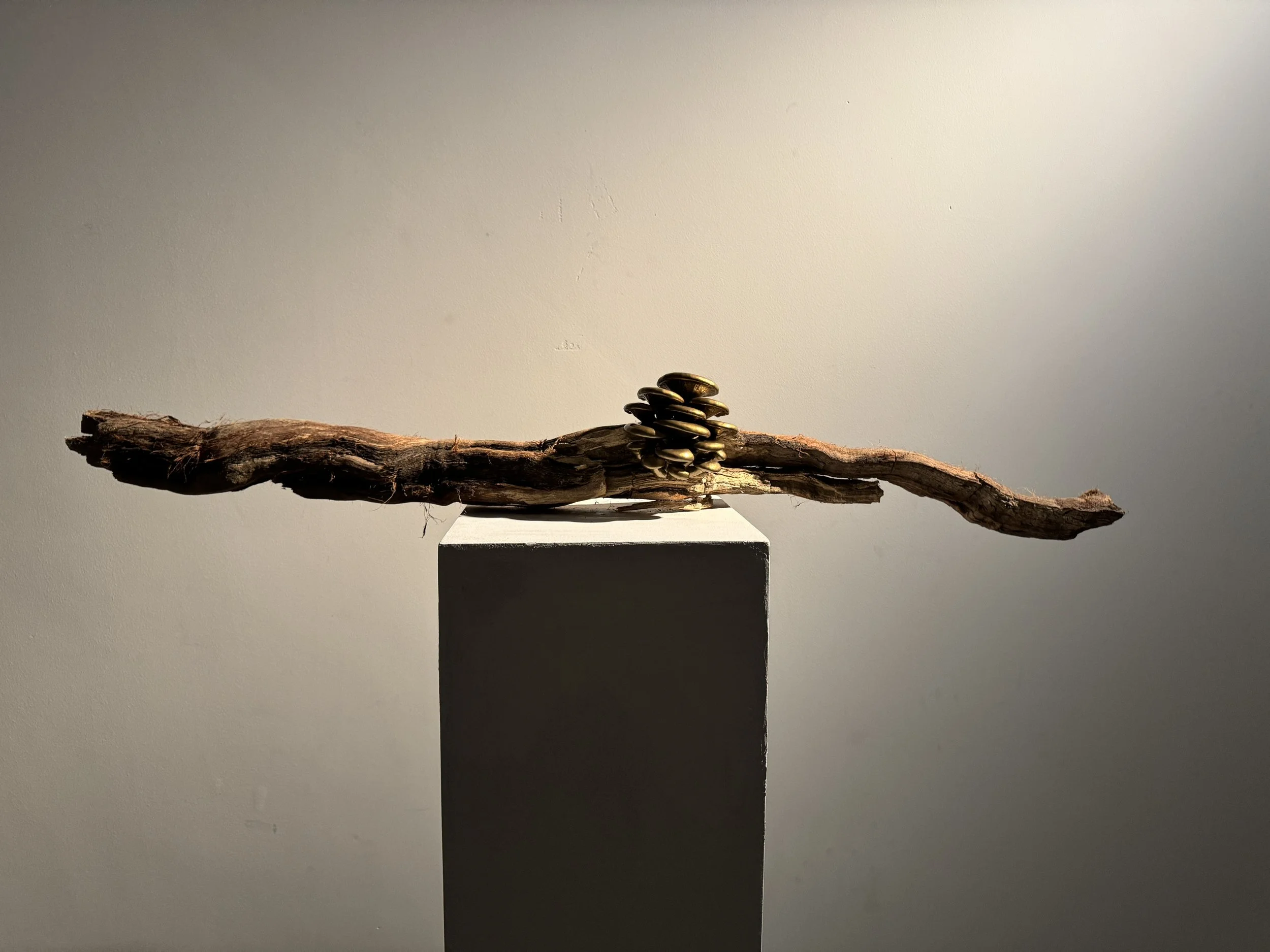
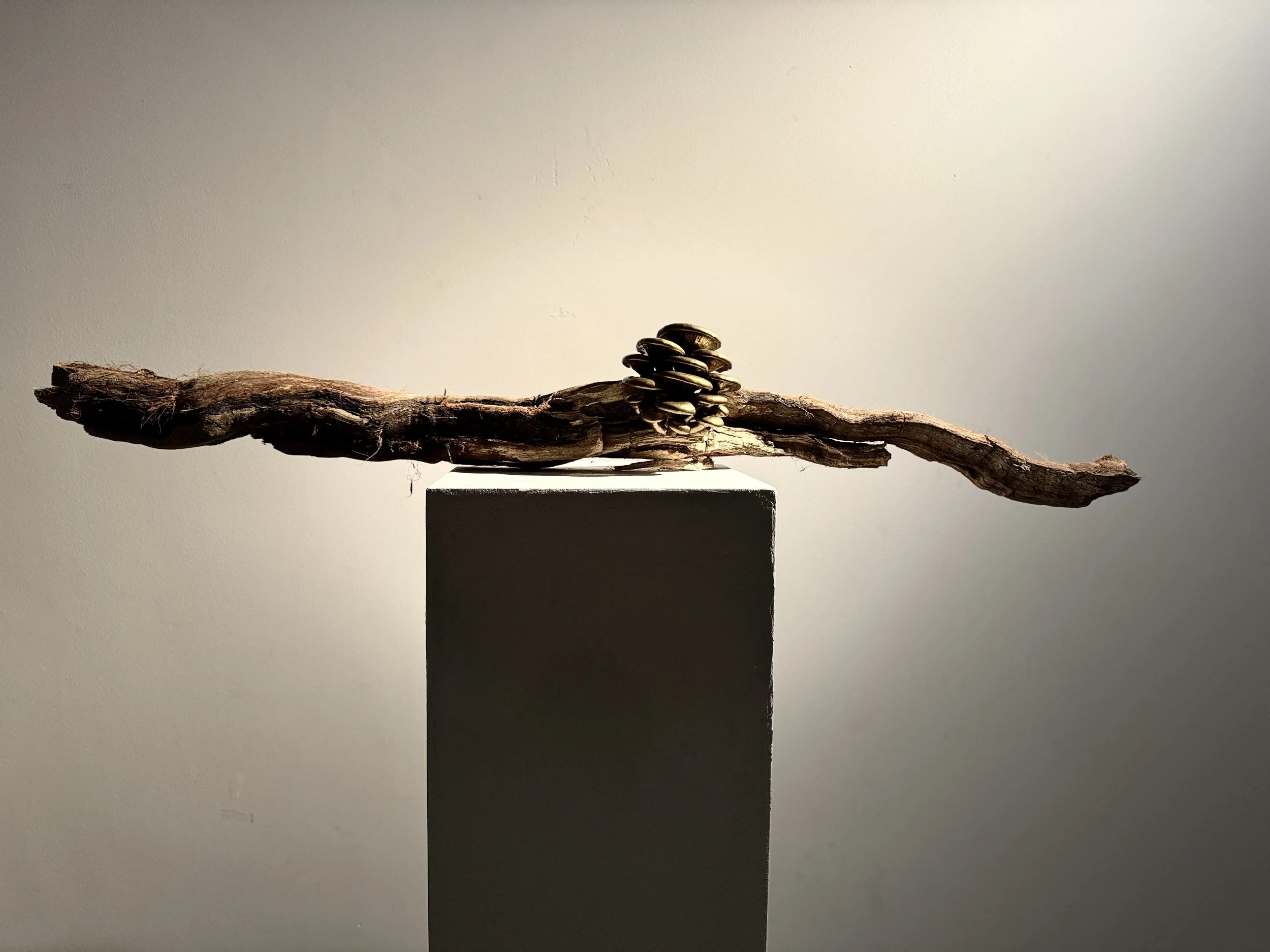
I am iterating on this piece which will be called:
"Instructions for Breathing That I Wrote While Holding My Breath (Second Try)"
Decomposed grapevine, brass
120 cm × 12 cm × 12 cm
2025
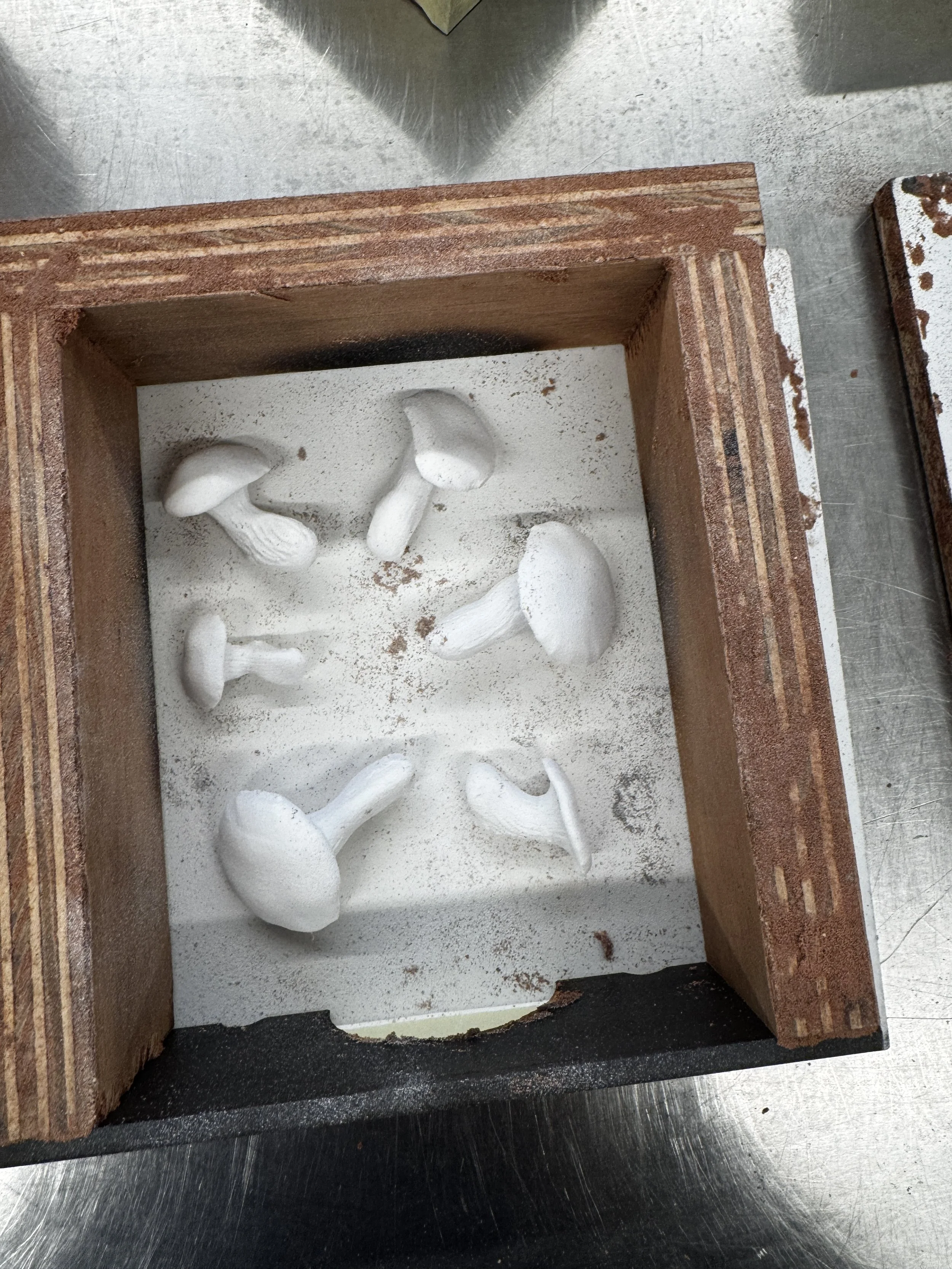
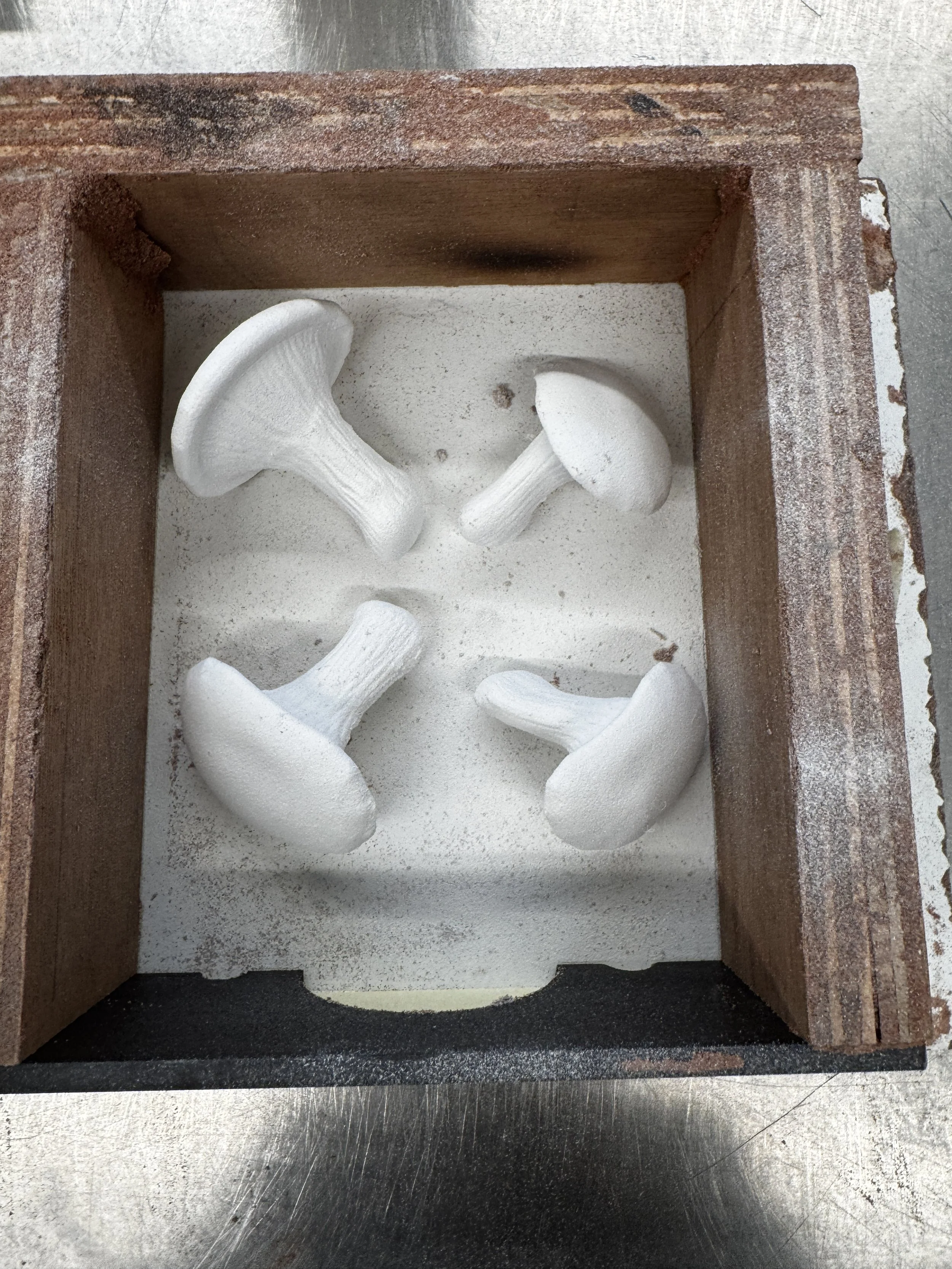
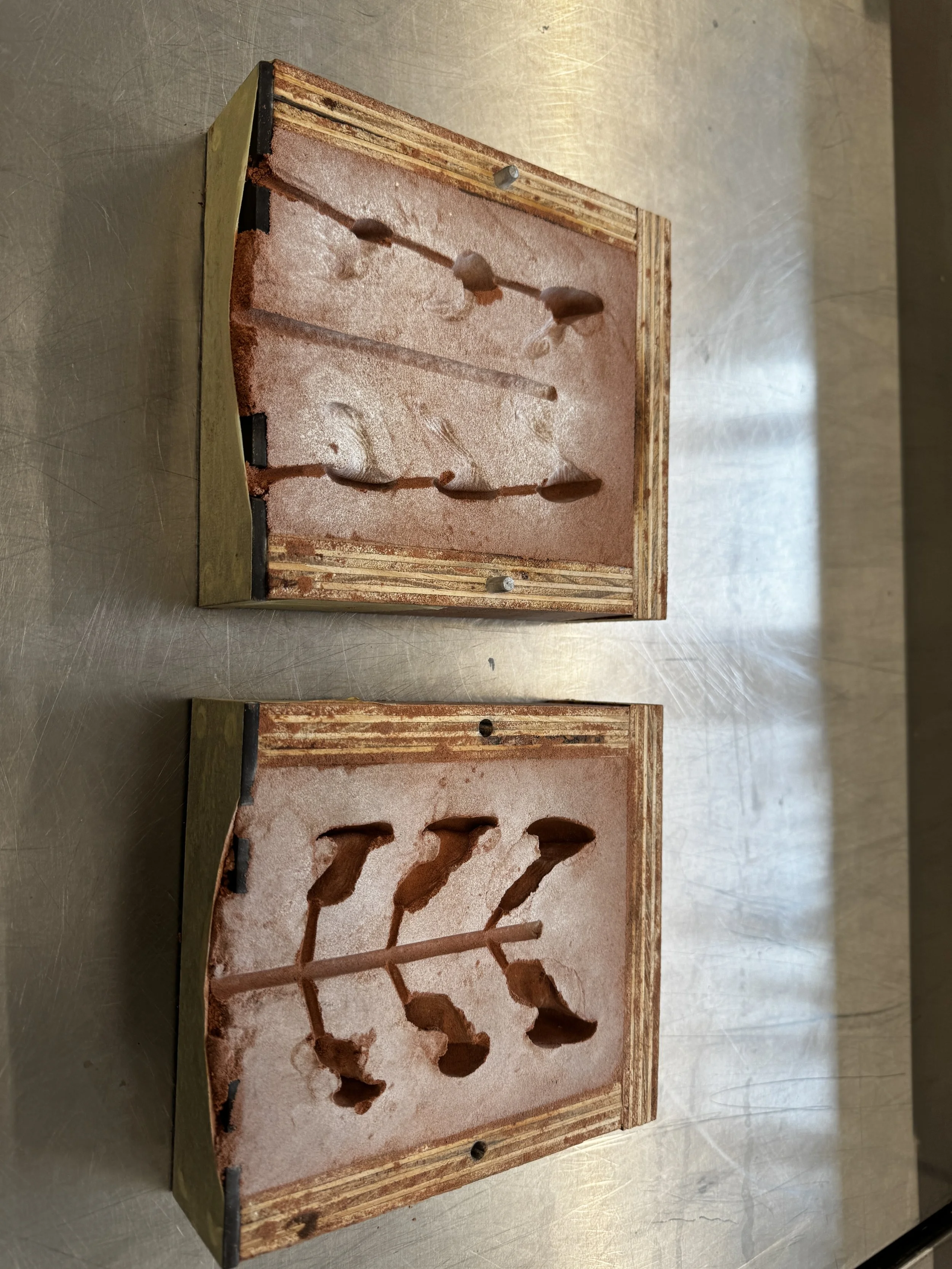
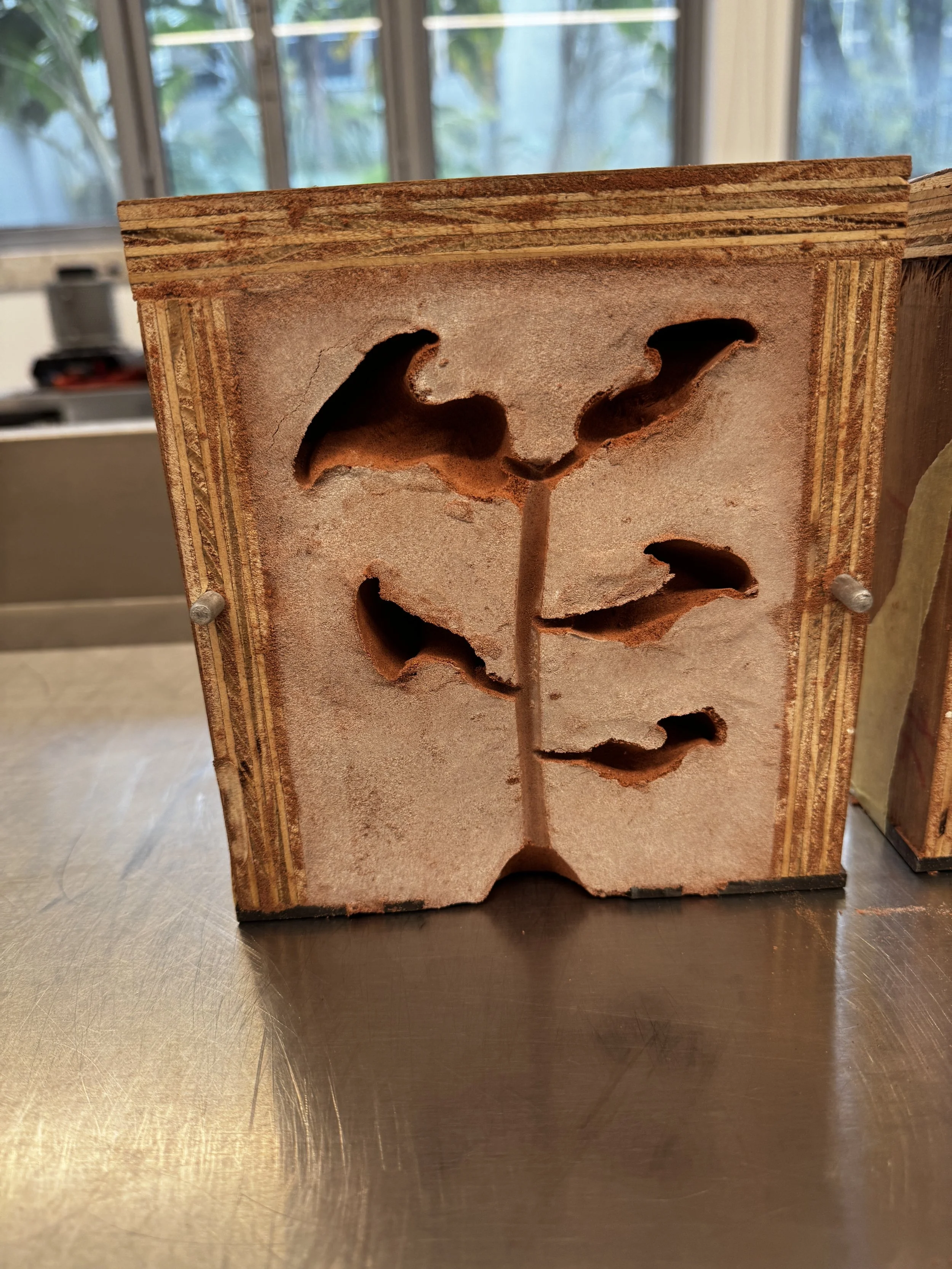

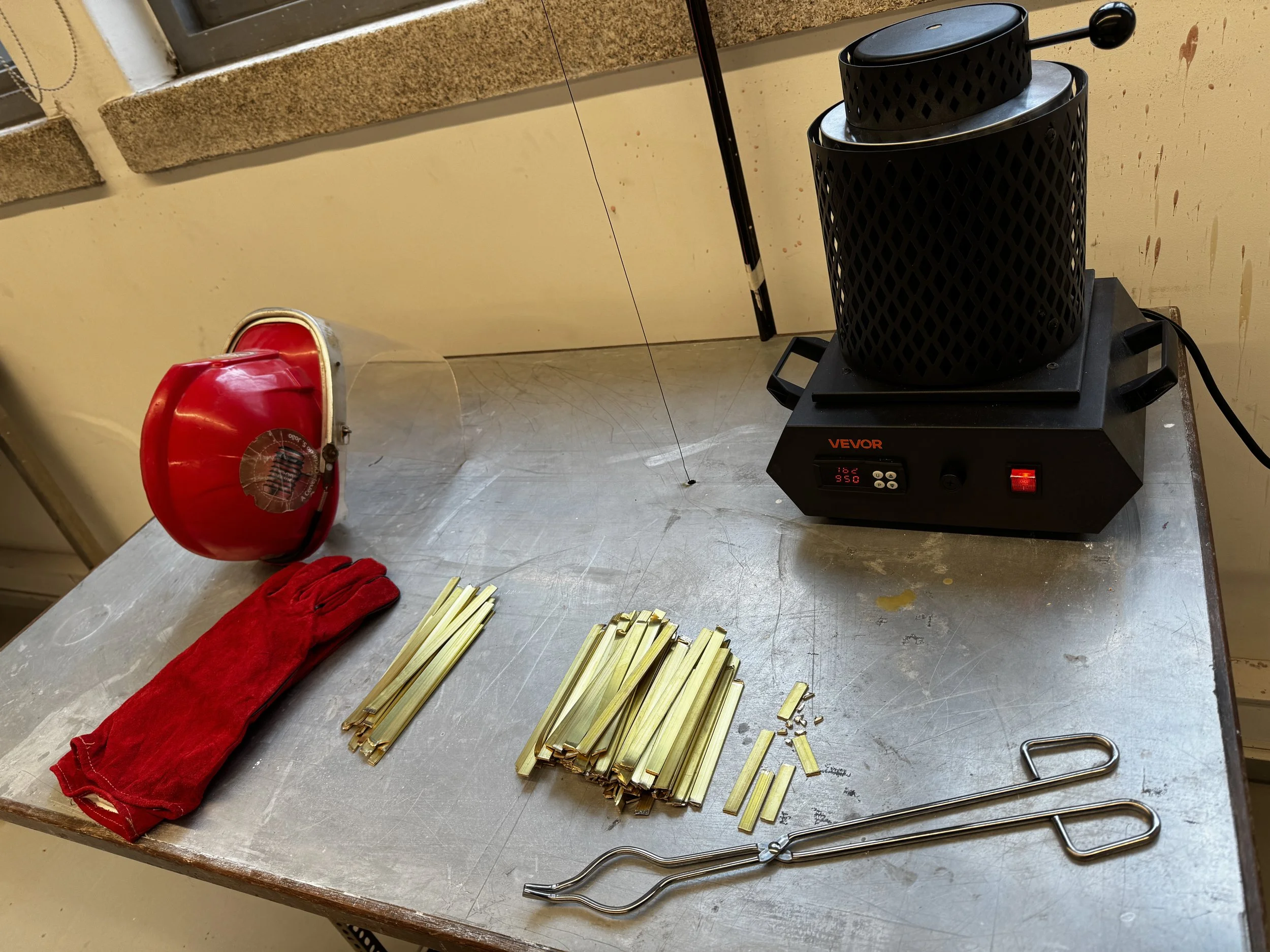
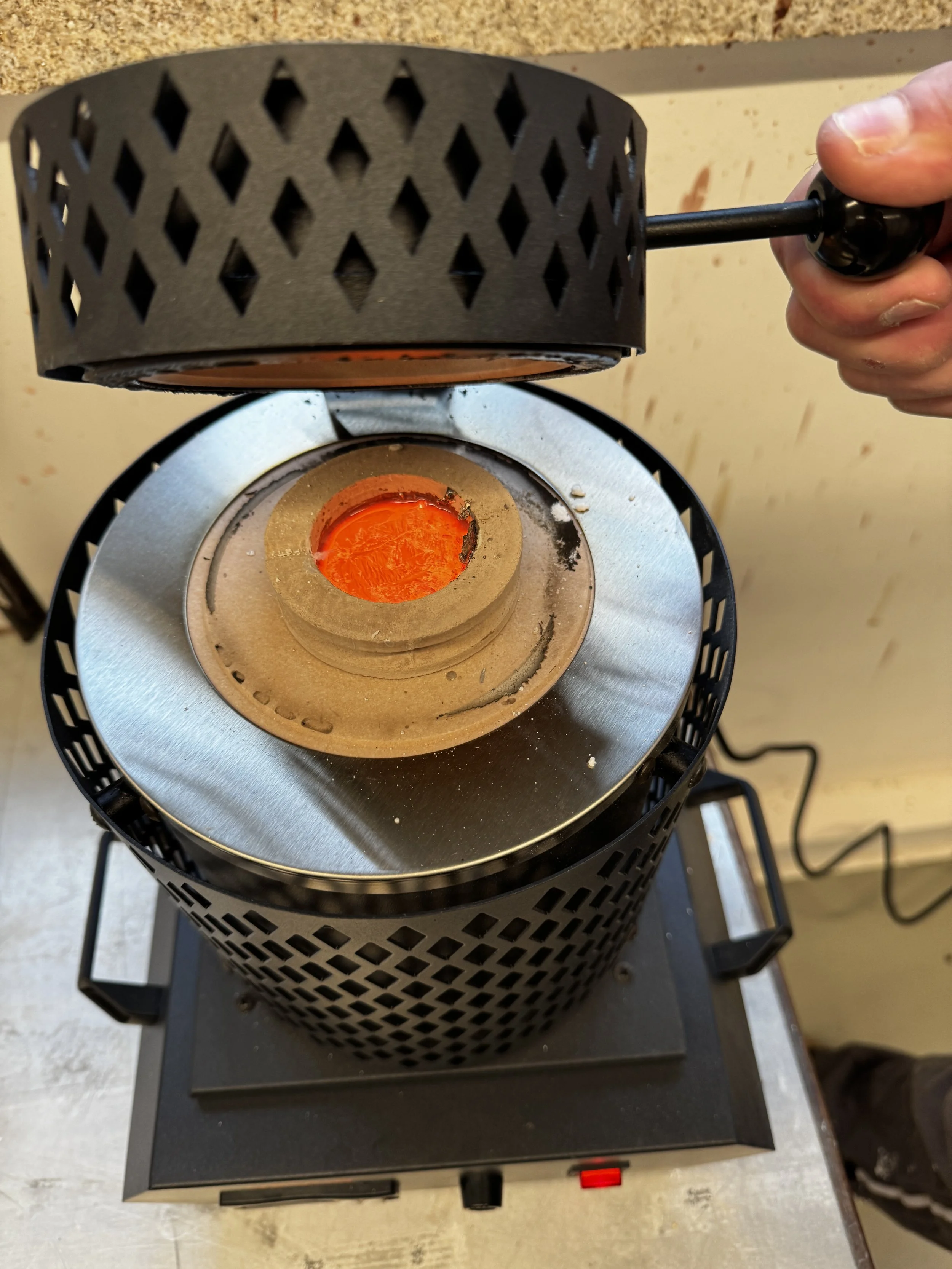
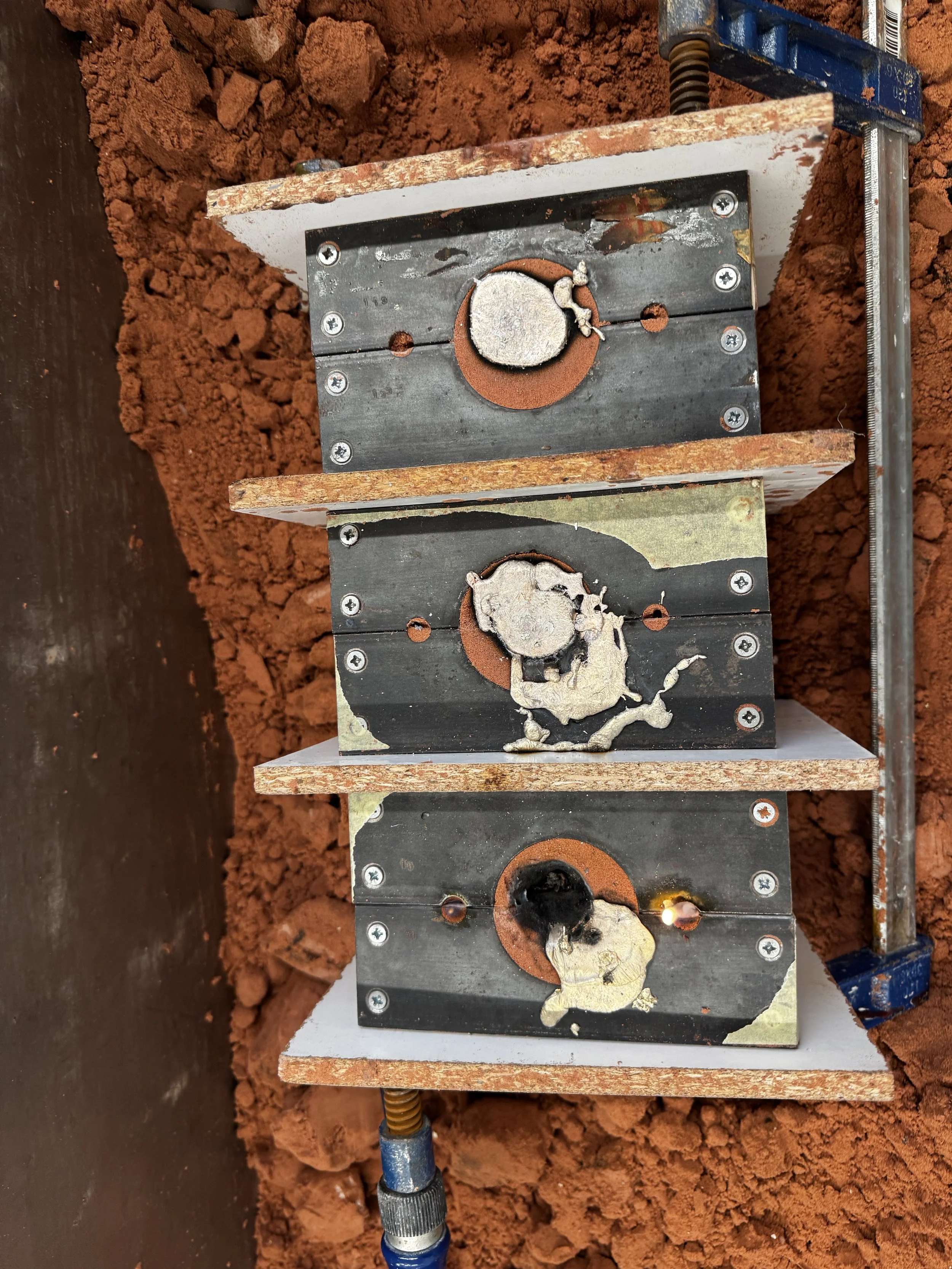
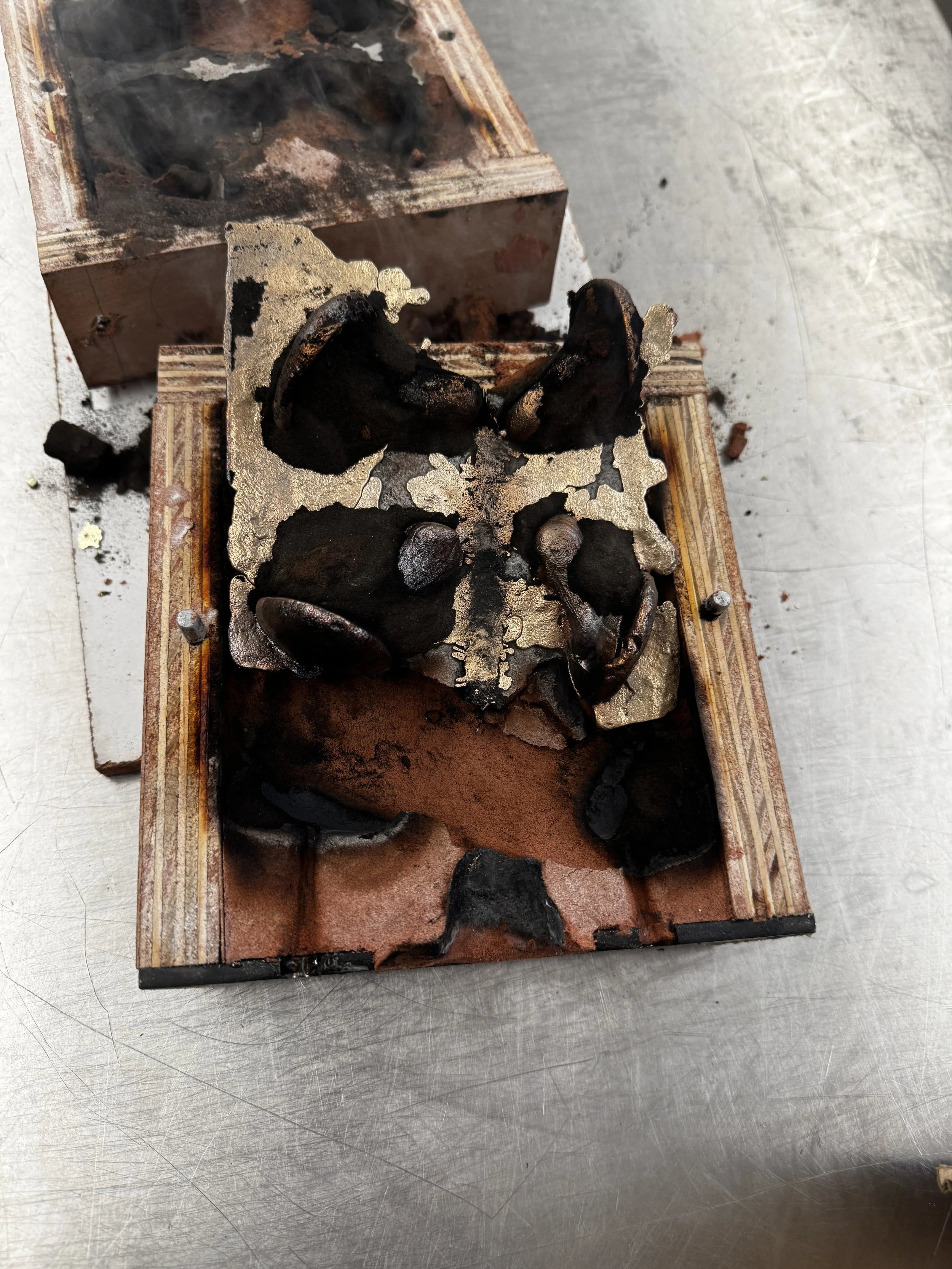
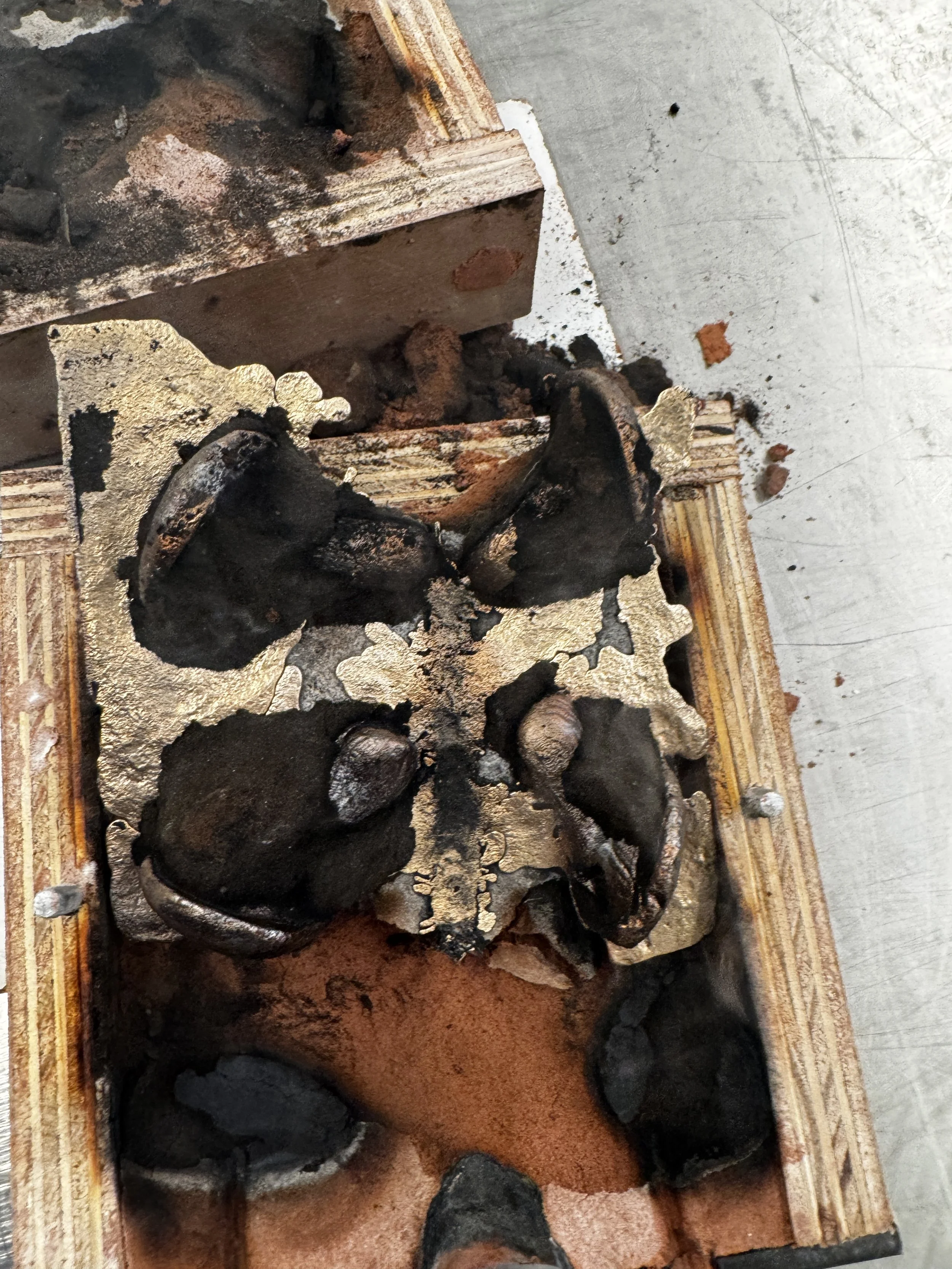
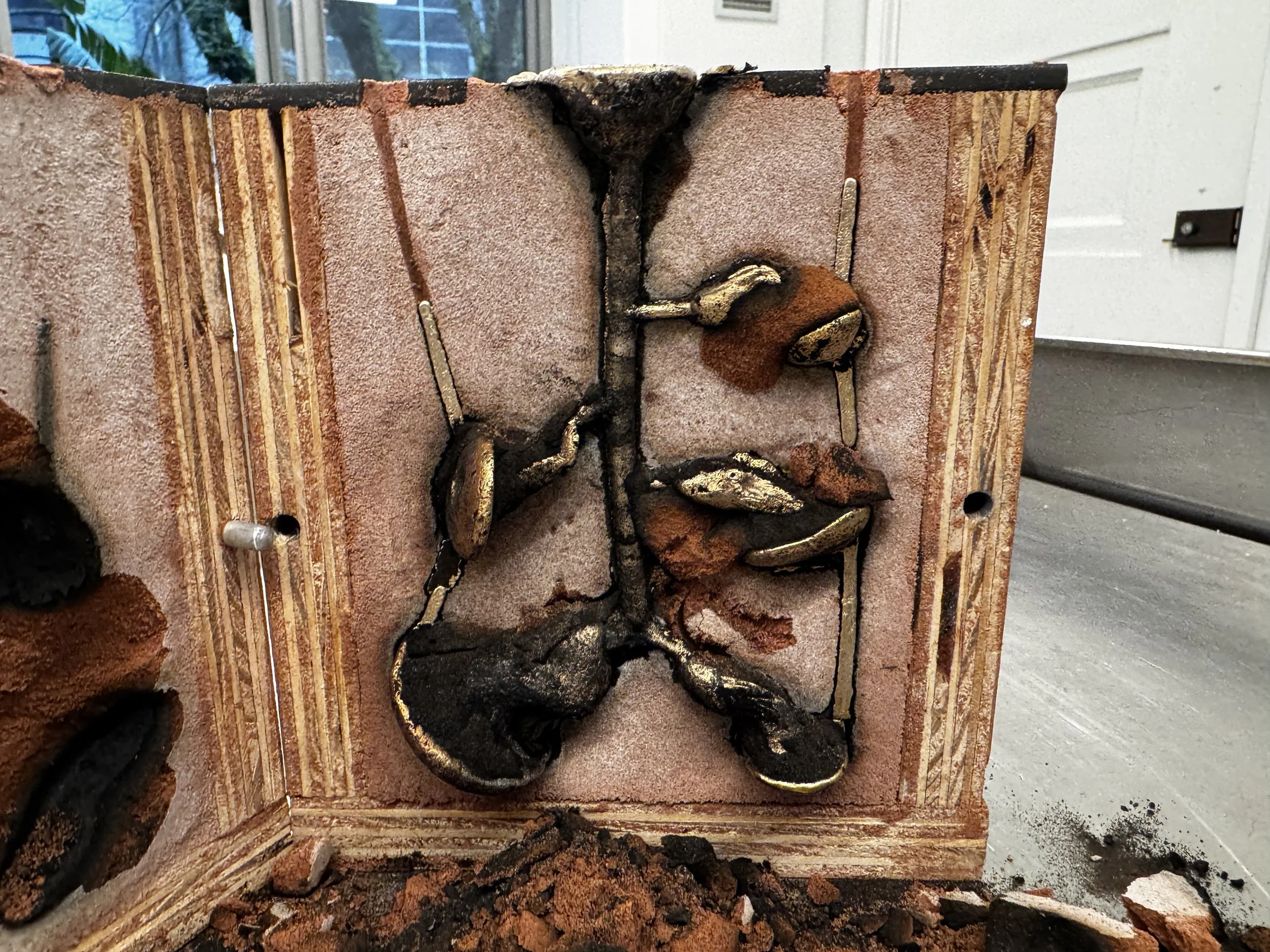
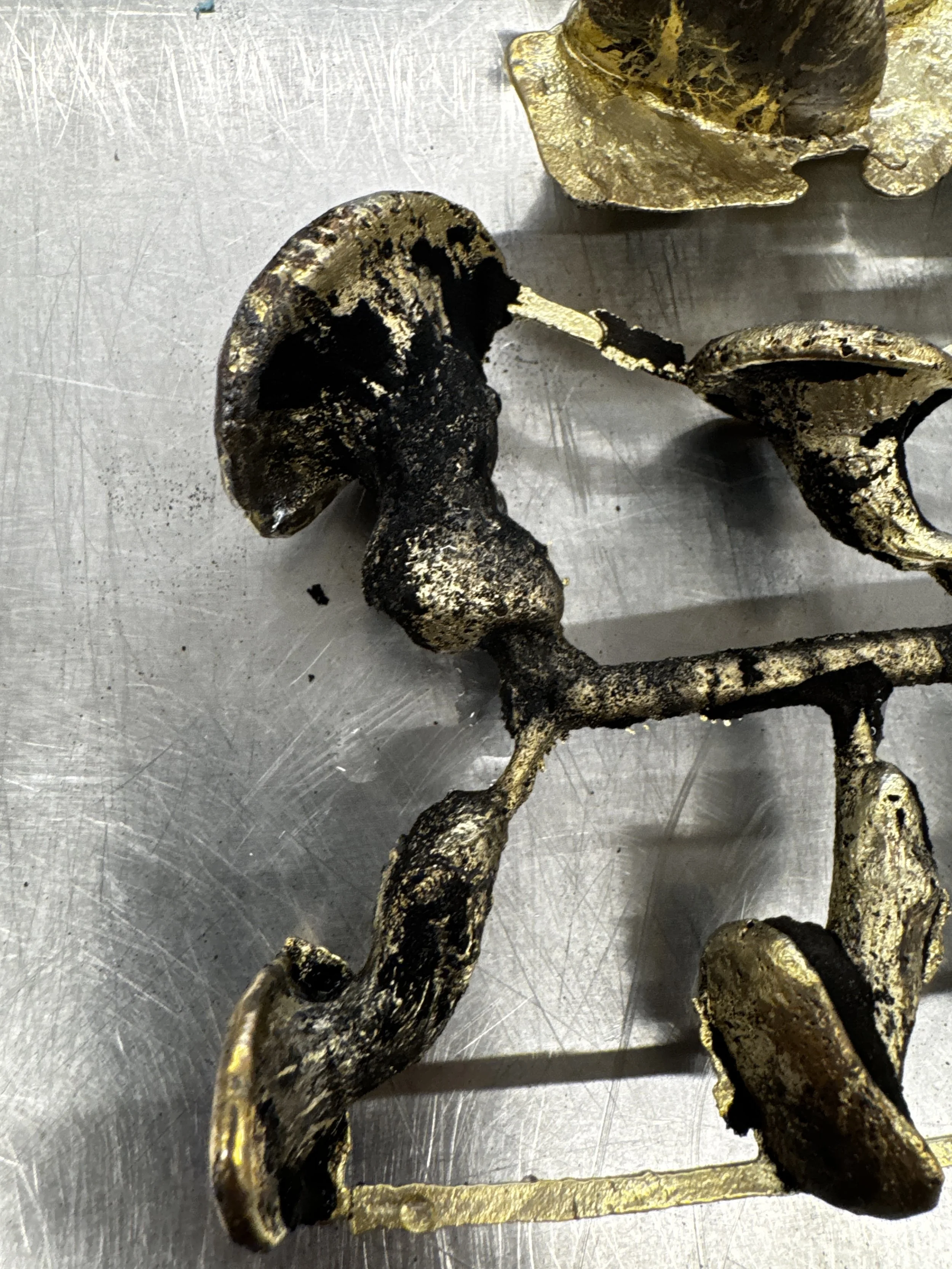
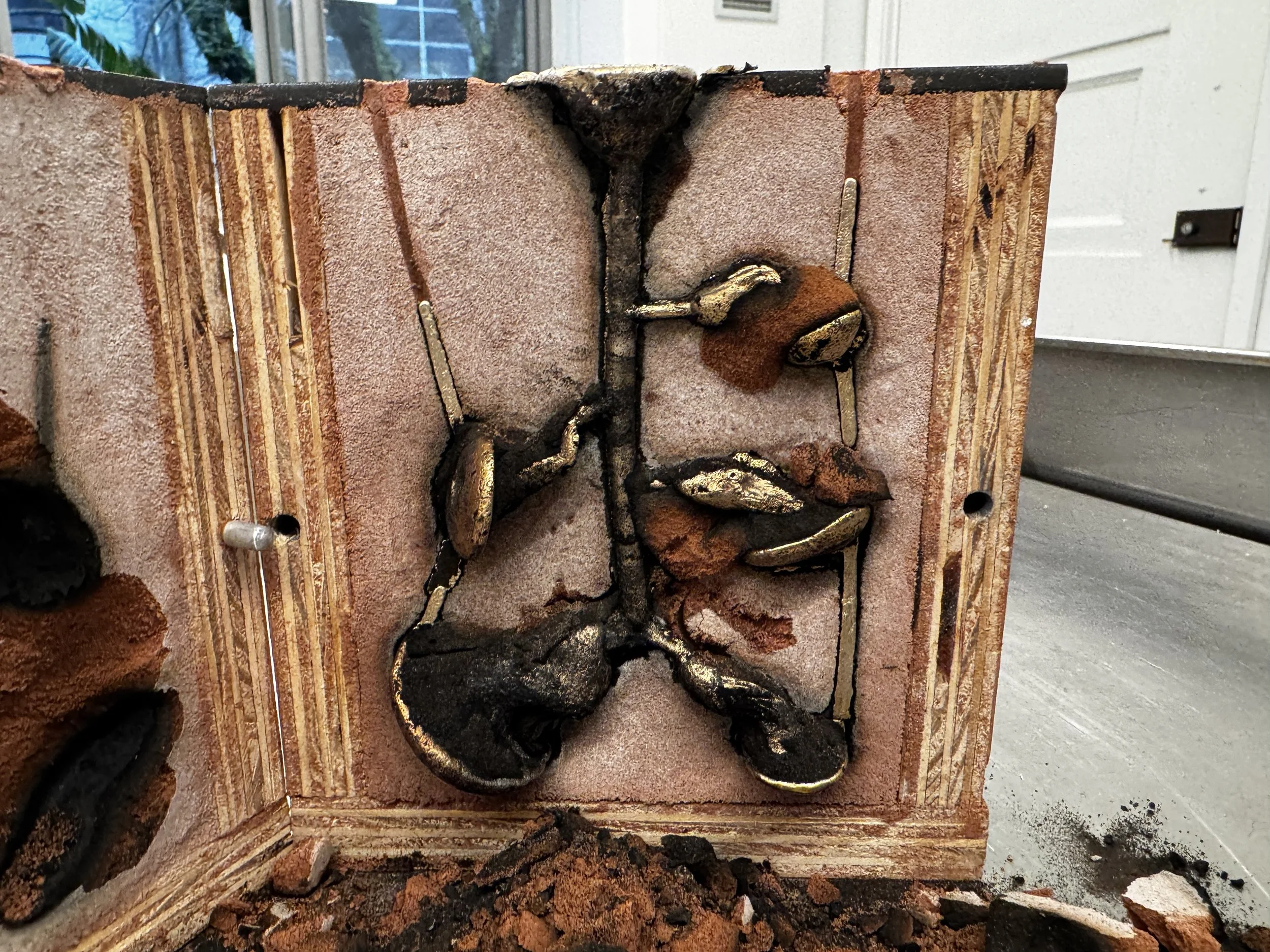
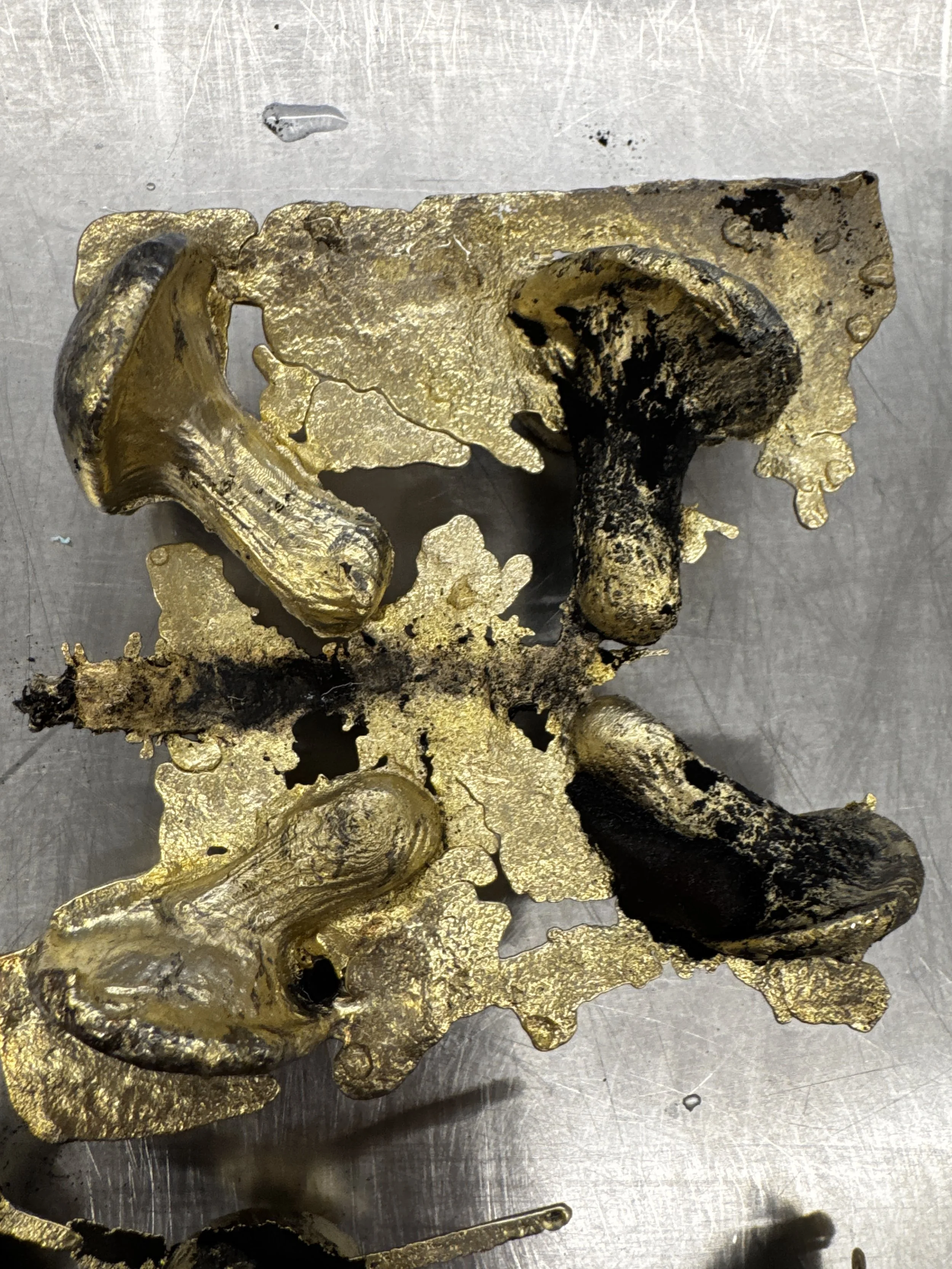
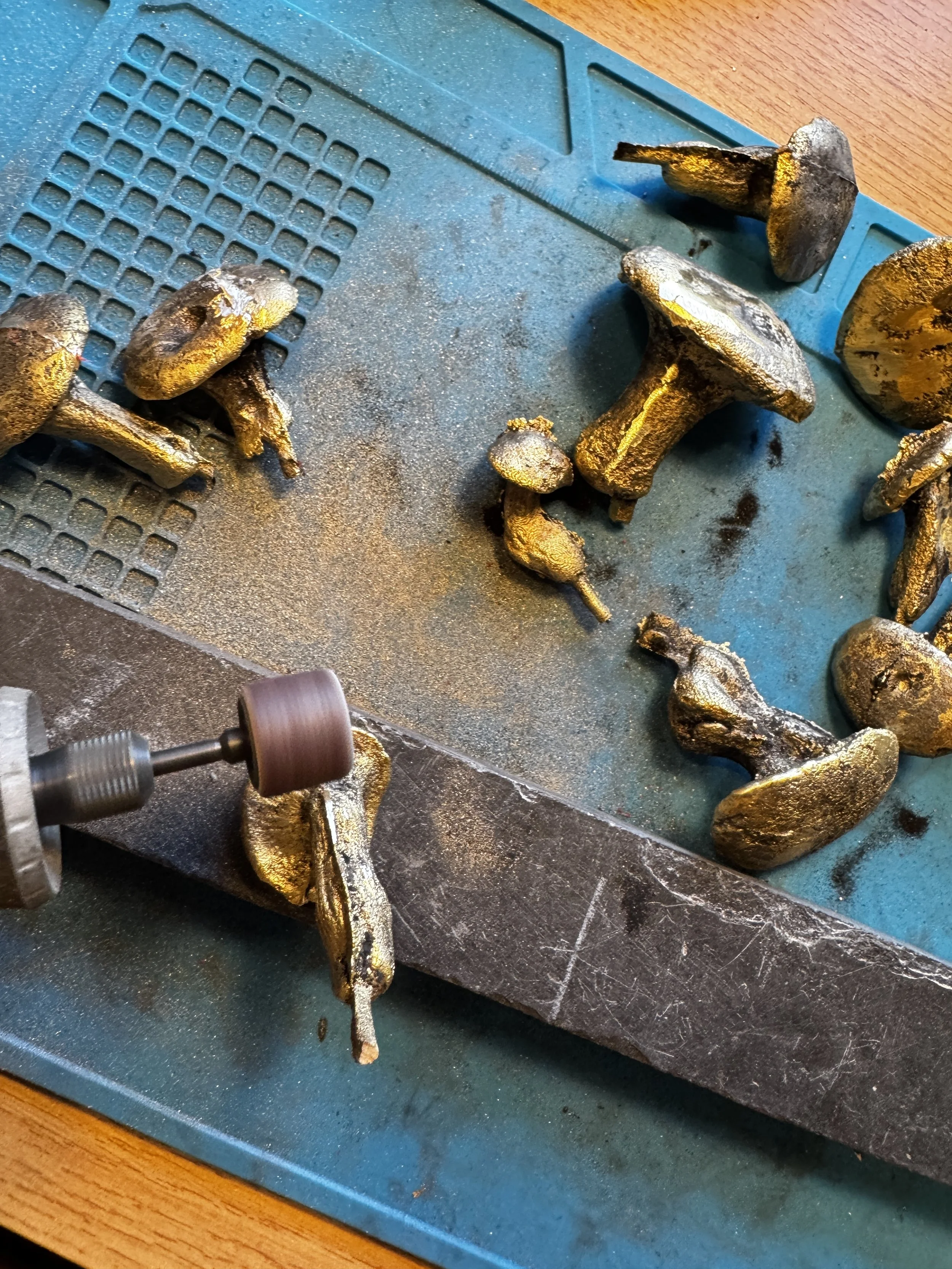
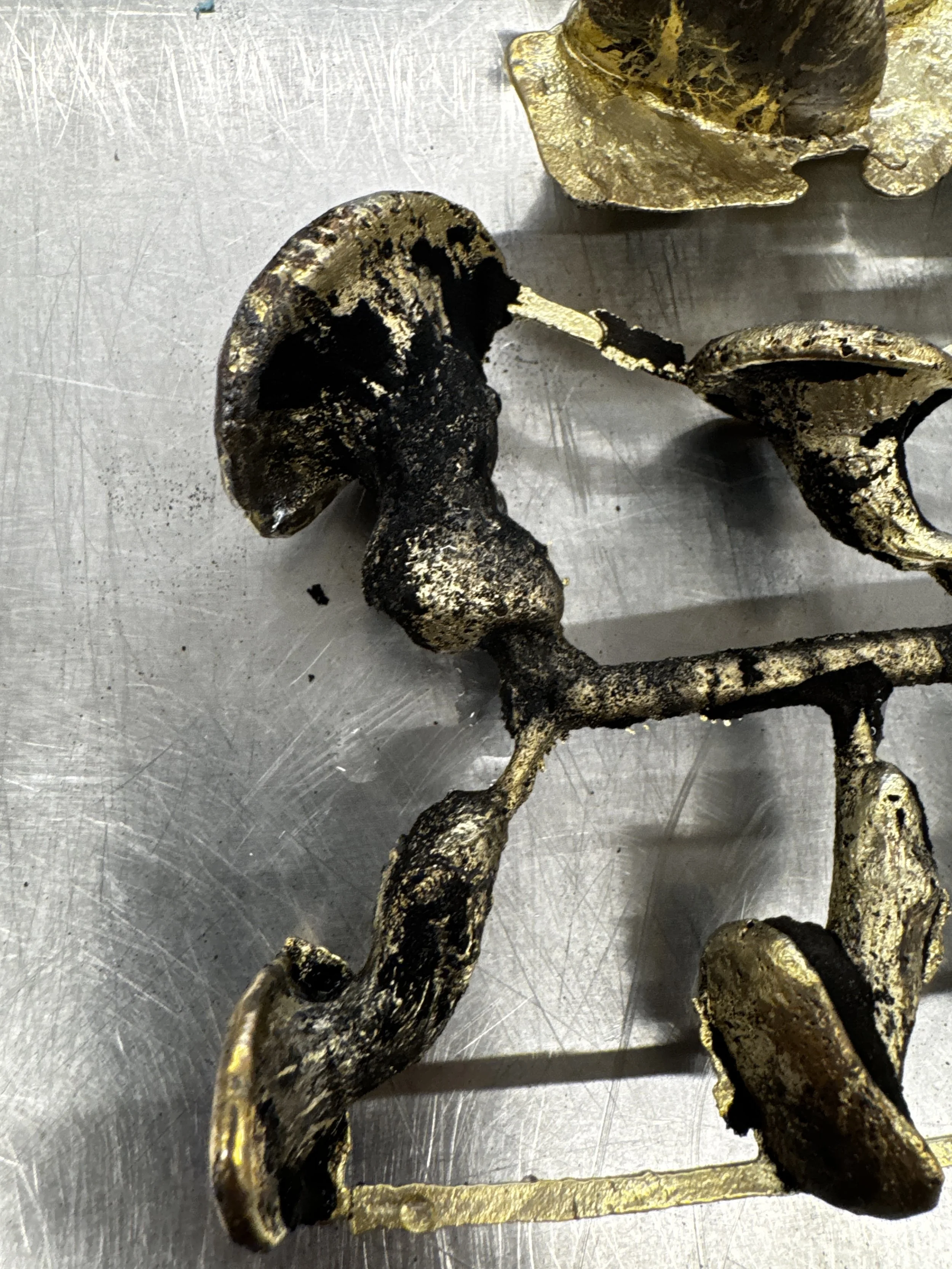
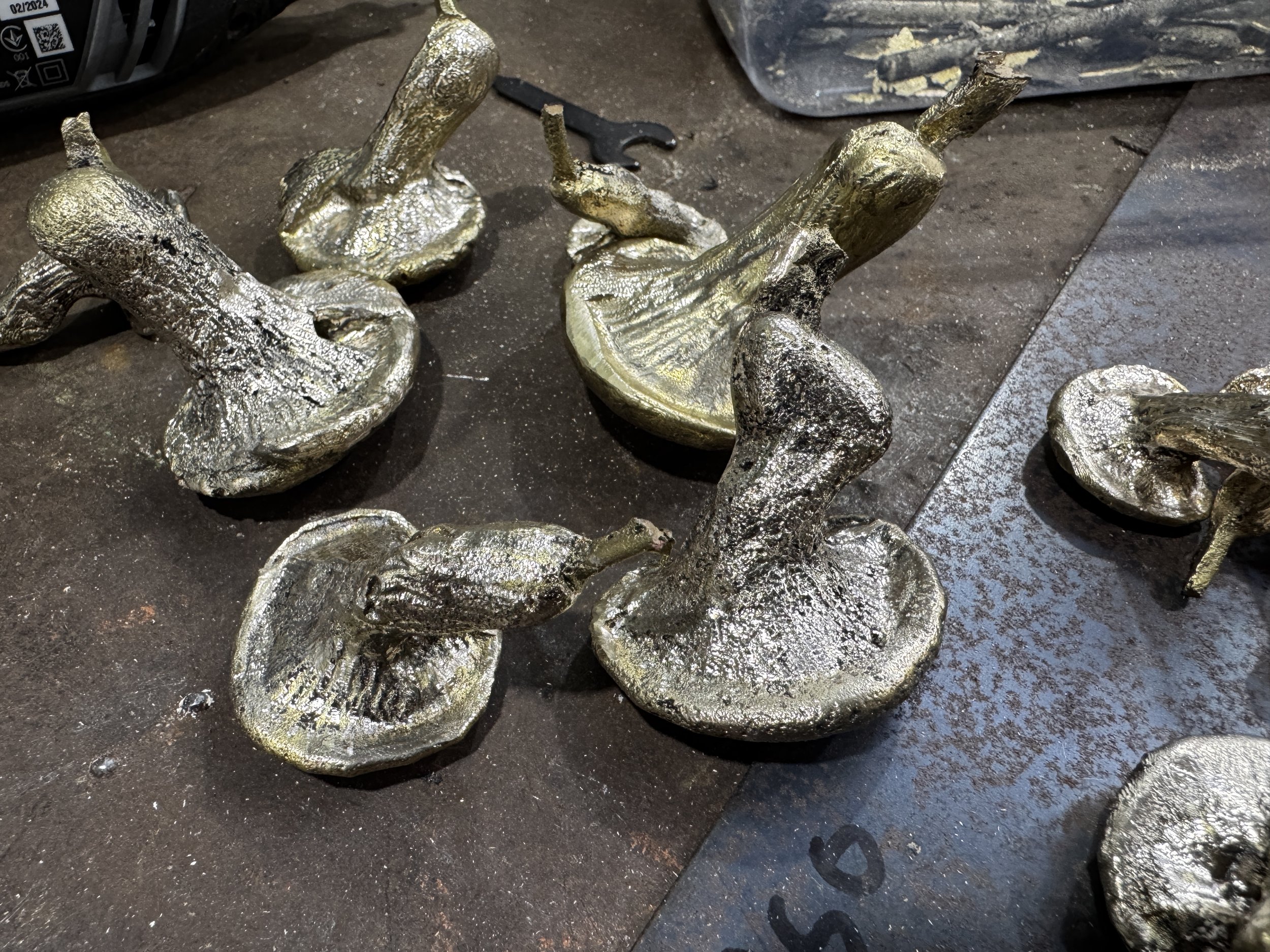
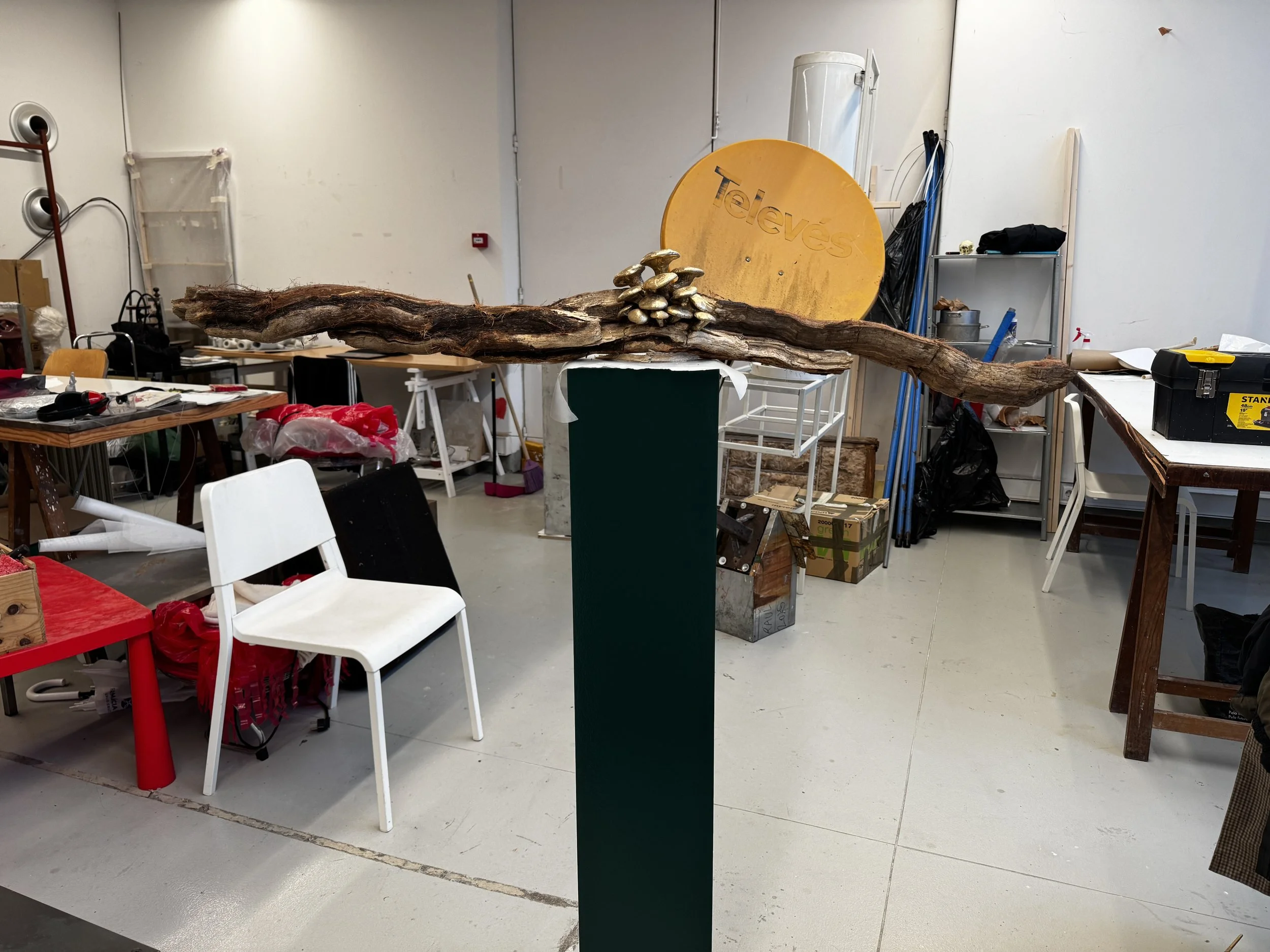
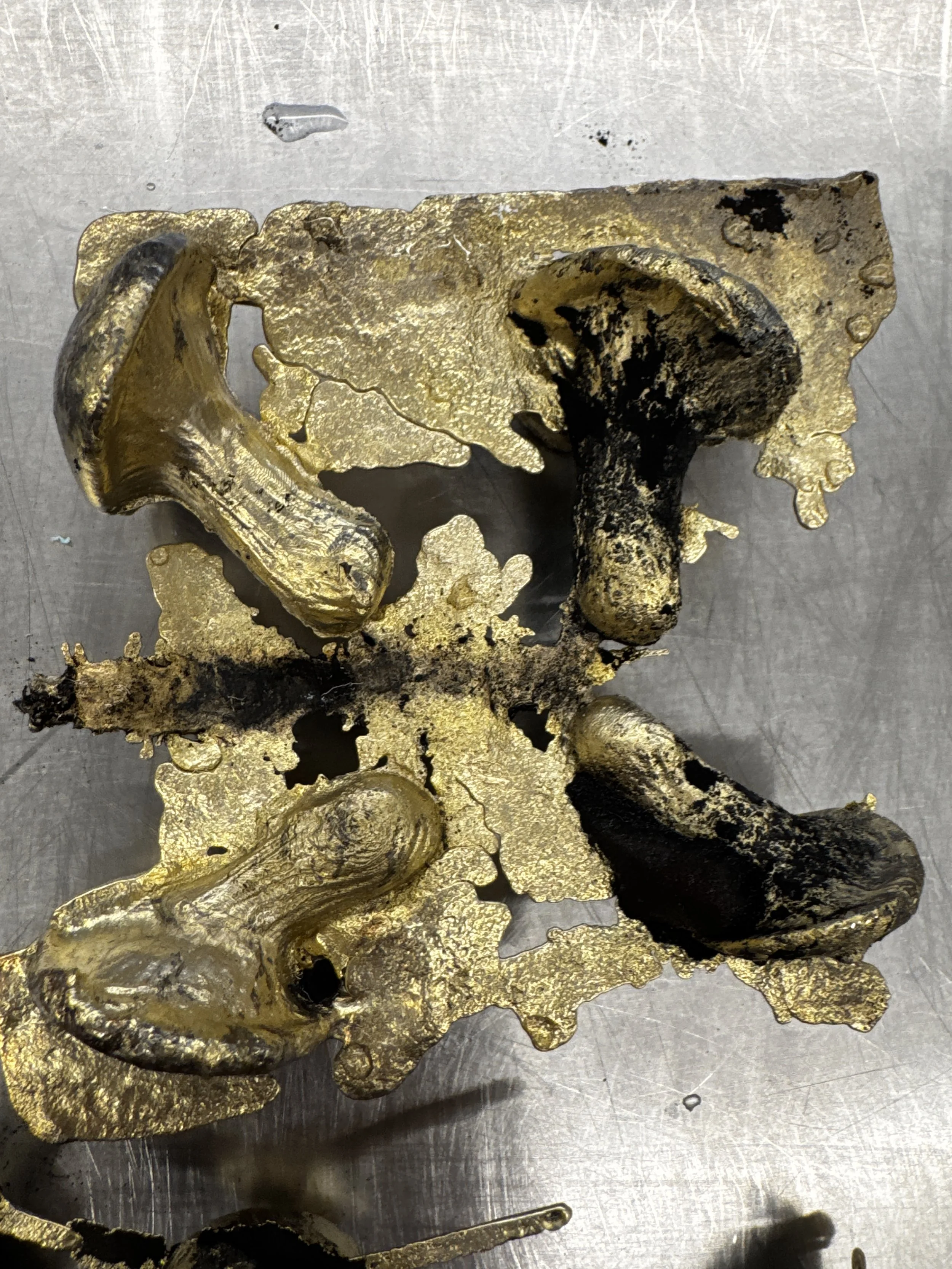
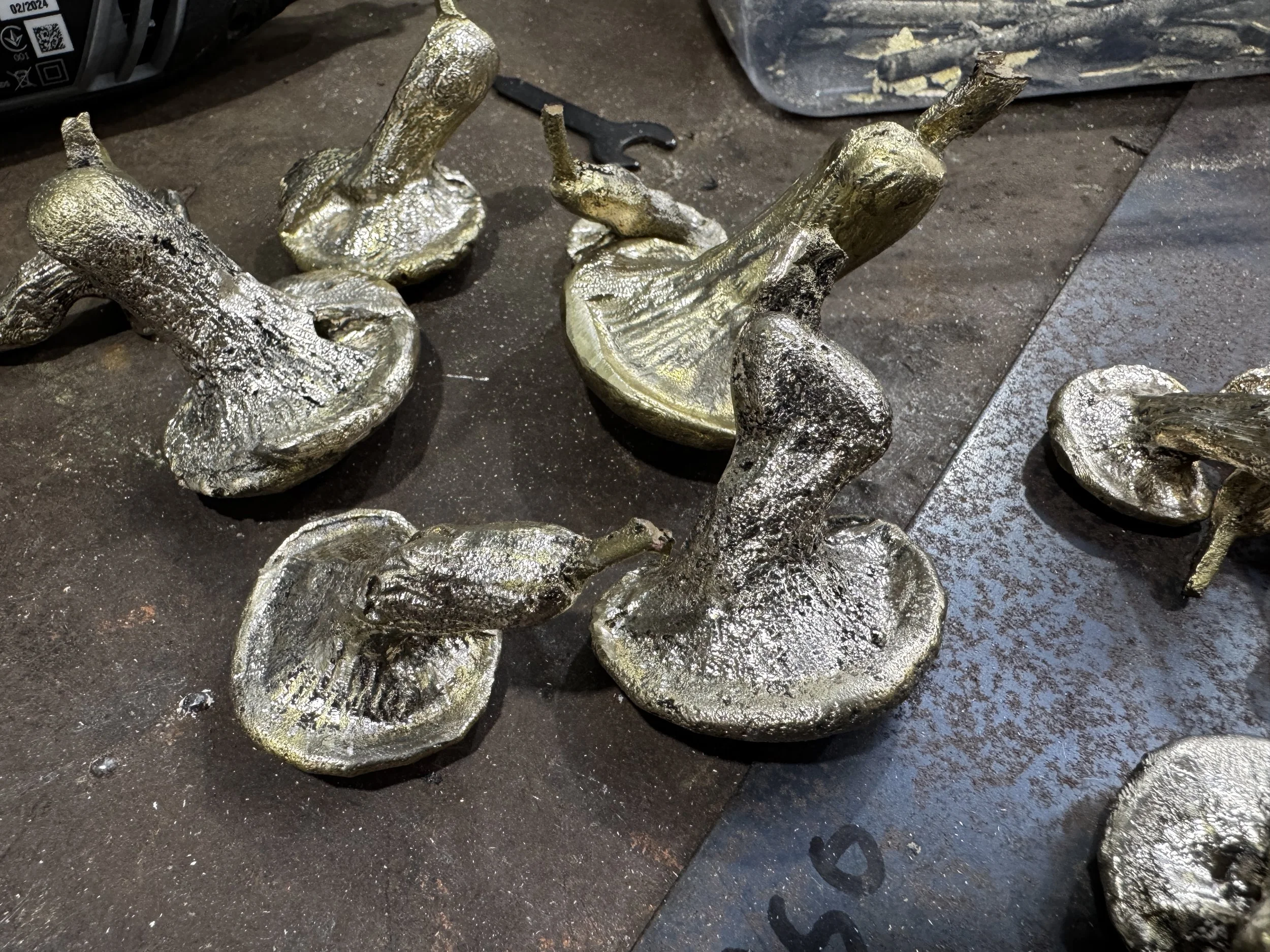
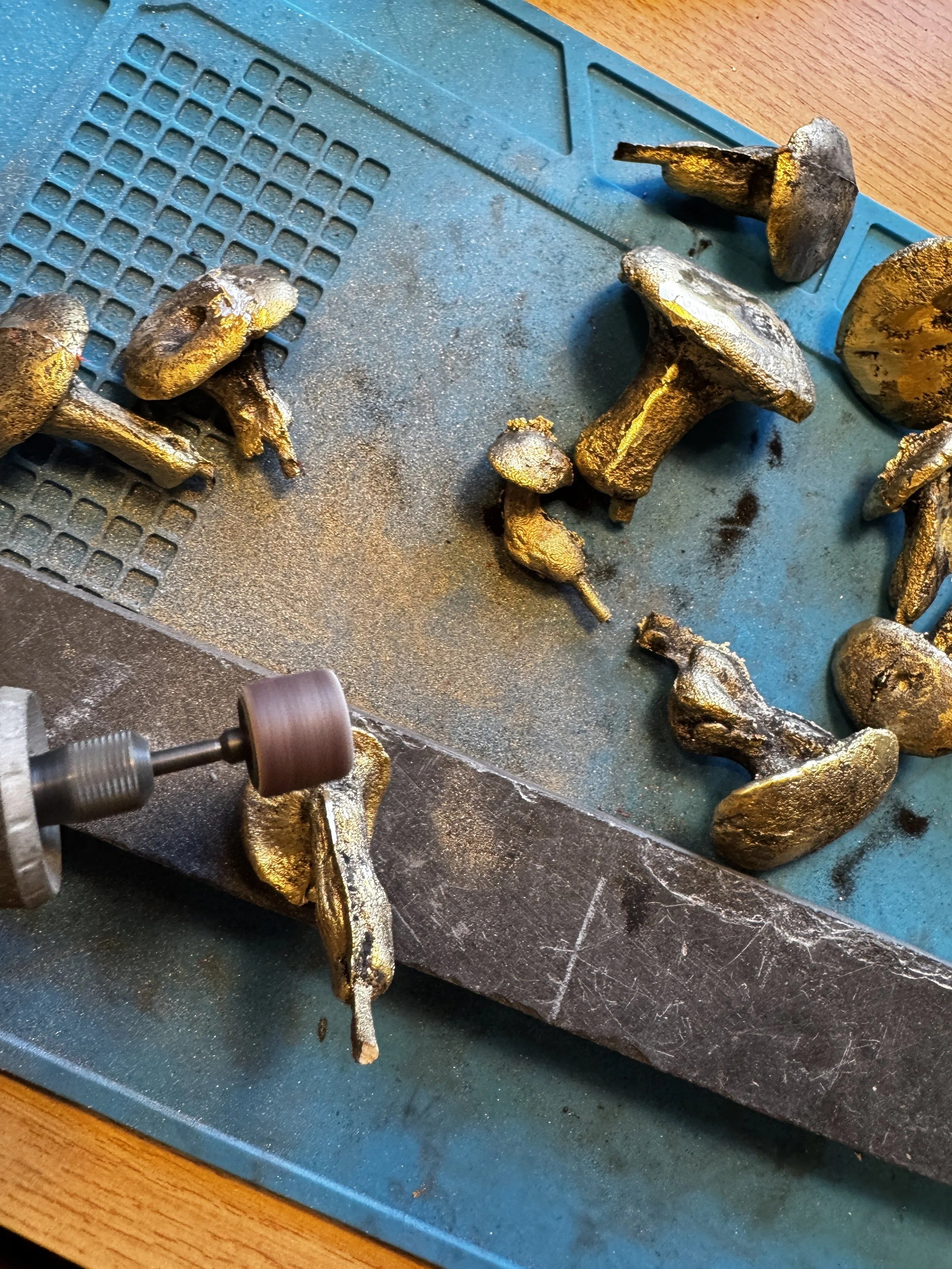
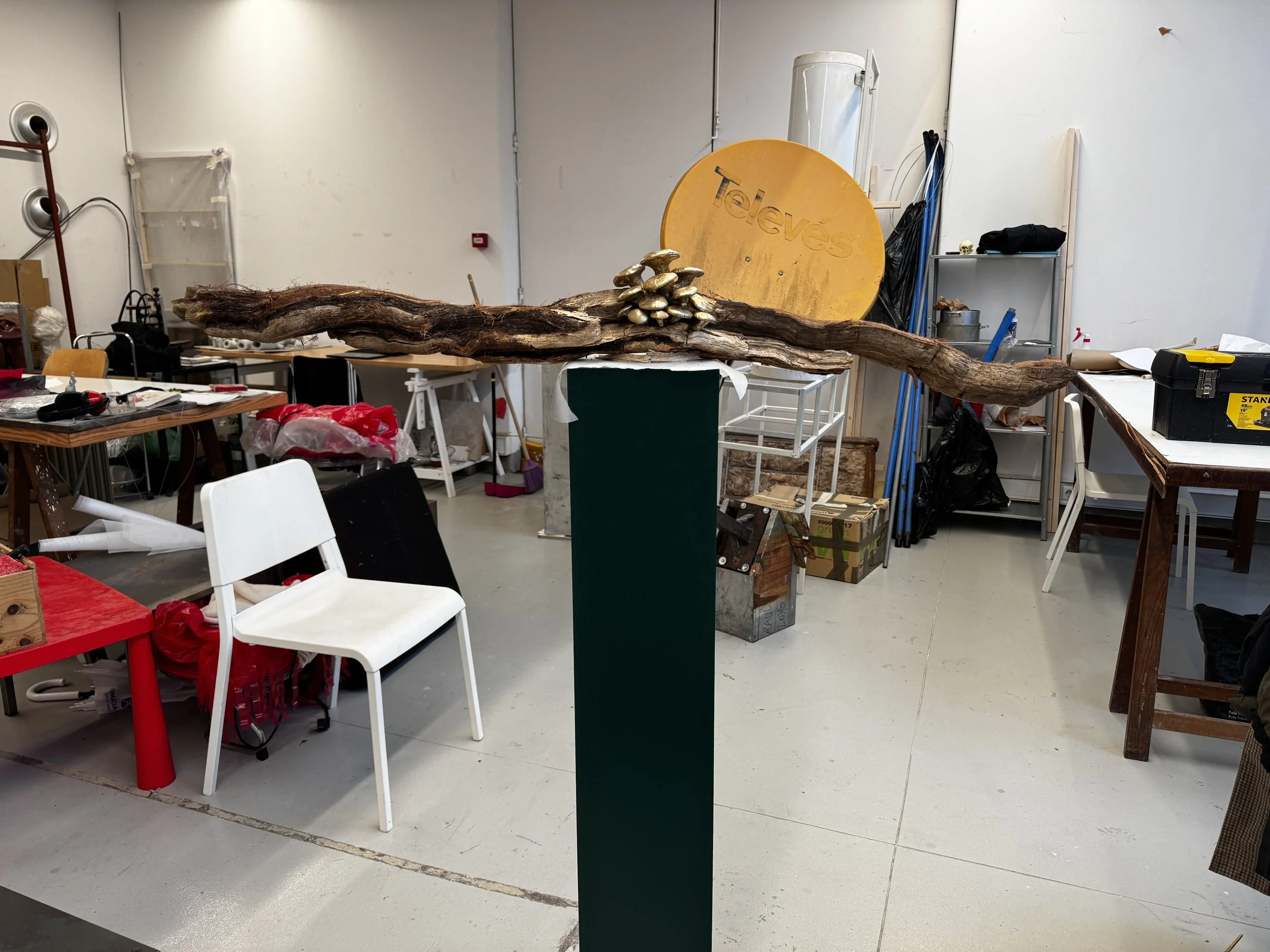
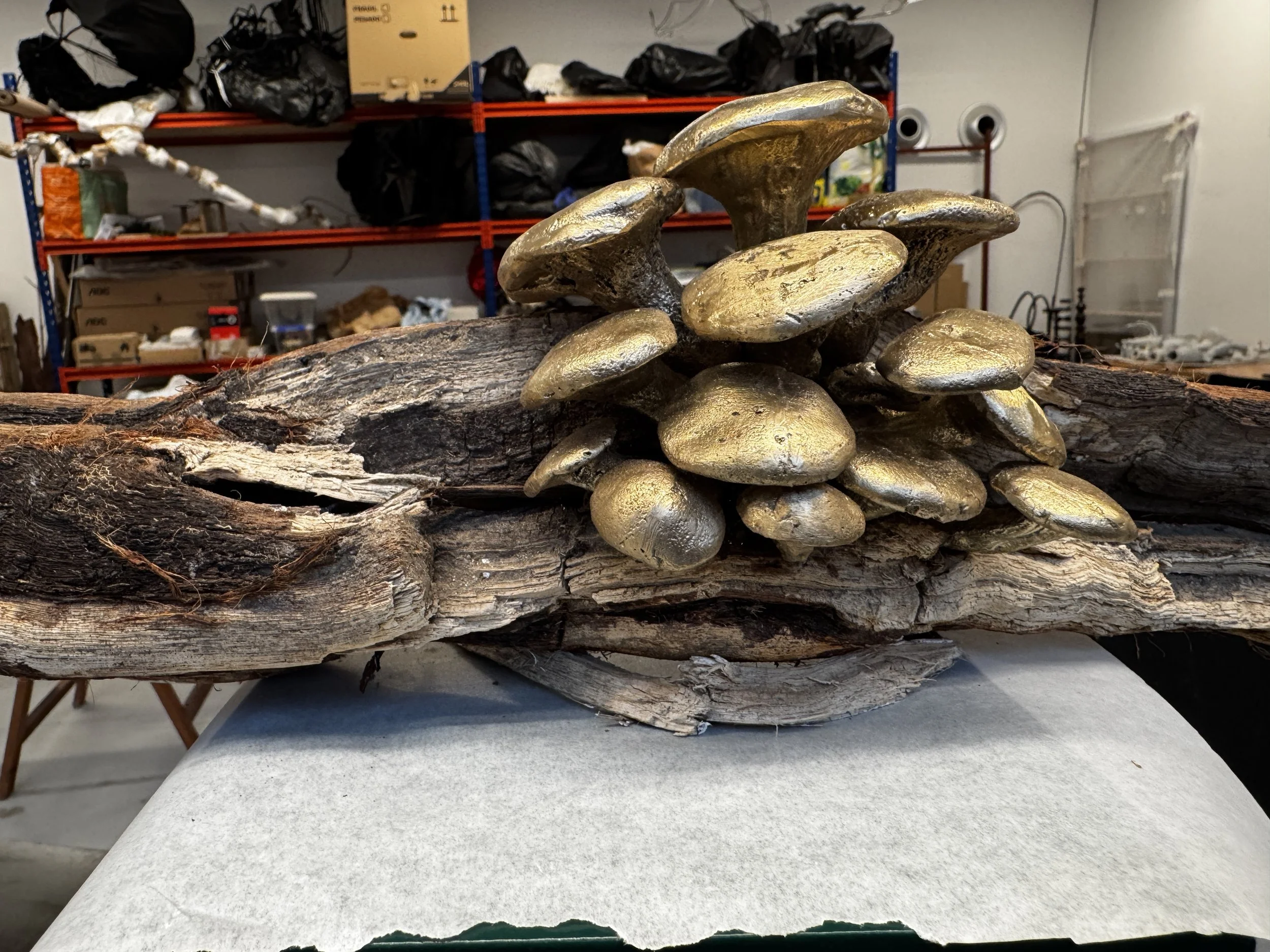
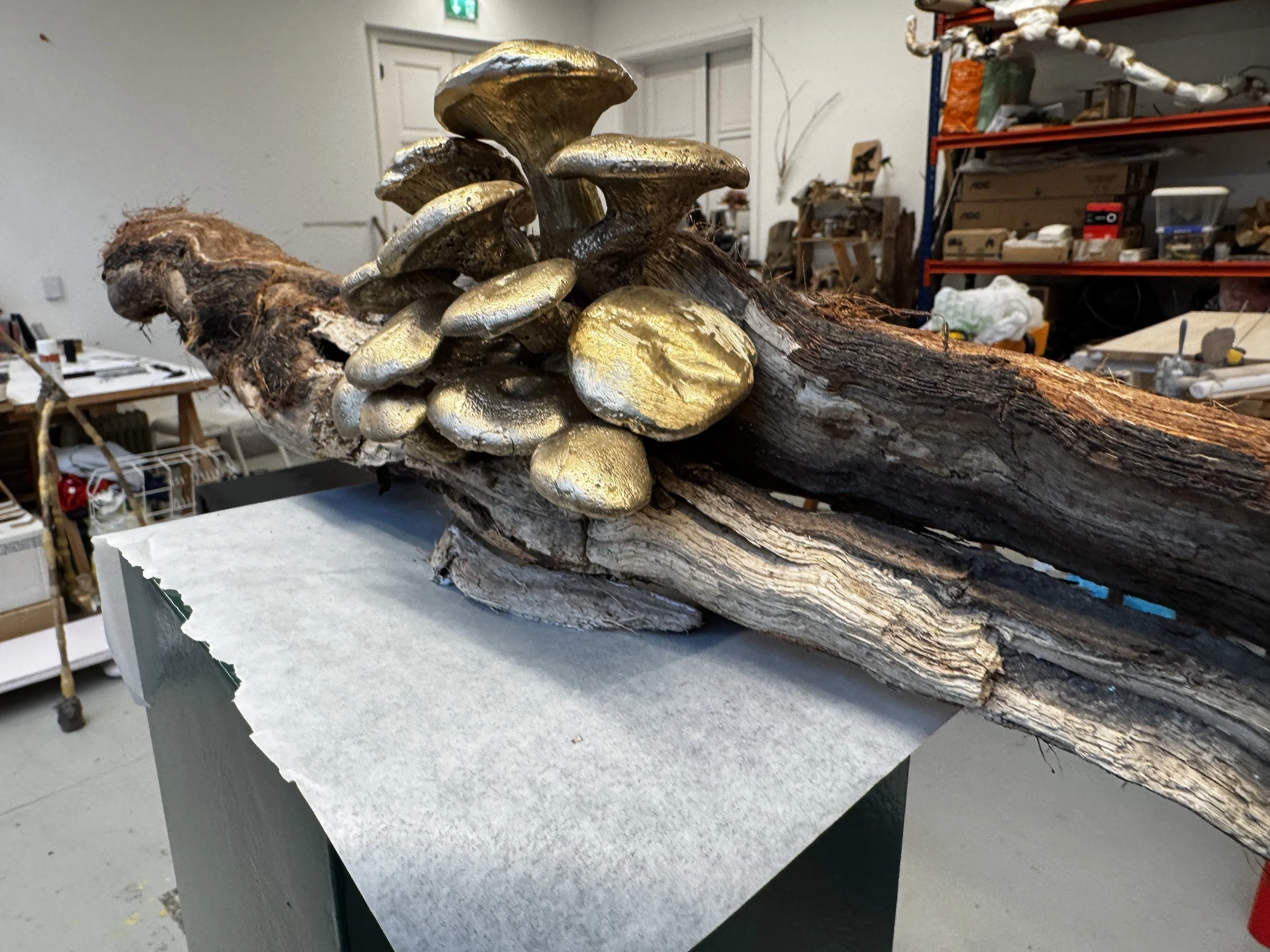
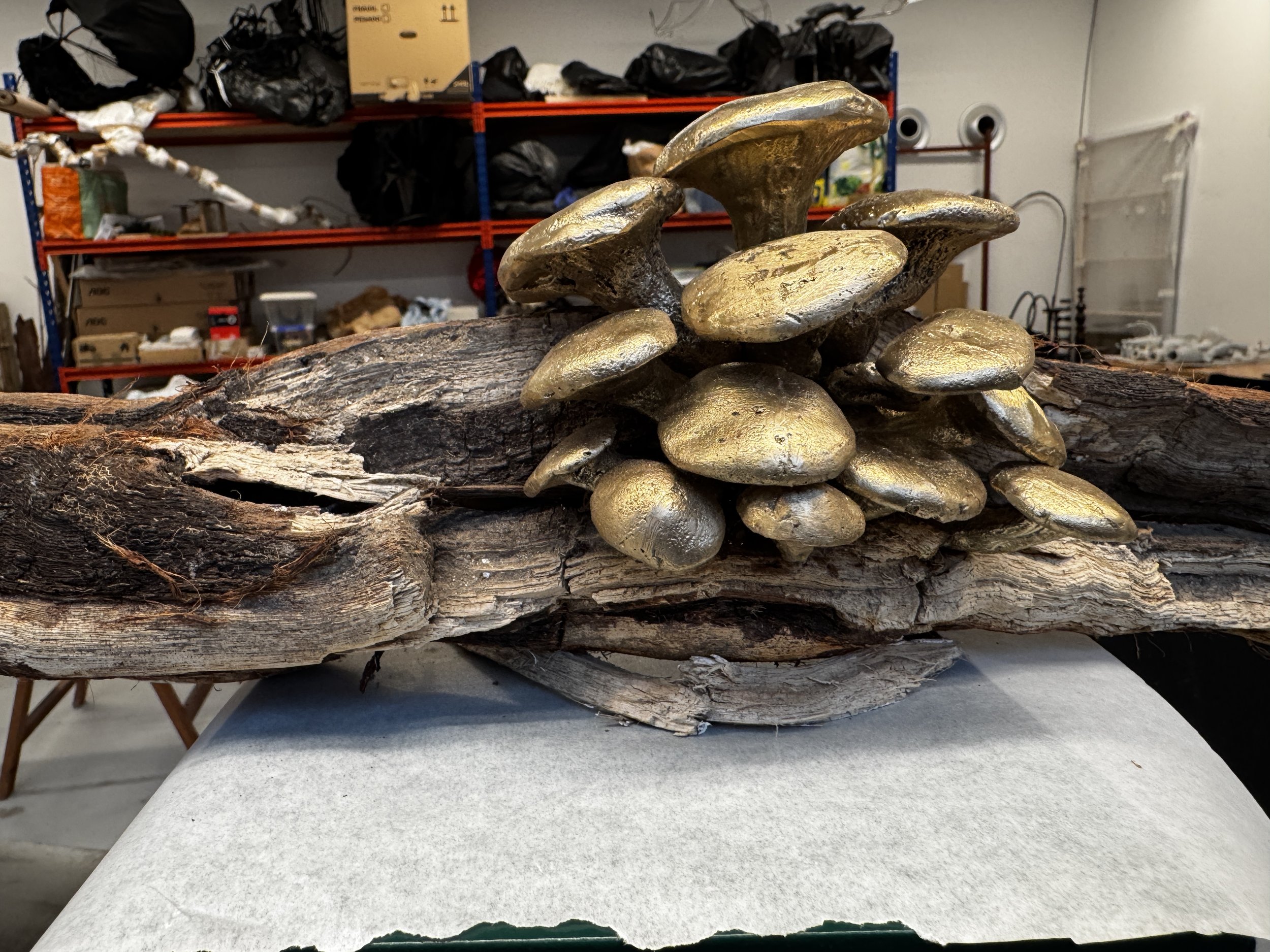
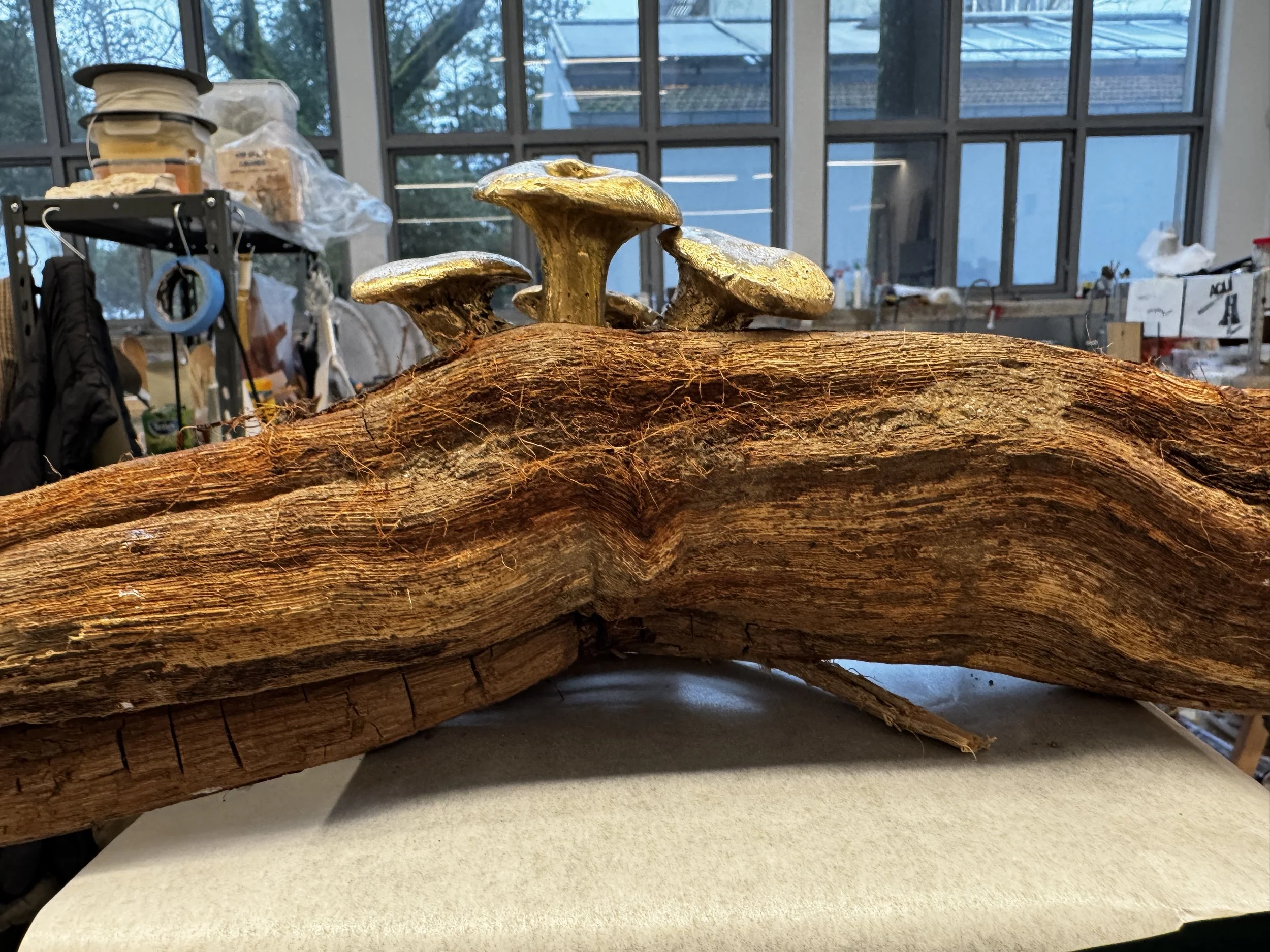
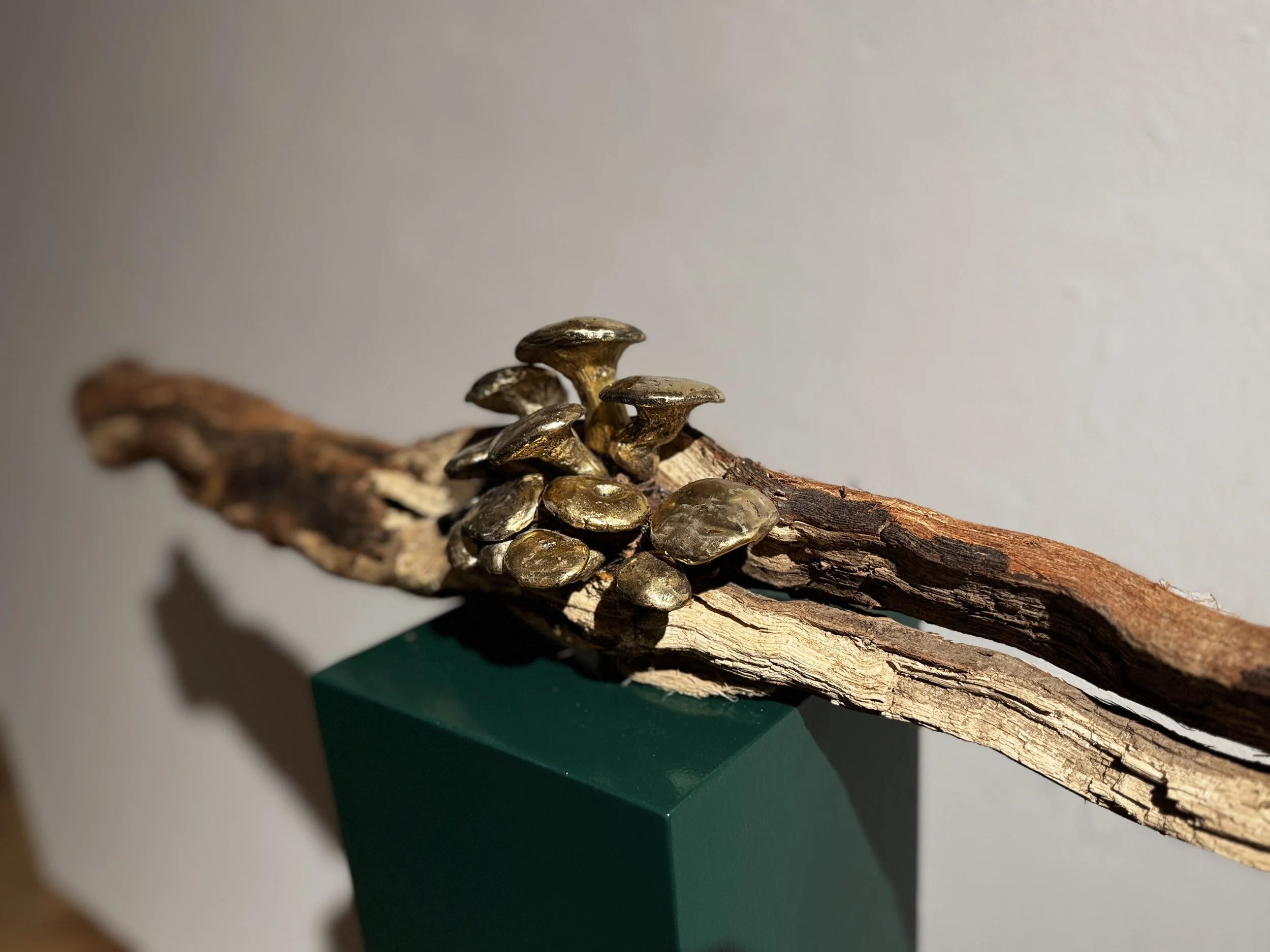
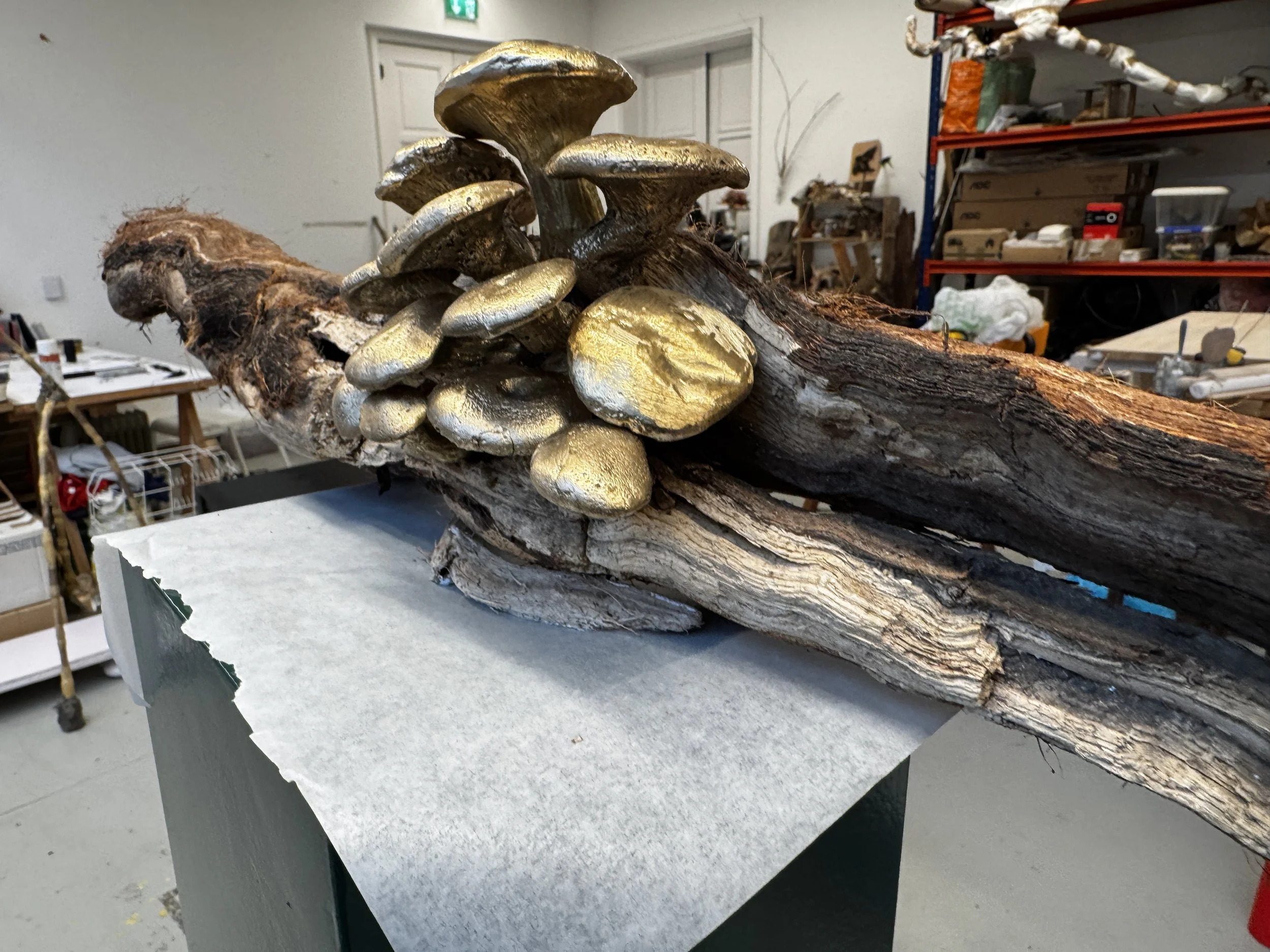
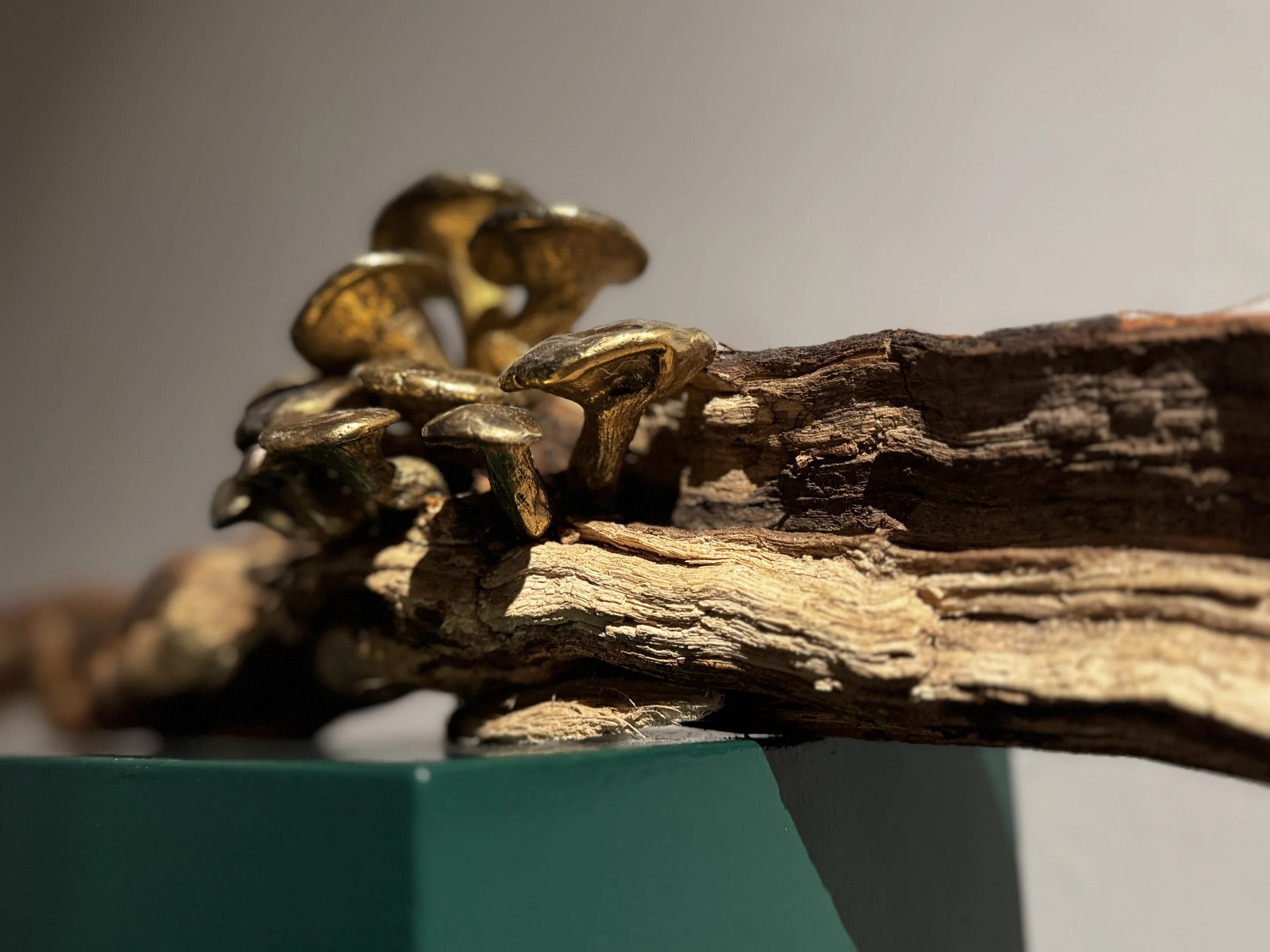
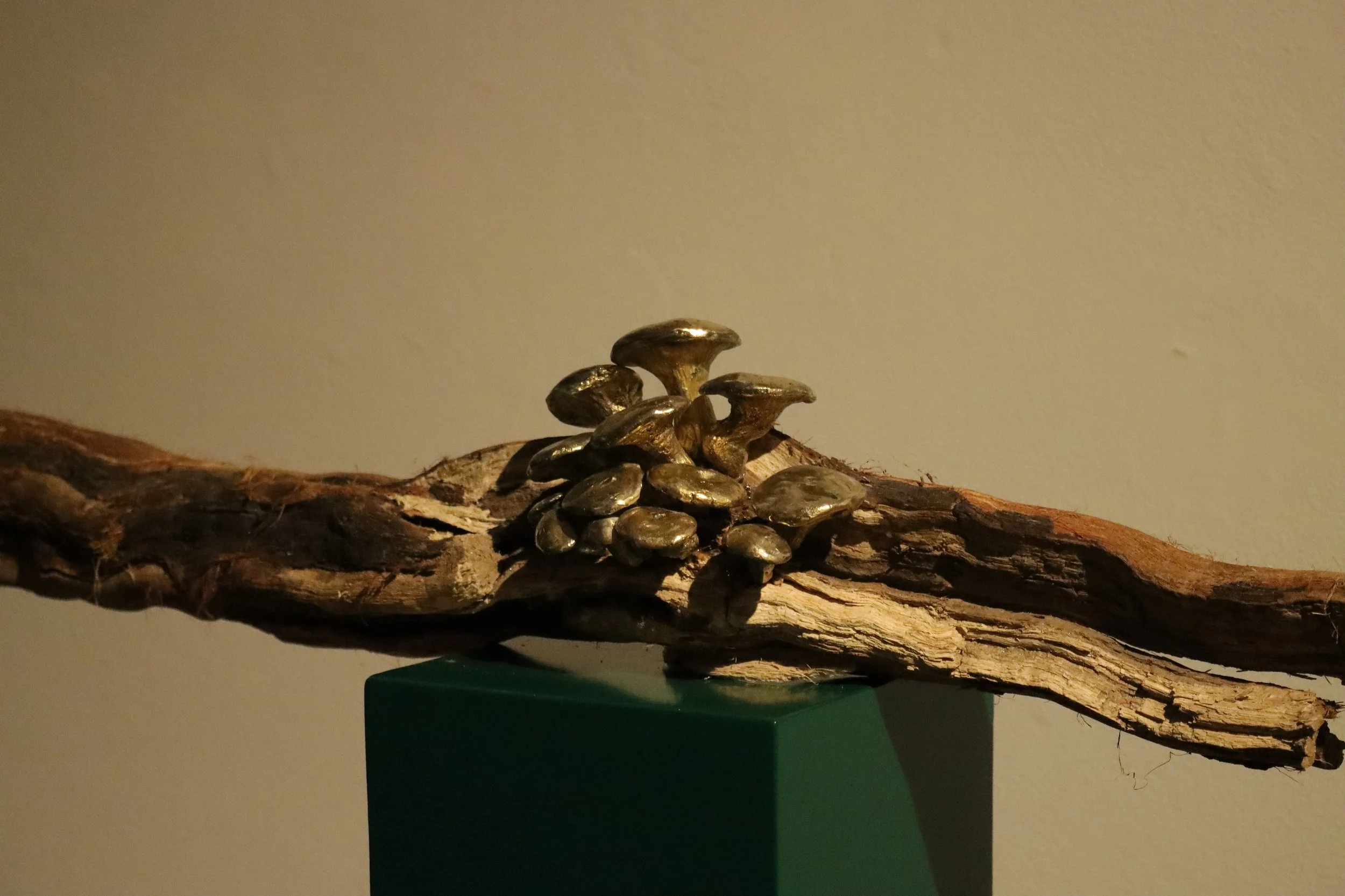
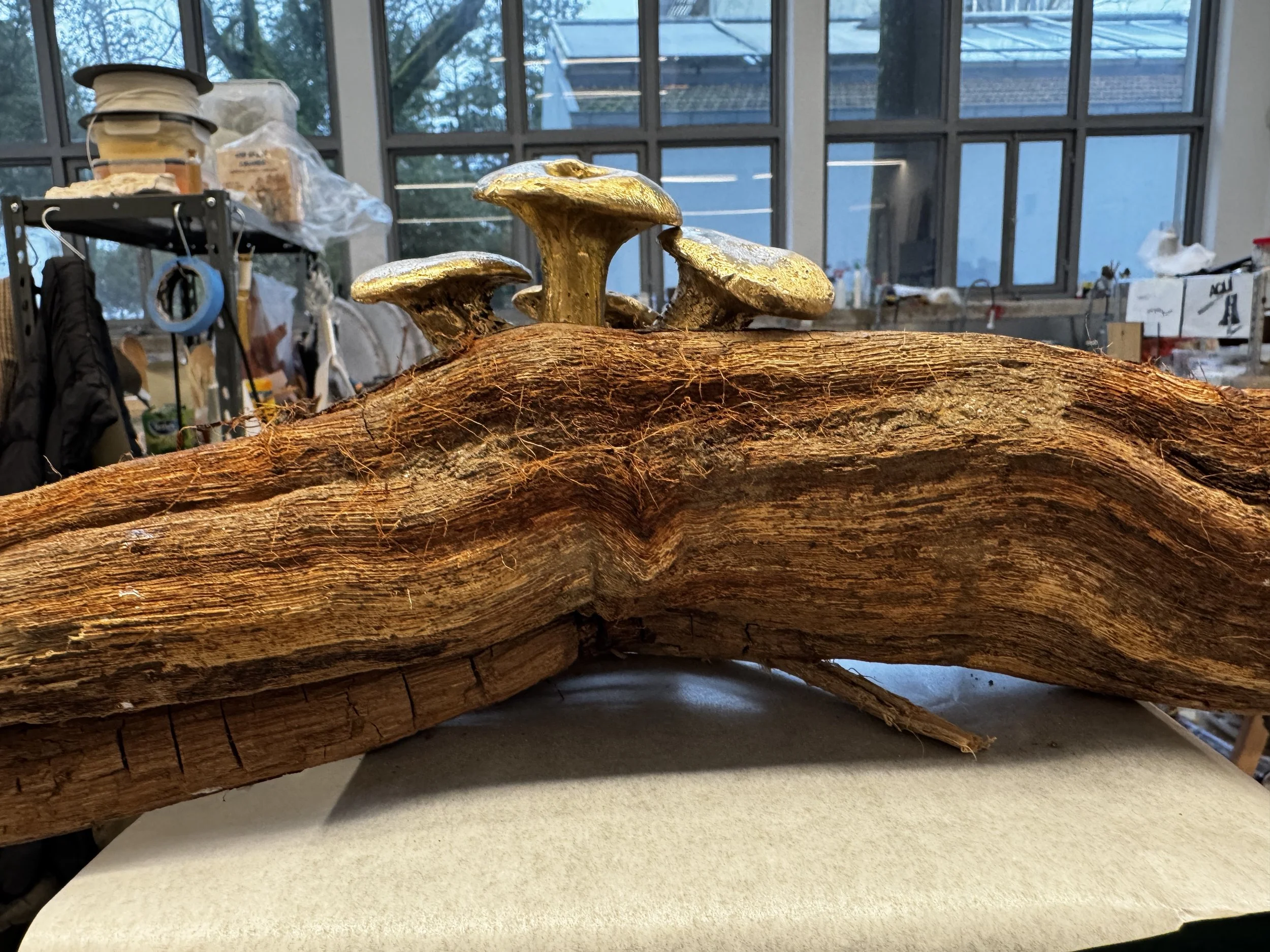
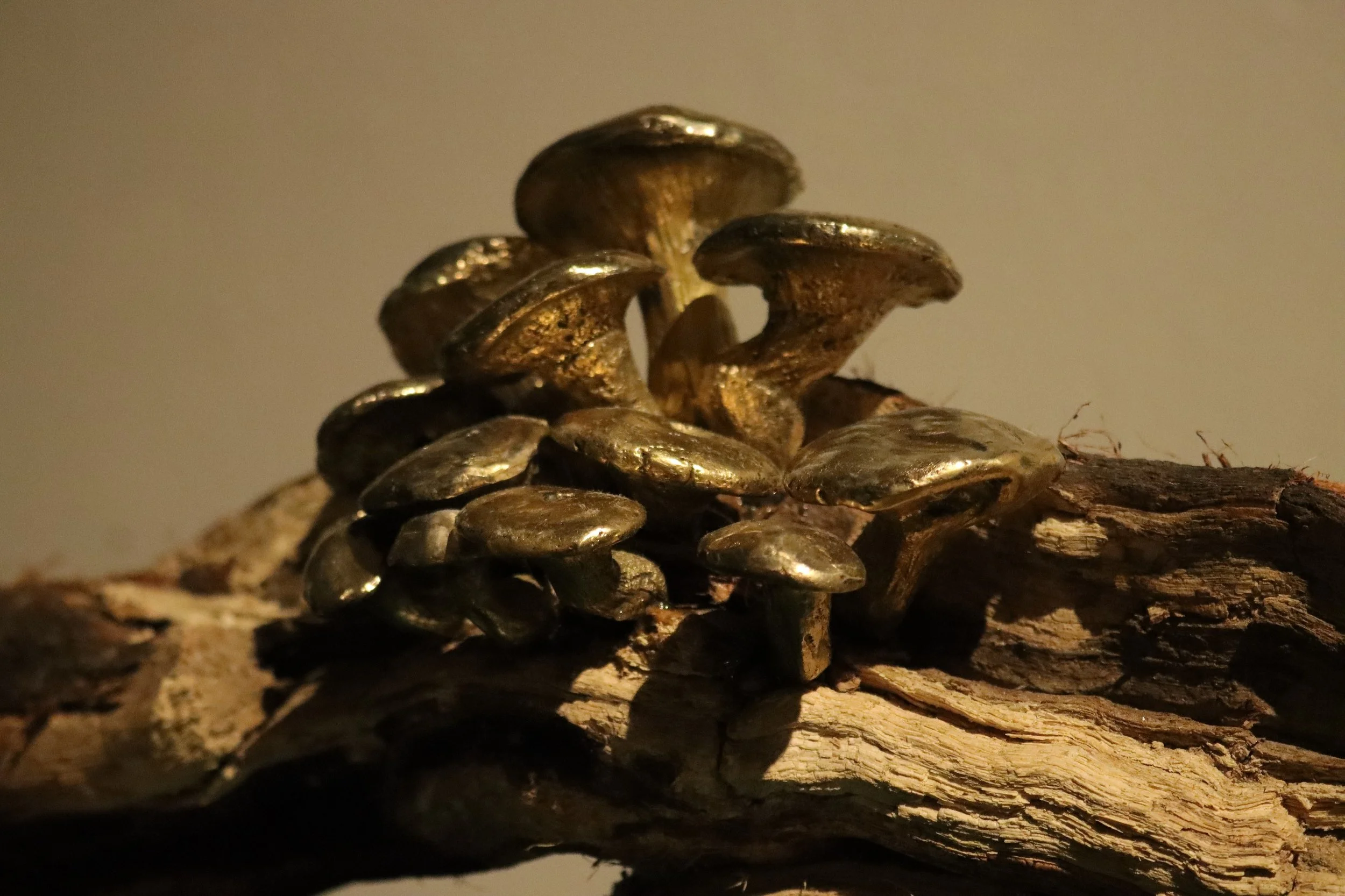
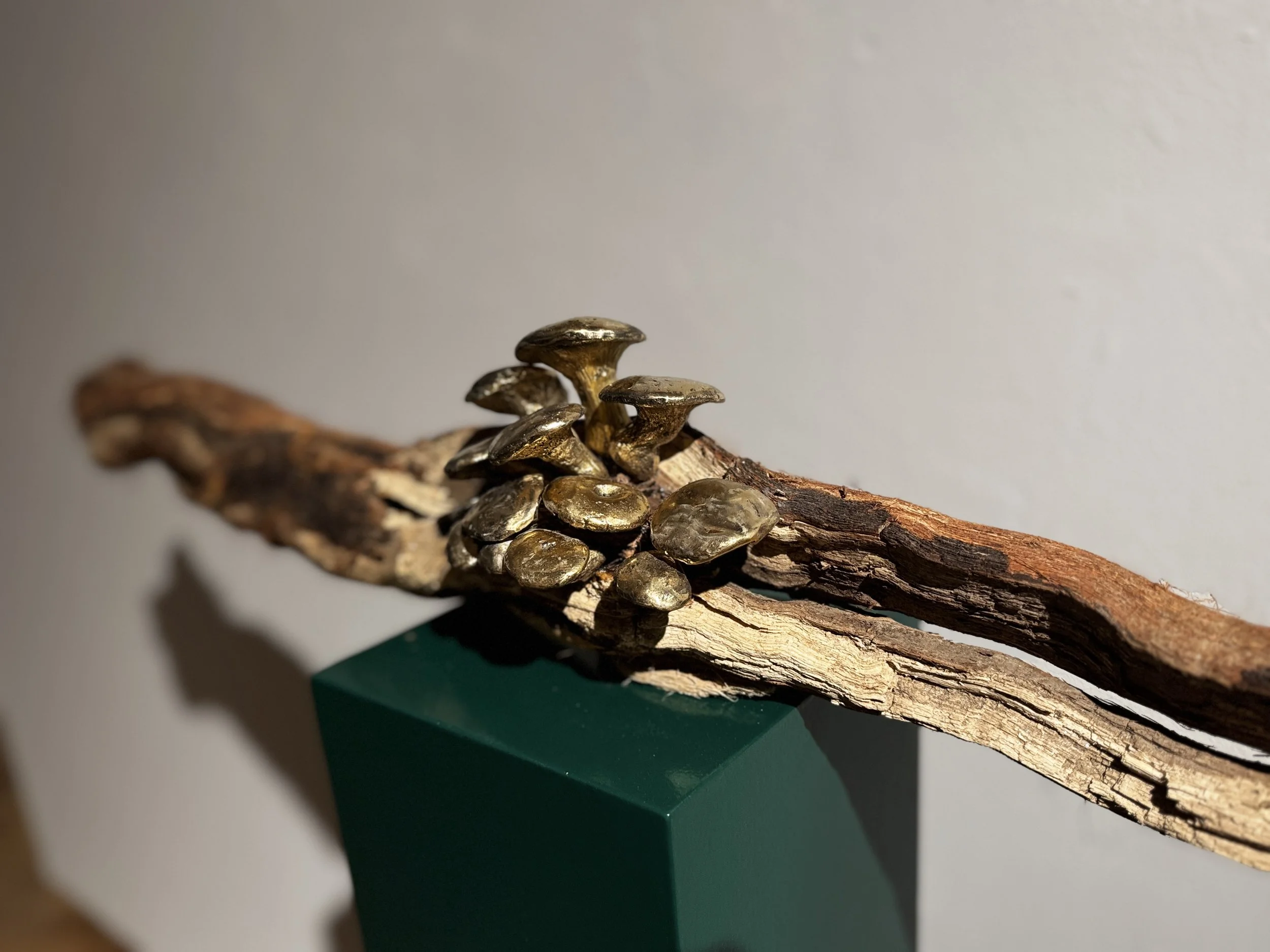
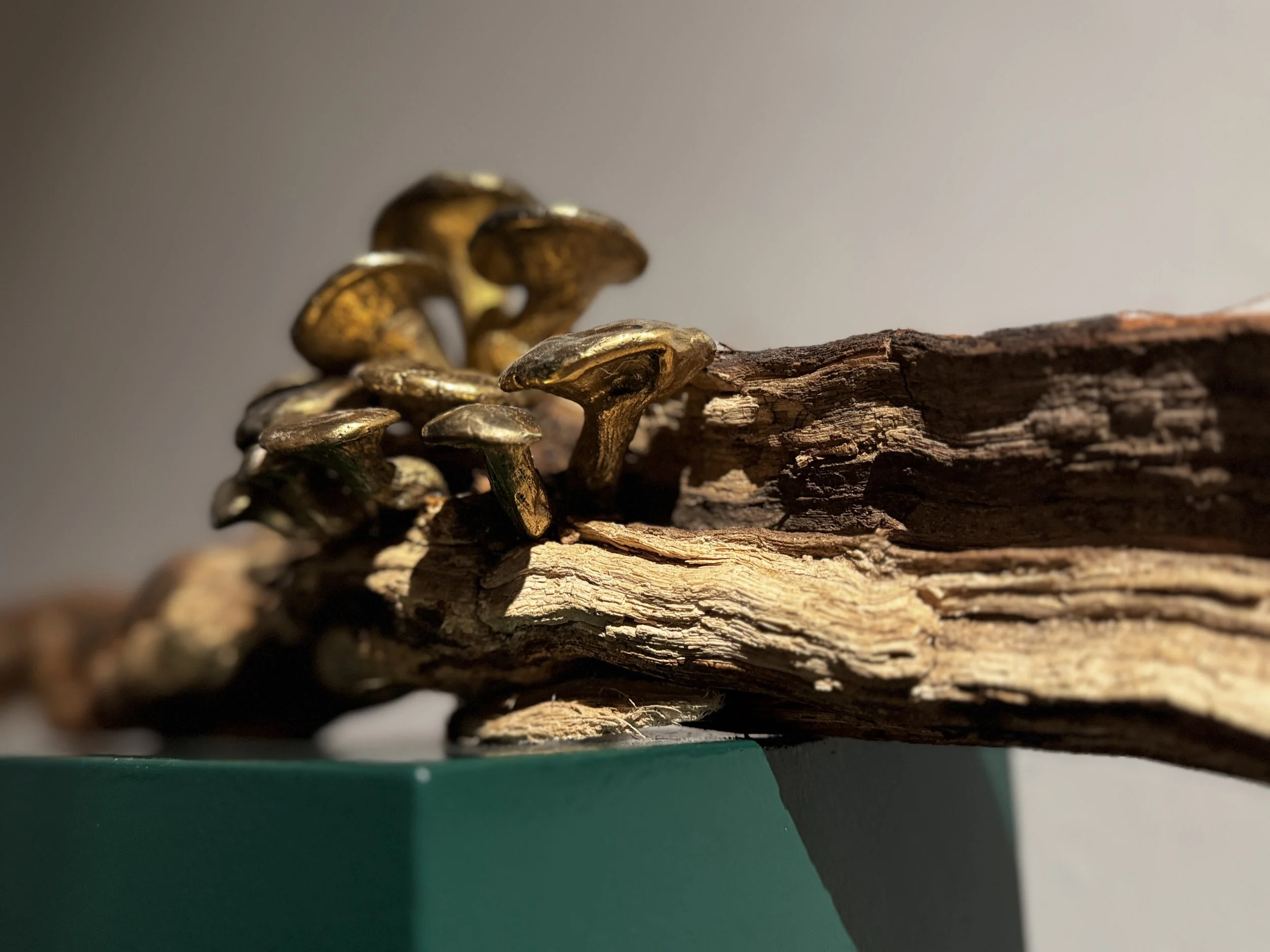
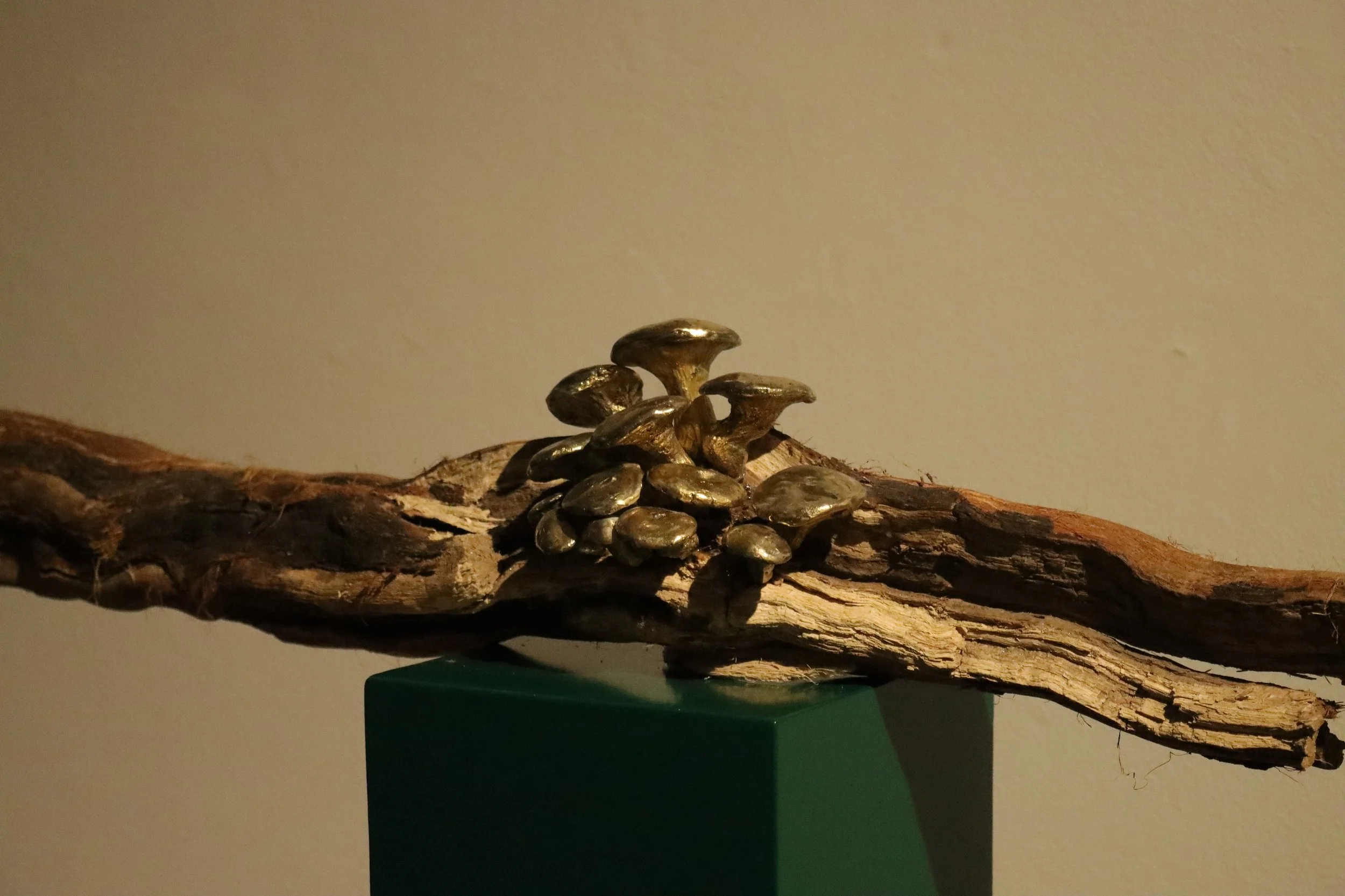
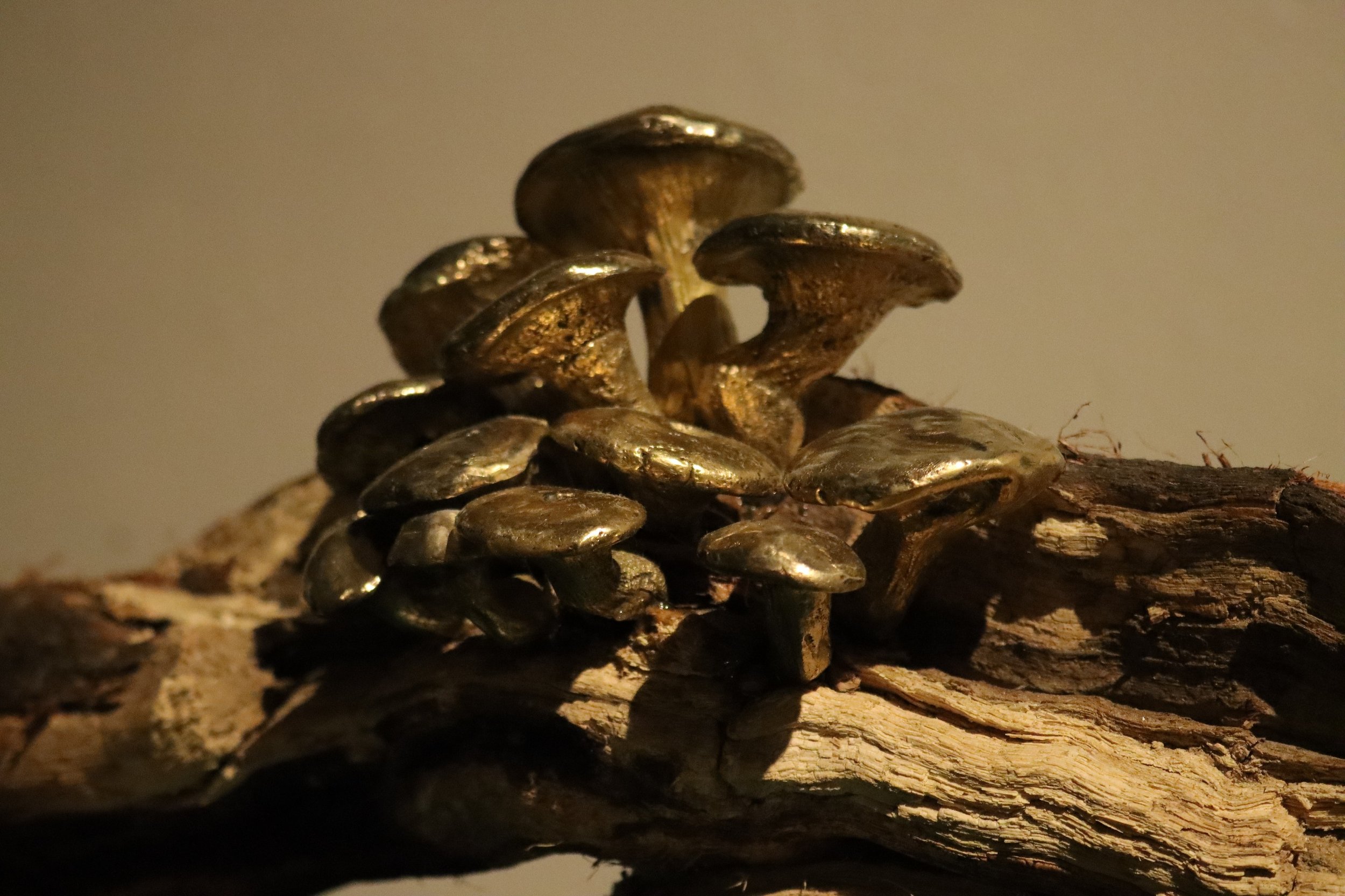
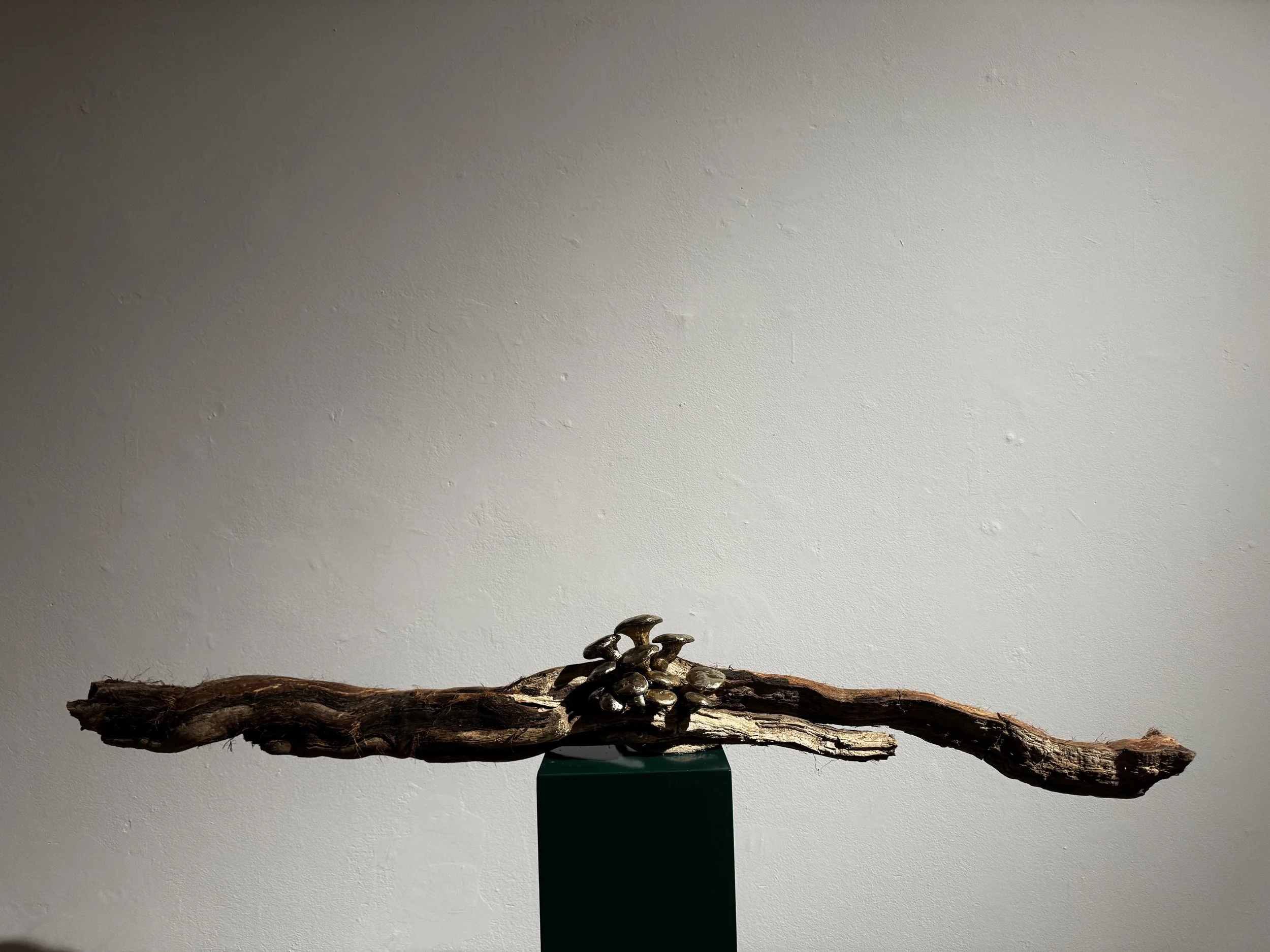
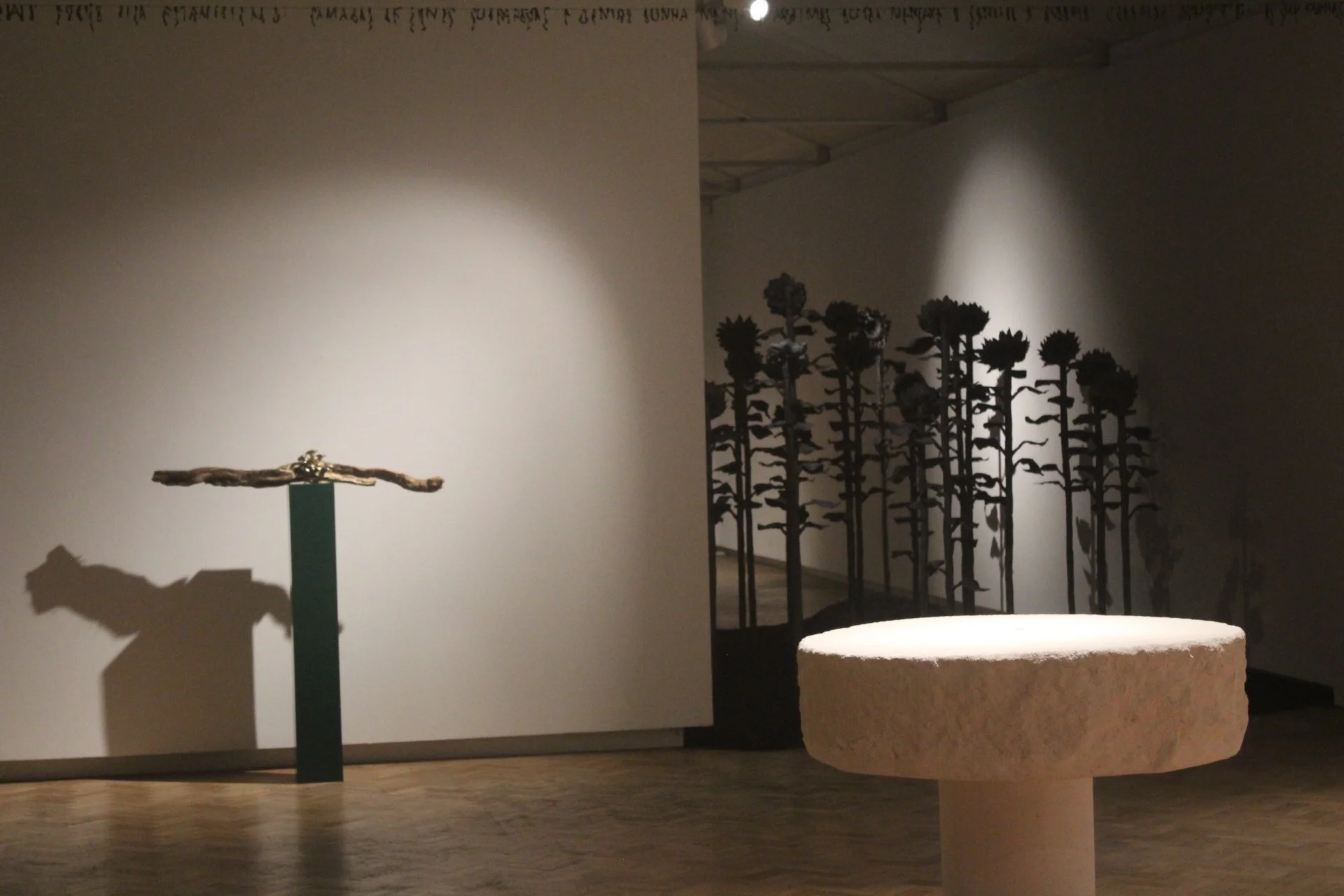
This piece began with the physical sensation of holding my breath, that metallic, frozen moment when the body realizes it has stopped breathing somewhere between tasks. The grapevine branch is thick, knotted, and twisted from years of growing under pressure. It sprawls horizontally because that is what happens when one has been bearing weight for too long. One does not continue to grow up; instead you grow out, adapt, and endure.
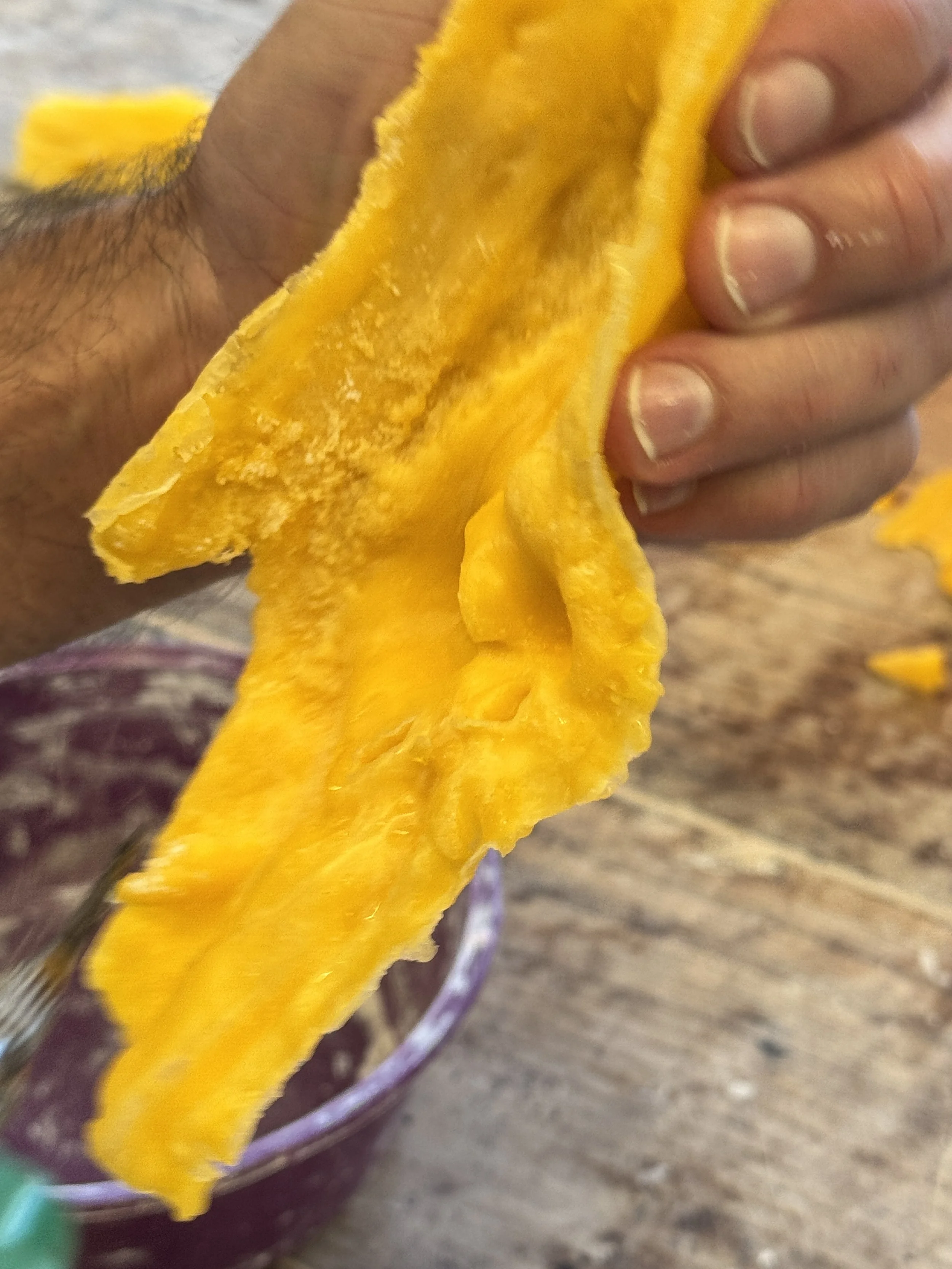
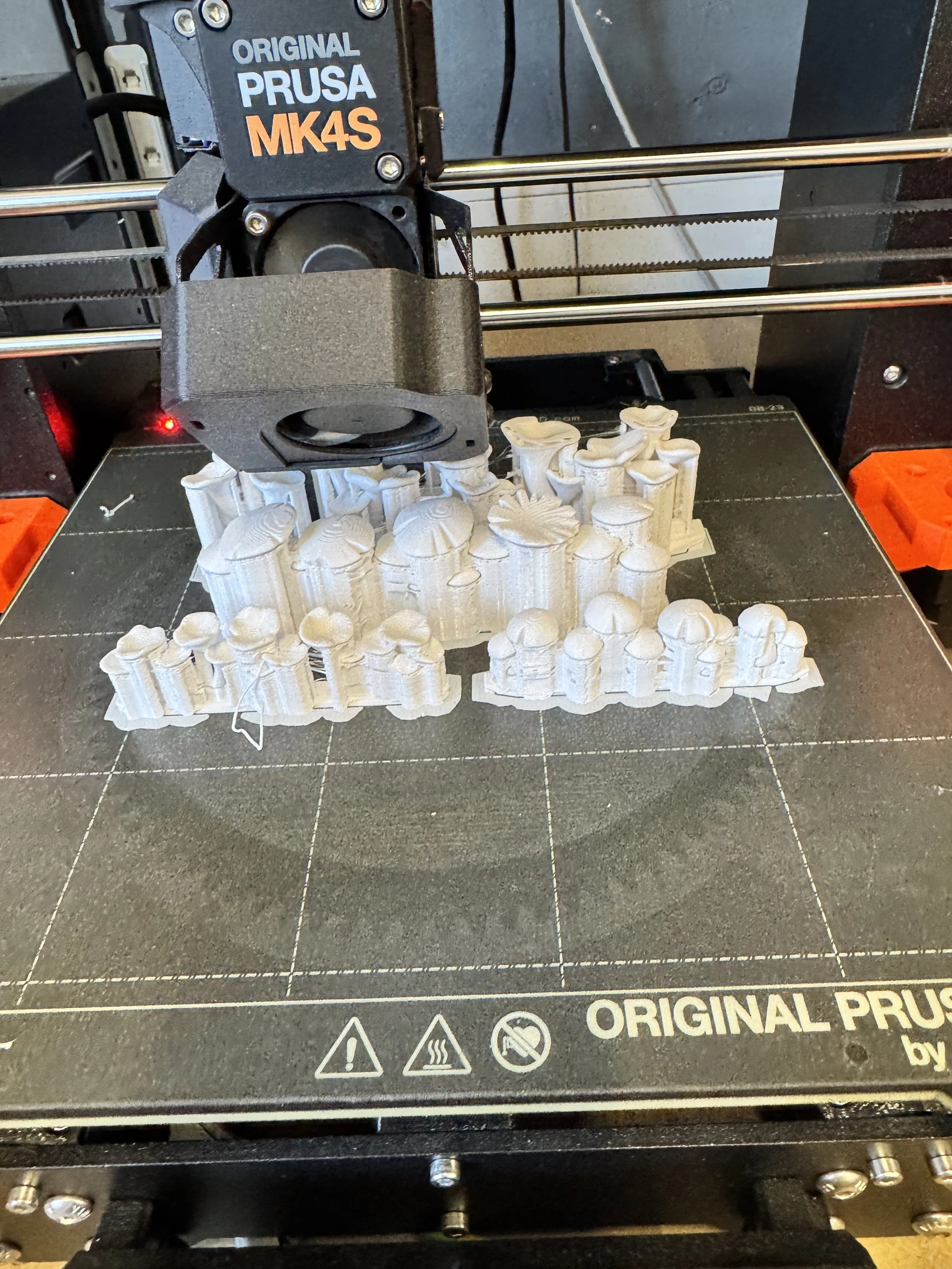
The bronze oyster mushrooms growing from the branch are frozen at peak fruiting, clusters of capability that will never complete their cycle—never rot, release, or rest. Initially, I attempted to create these mushrooms through 3D printing the mushrooms and gilding them with gold leaf. This was unsuccessful, as I was unhappy with the gold color and finish. I then coated the mushrooms with antique gold automotive paint and epoxy resin, seeking that metallic preservation. However, the layered effect felt too synthetic, lacking the warmth and weight the piece demanded. I have manipulated the 3D model to build moulds from which to cast the mushrooms individually in bronze.
The transition to bronze casting will provide the necessary gravitas, as these mushrooms will now carry the permanence of metal, the weight of competence that has calcified into something precious and untouchable. They represent what happens when capability becomes entombed at its moment of peak utility, beautiful in a way that makes you wonder at what cost.
This is about that suspended instant before the breath breaks. The terrible, glittering pause where everything is just barely held together.
"Self-Portrait of the One That Saves All the Passwords"
Grapevine branch, bronze-cast branch segments, bronze oyster mushrooms
115 cm x 70 cm x 40 cm
2025
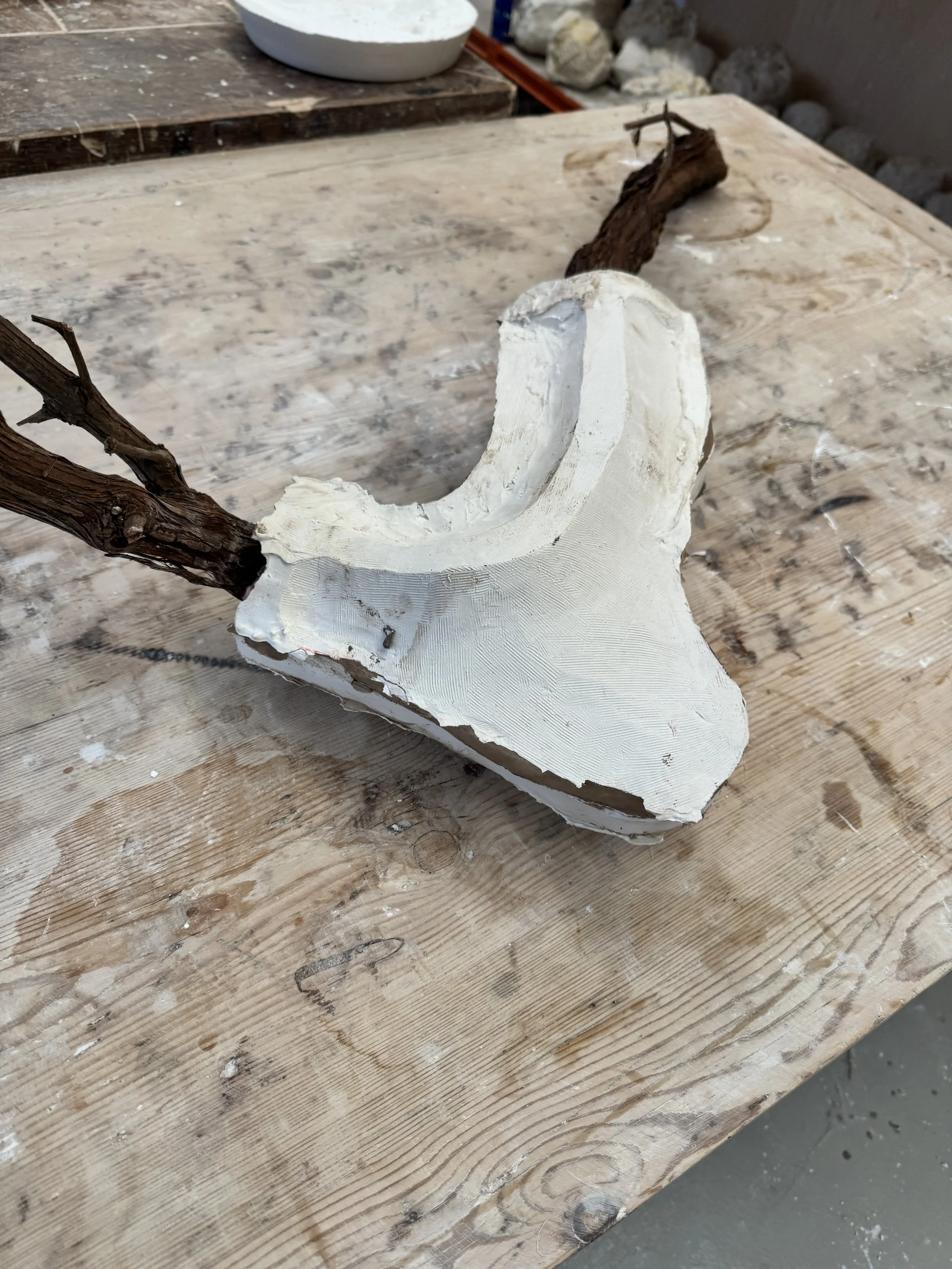
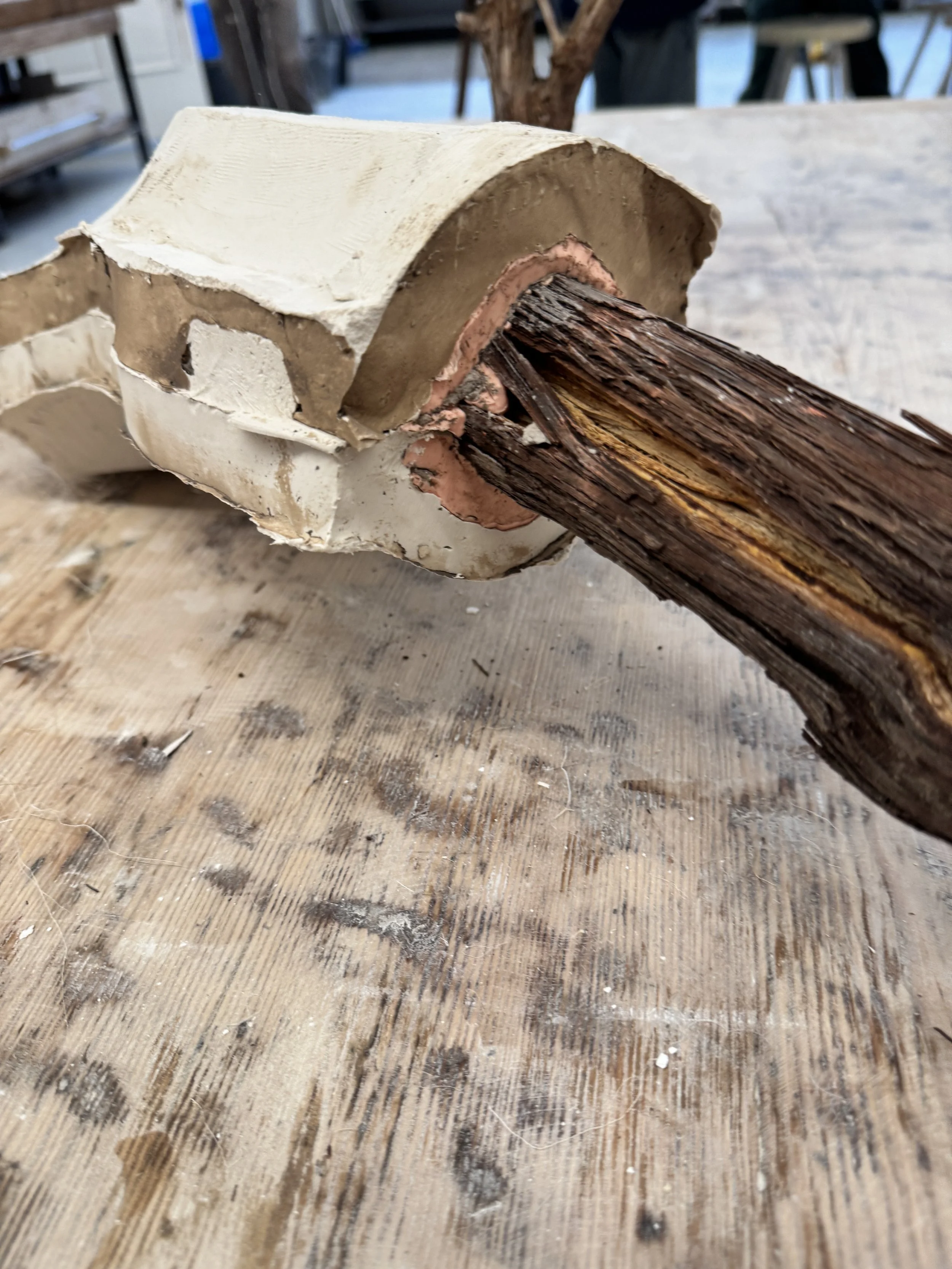
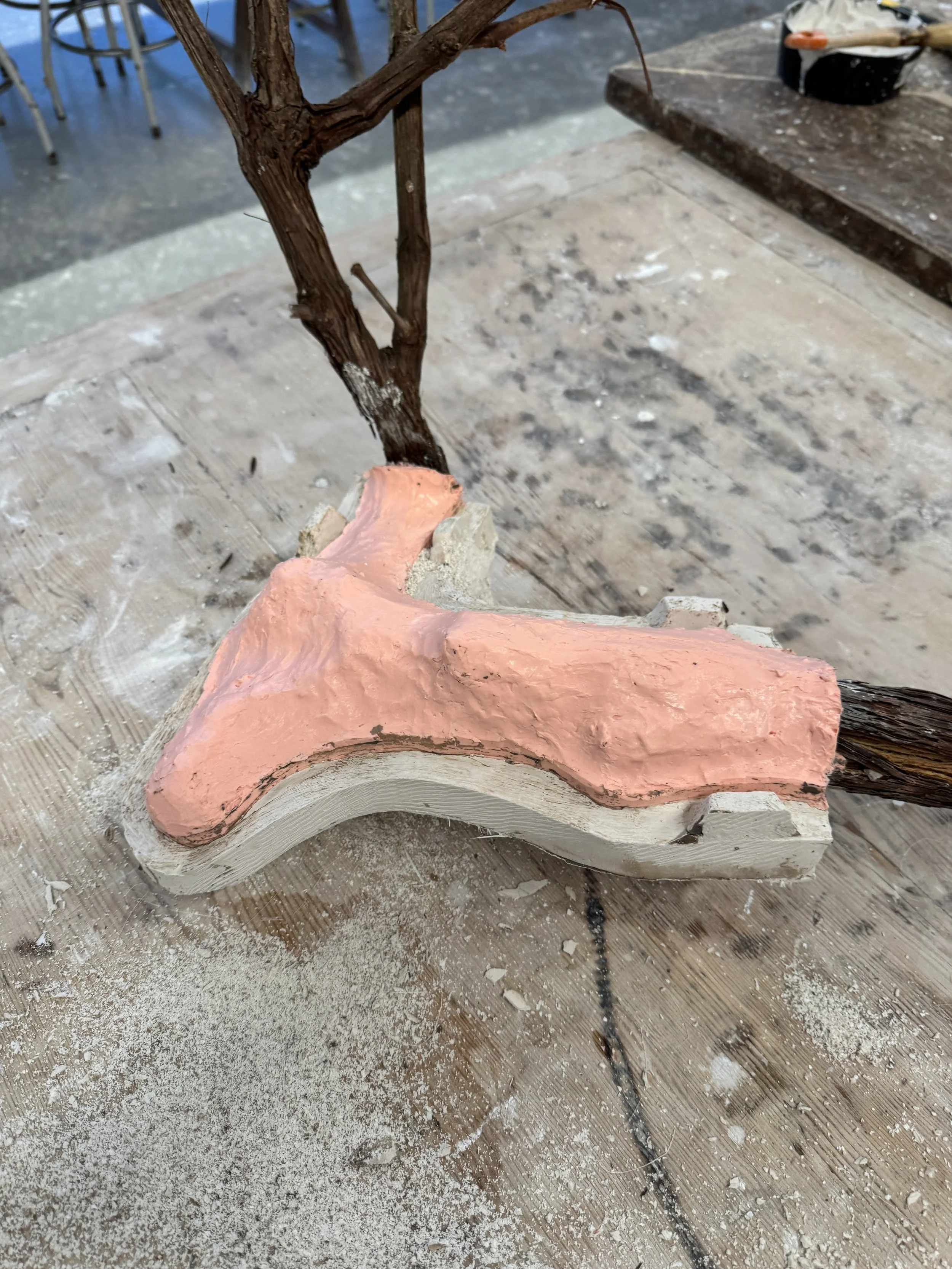
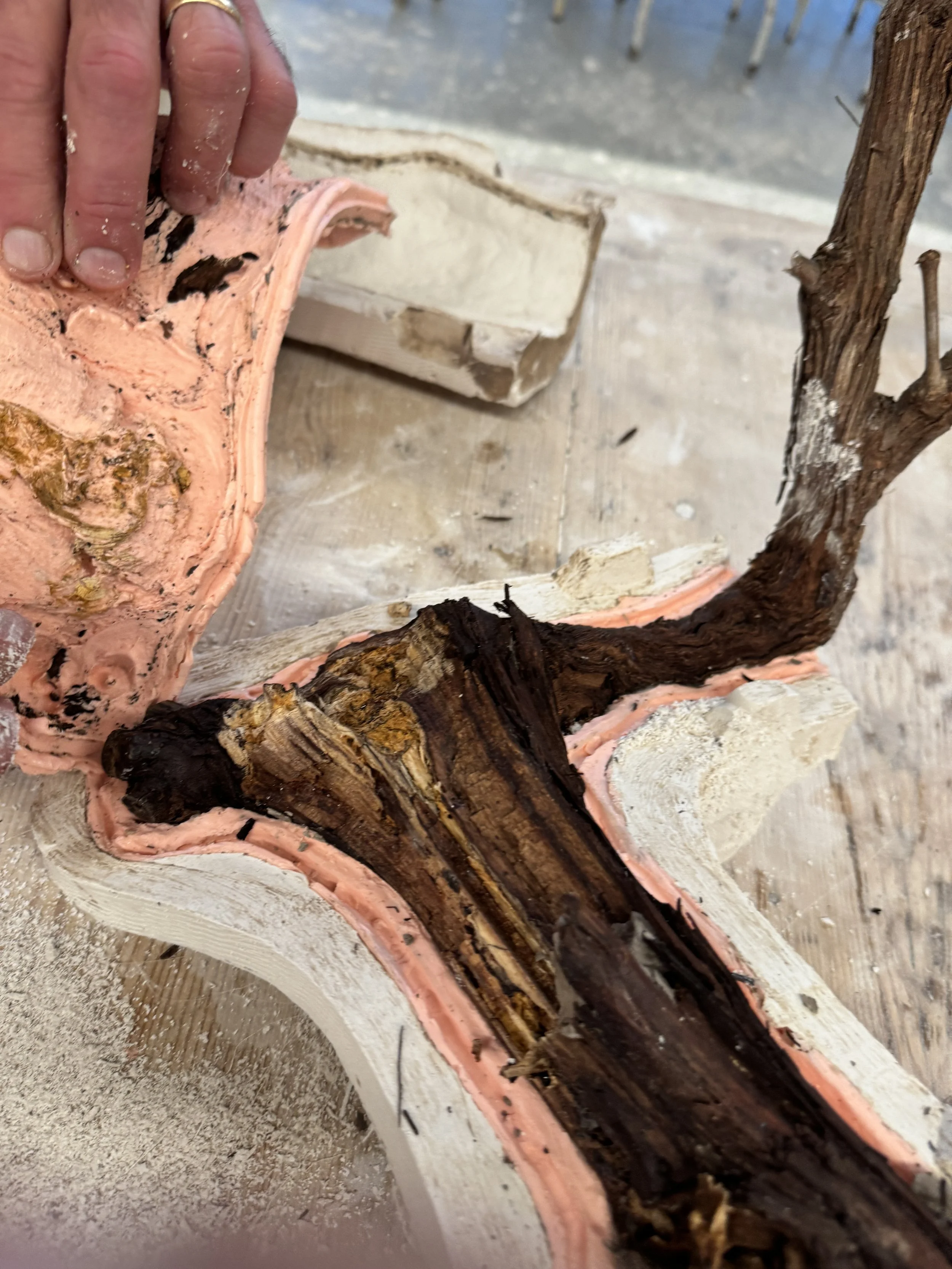
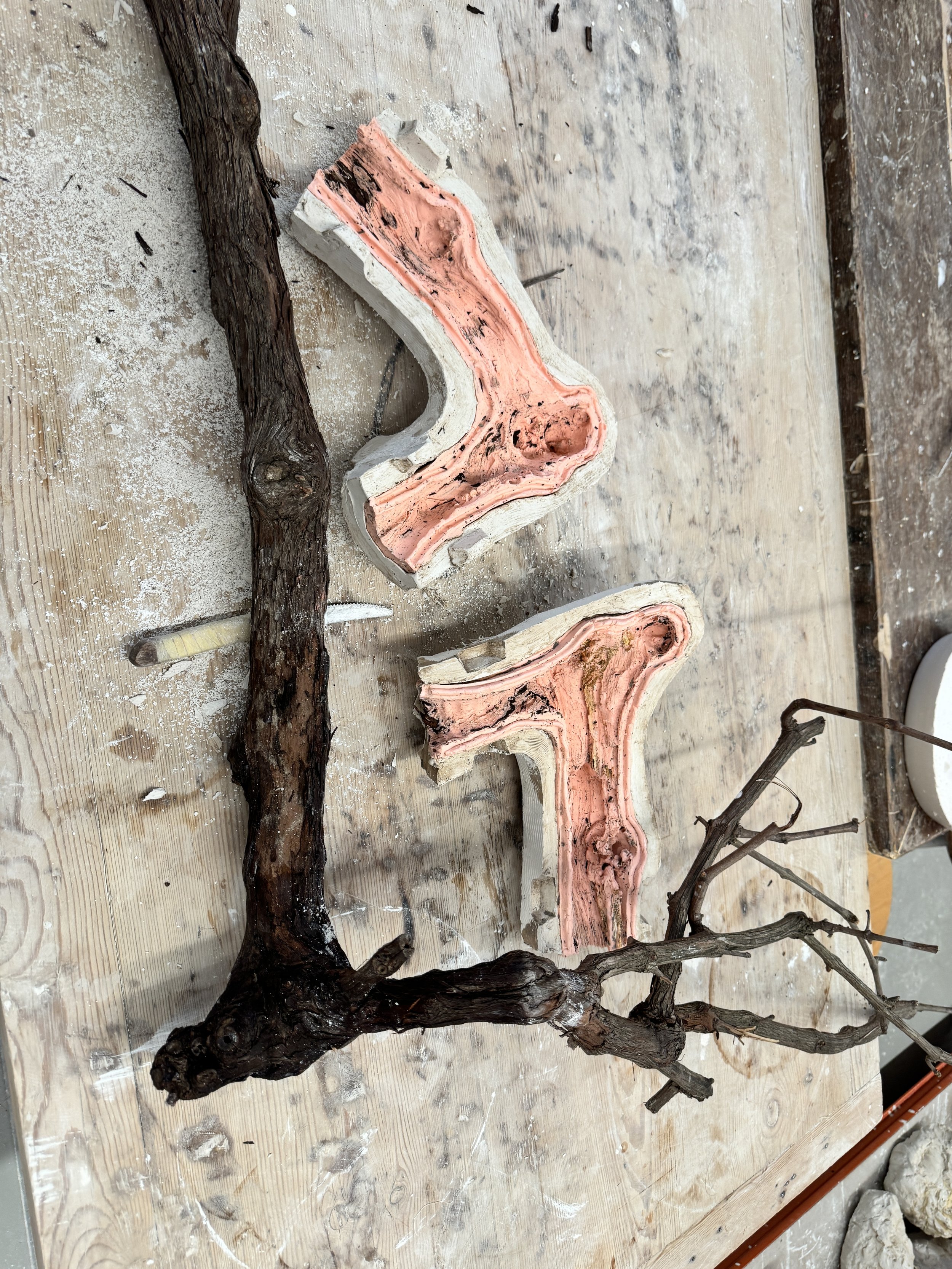
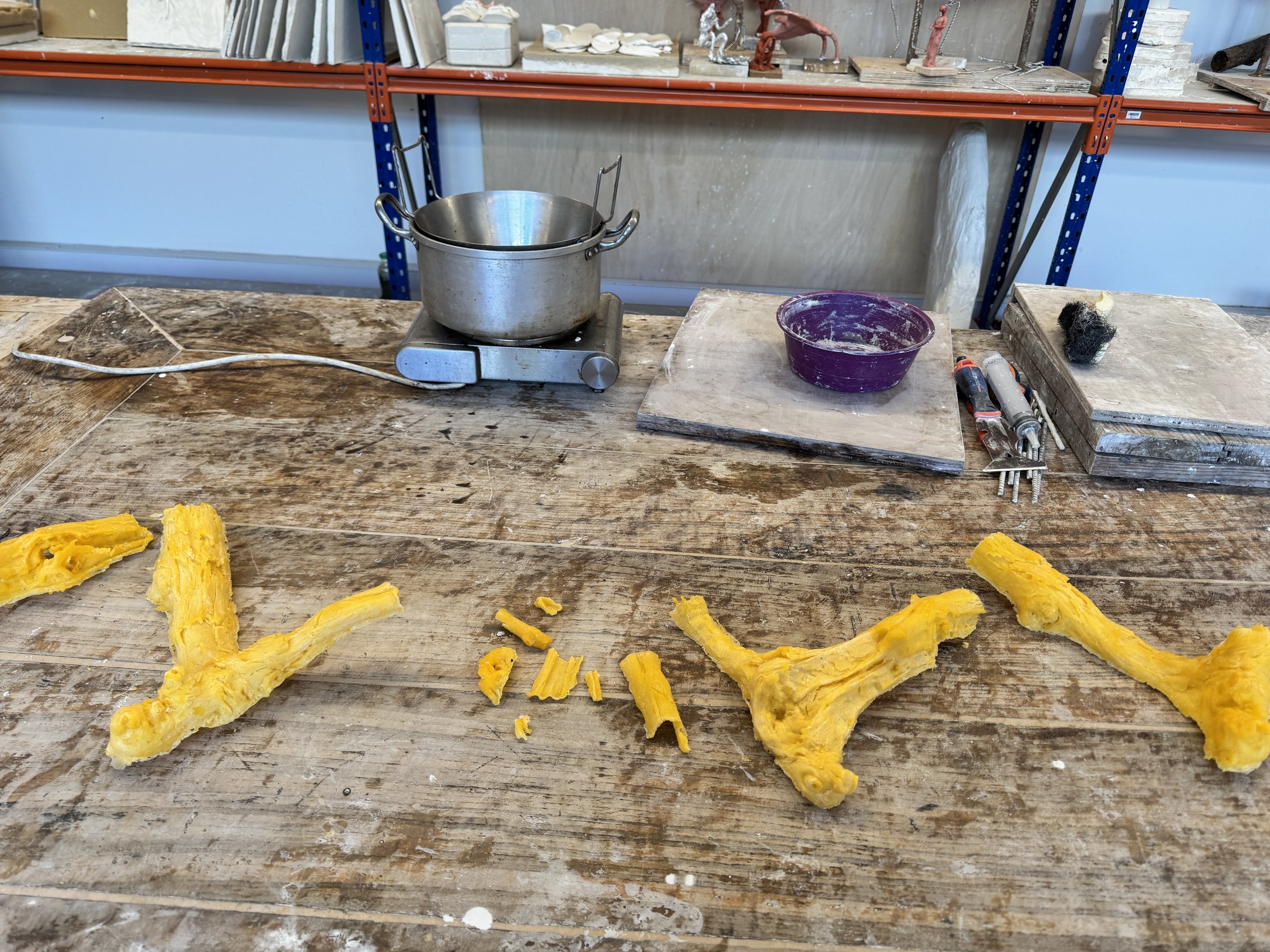
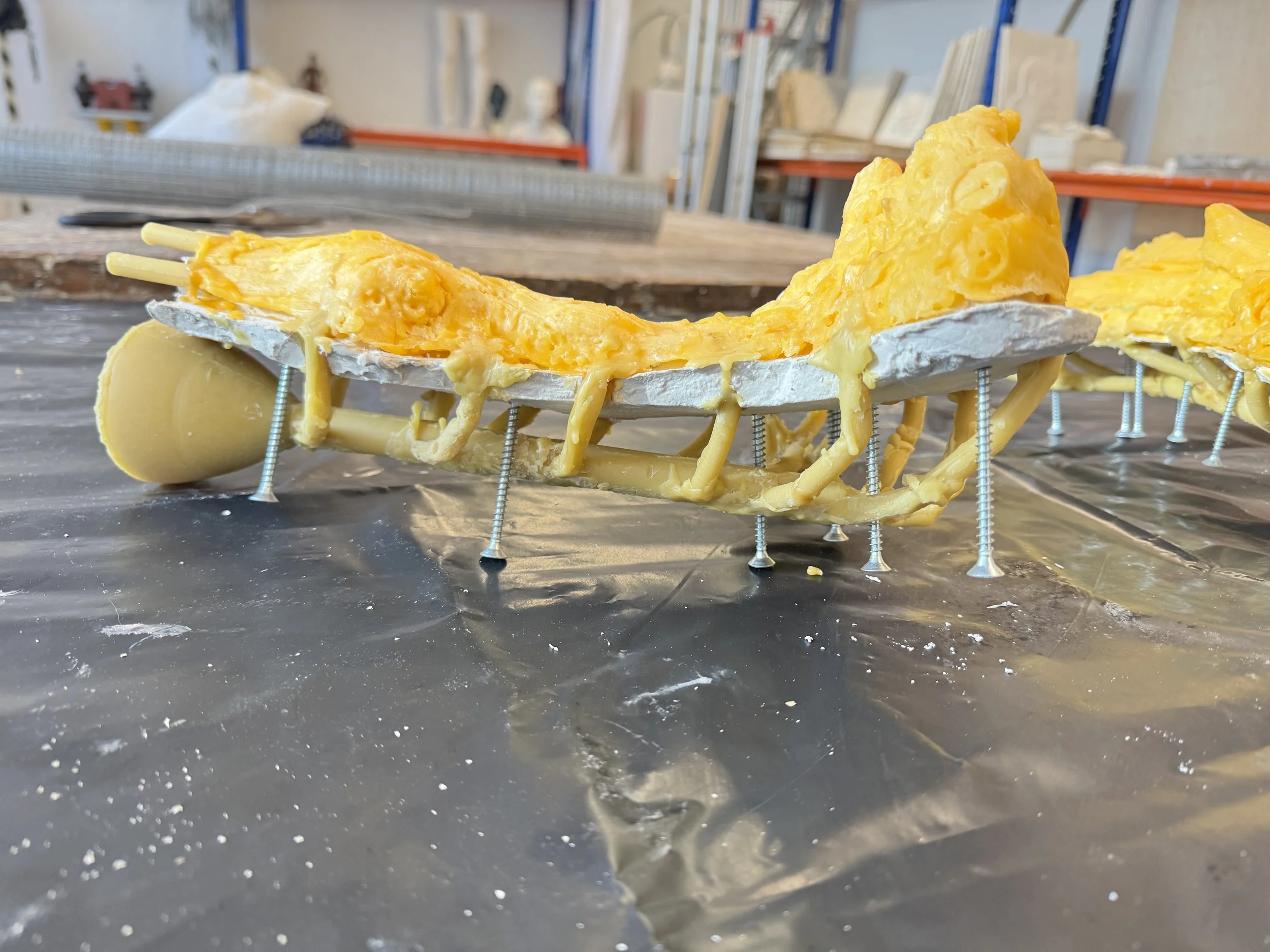
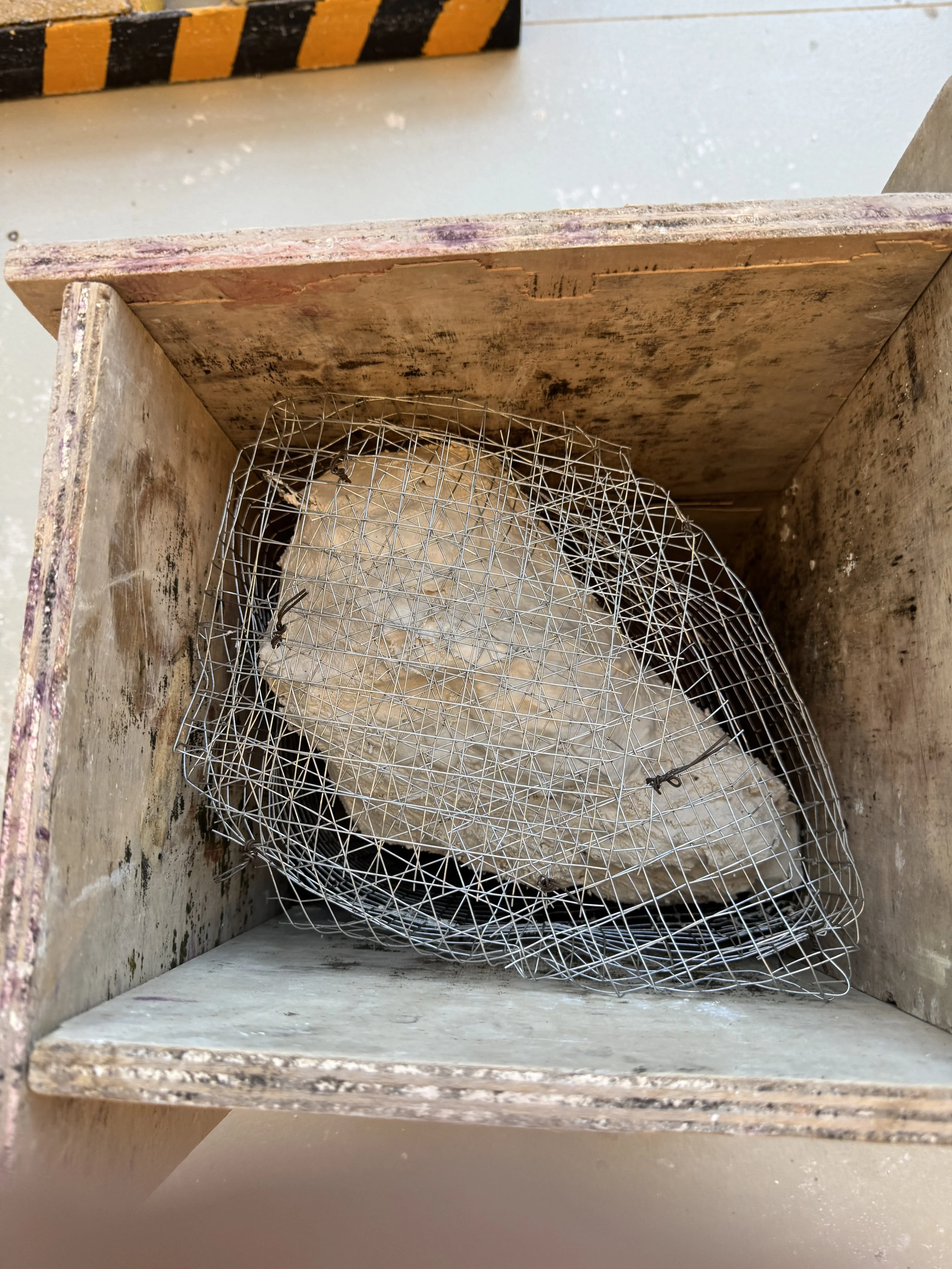
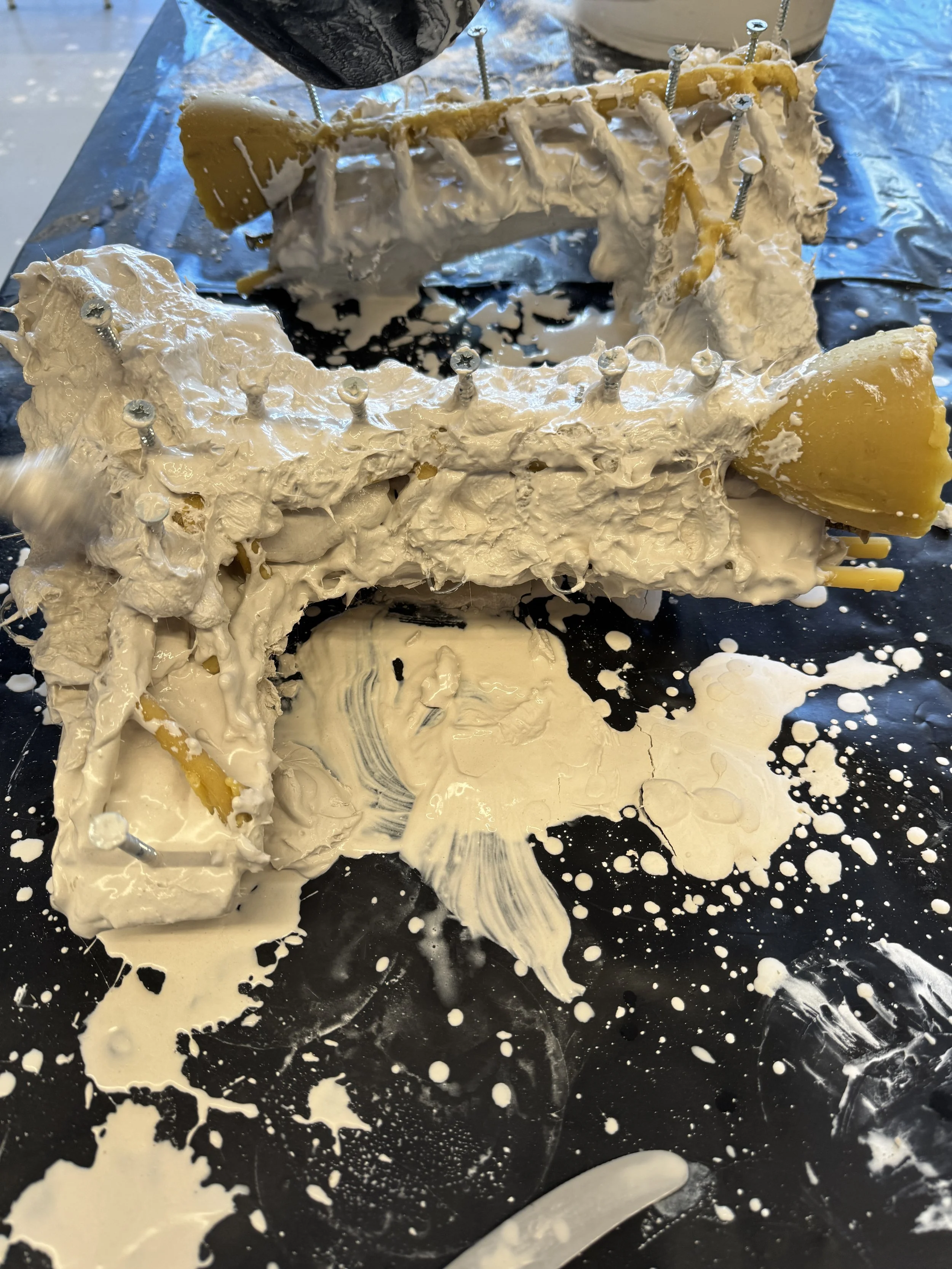
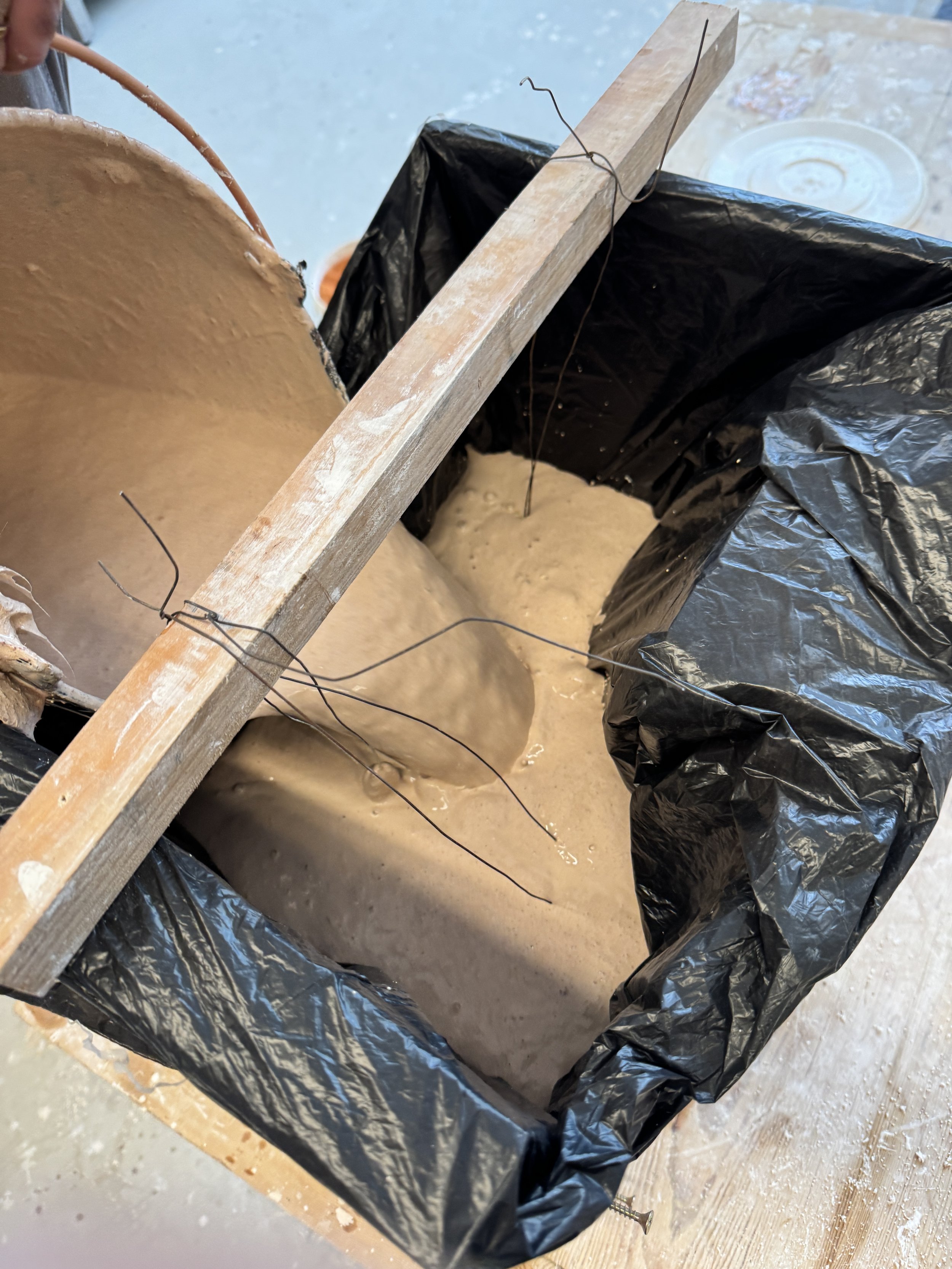
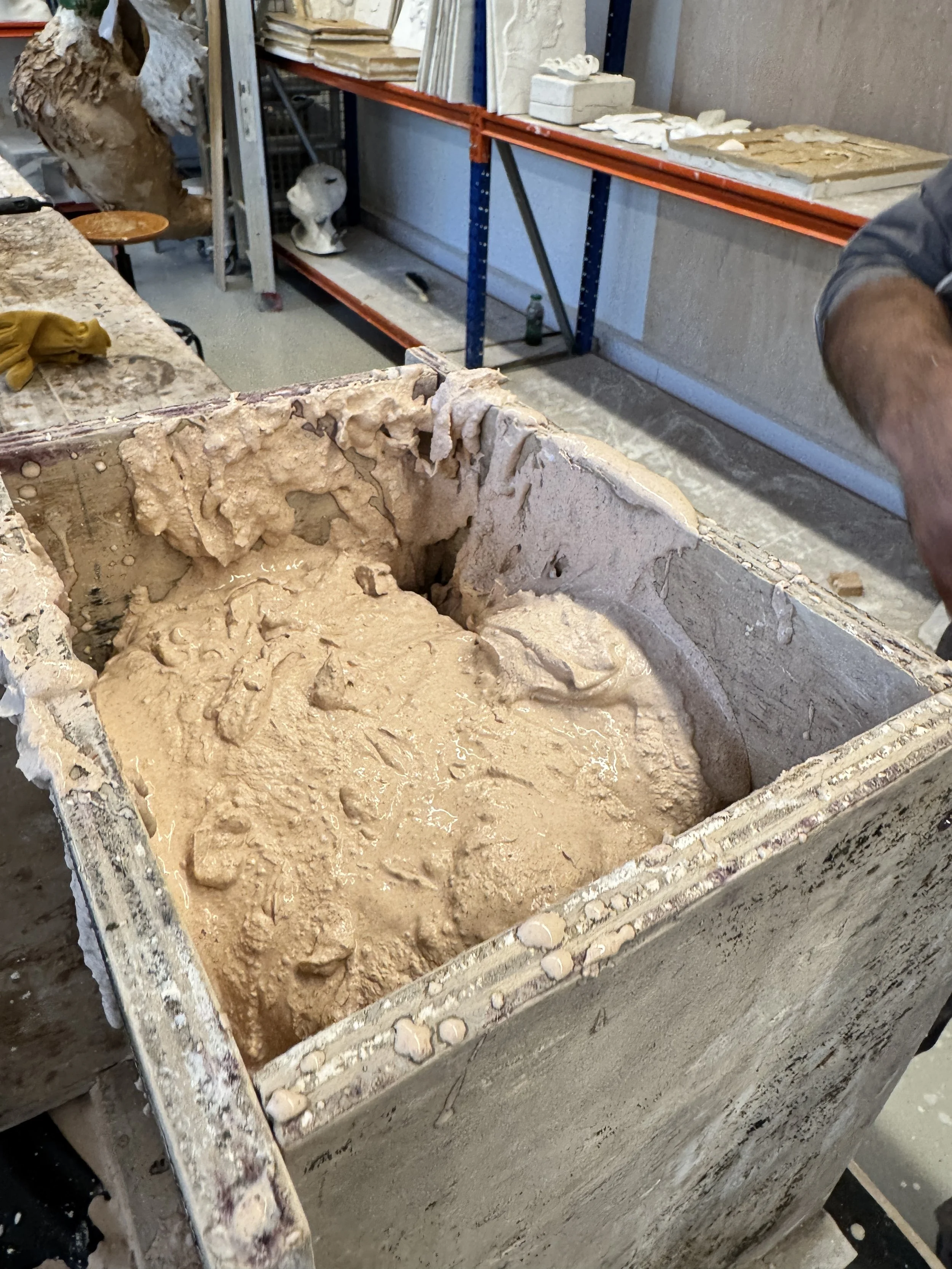
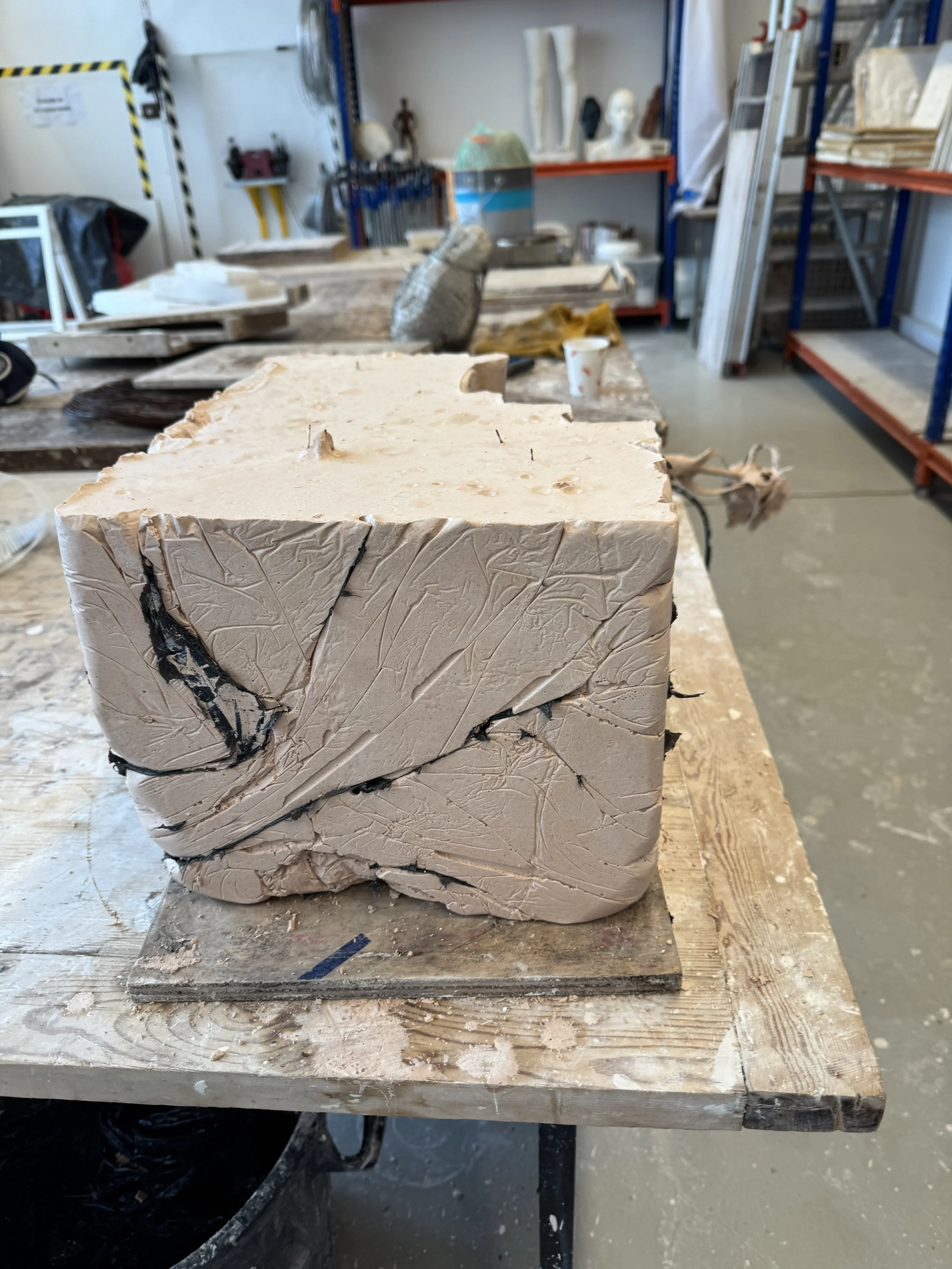
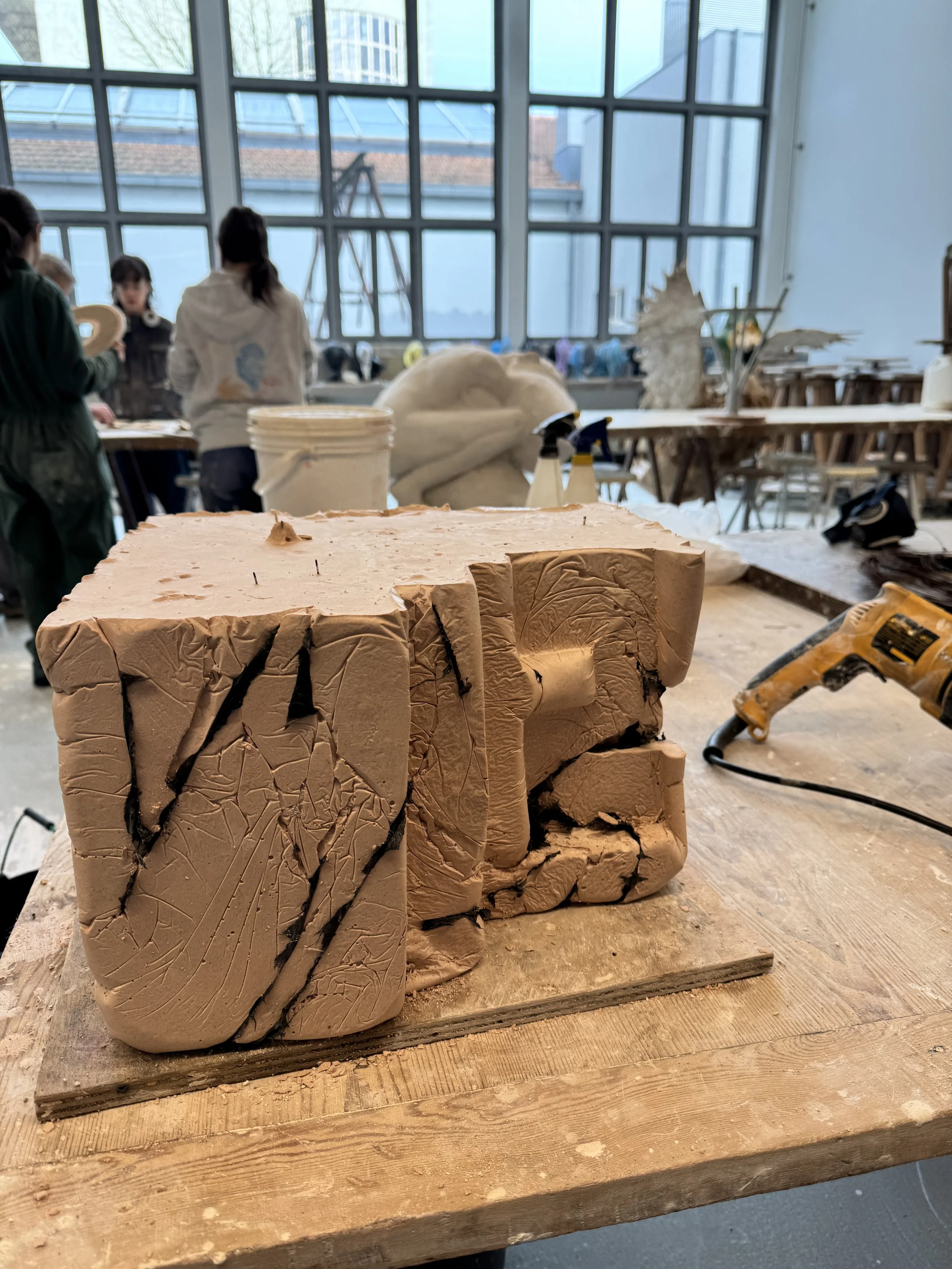
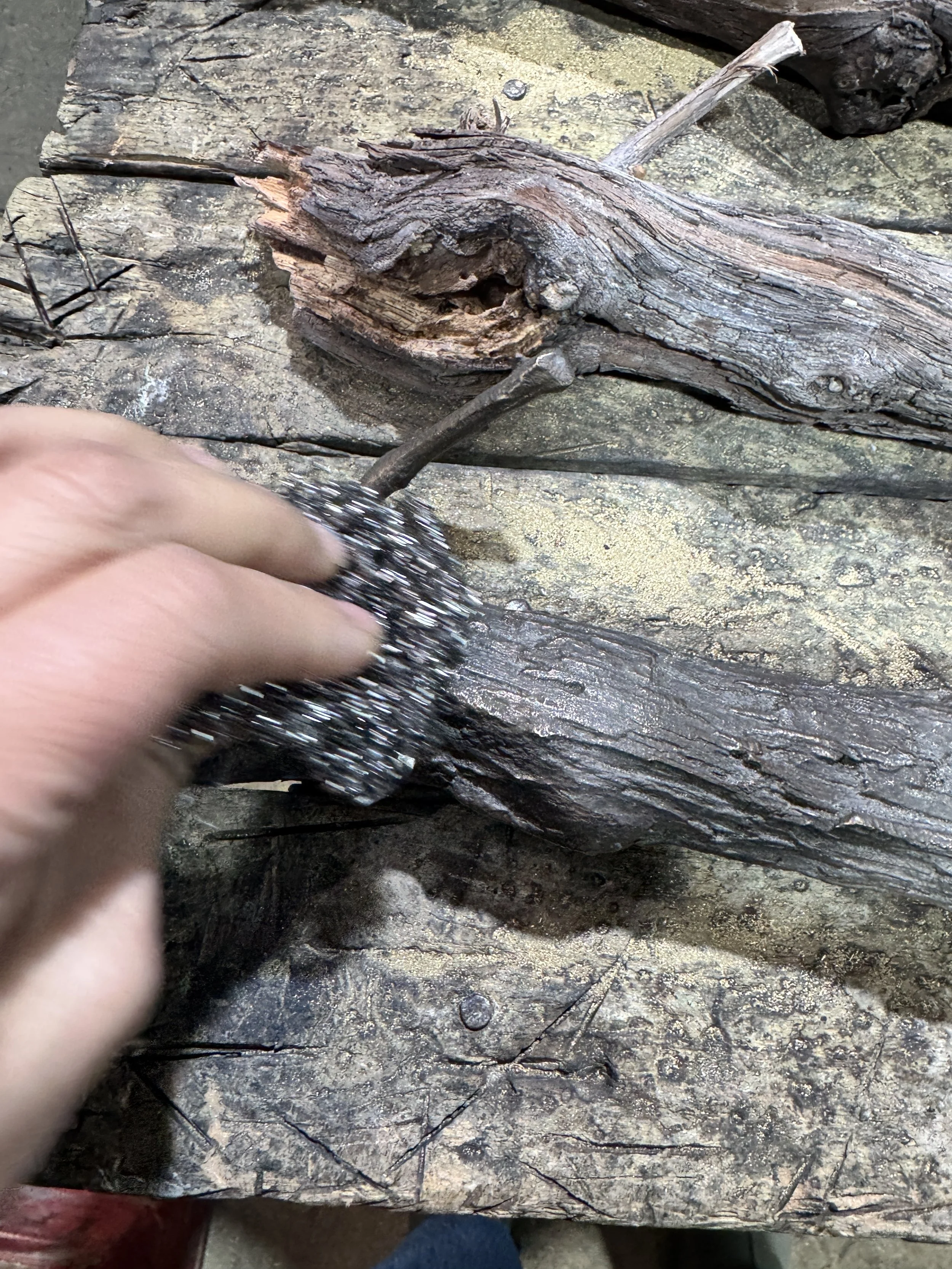
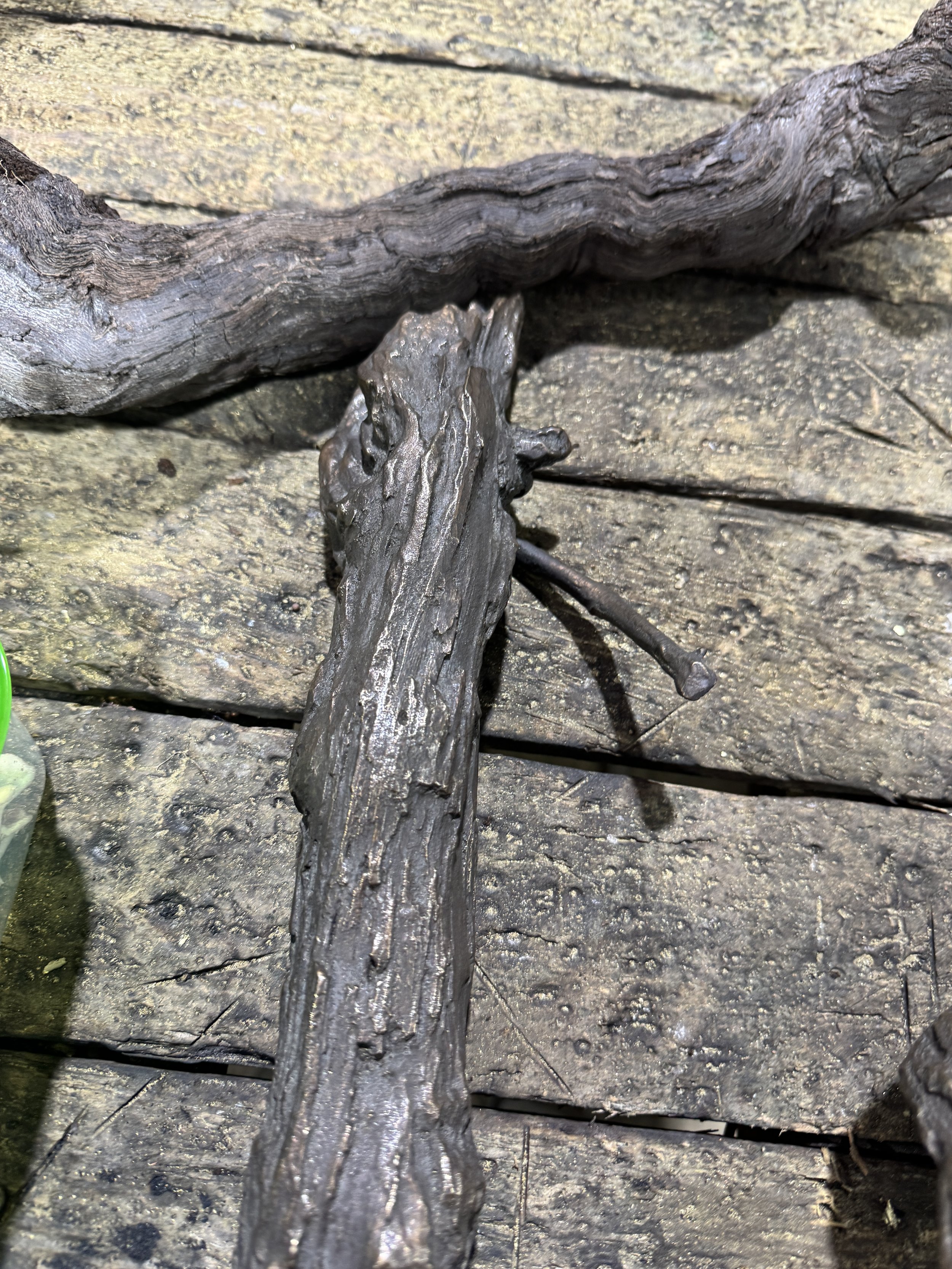
This piece emerged from thinking about the invisible architecture of care work and the mental load of remembering, the organizational labor that goes unacknowledged. The deer antler-shaped branch suggests both growth and trophy, rebirth and objectification. The bronze-cast branch pieces create a visible armature, making infrastructure itself the subject. These cast bronze components include support structures and mounts for mushroom forms, revealing how women's labor becomes the foundation everyone else depends on without acknowledging it.
The mushrooms emerging from this substrate represent the endless fruiting expected of women's competence, the passwords saved, the appointments remembered, the emotional database maintained. The permanence of metal against organic material creates a specific tension: women's competence gets treated as both infinite and expendable.
"Instructions My Hands Remember When My Mind Has Gone Blank"
Grapevine branch, cast bronze
50 cm x 20 cm x 25 cm
2025
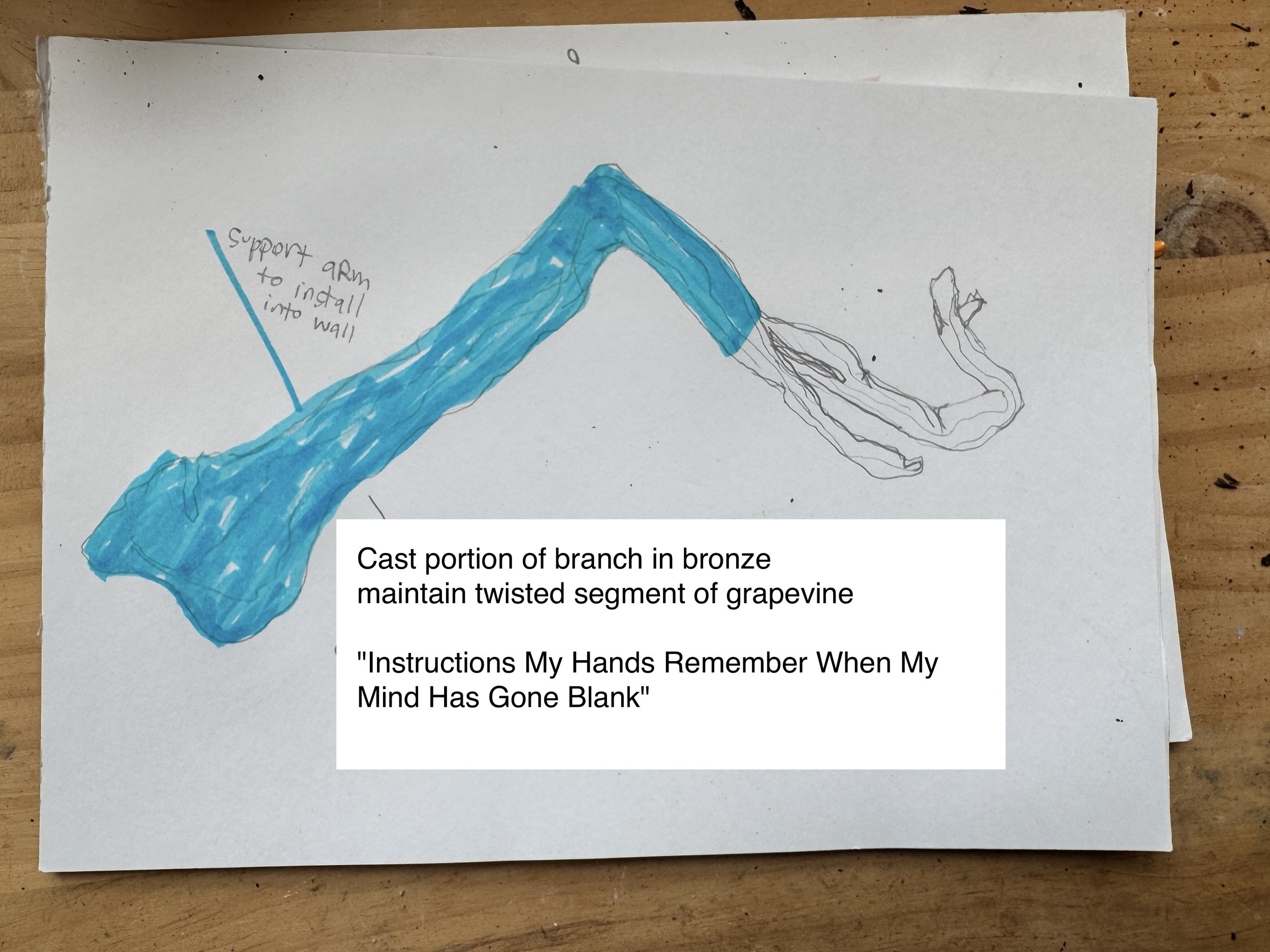
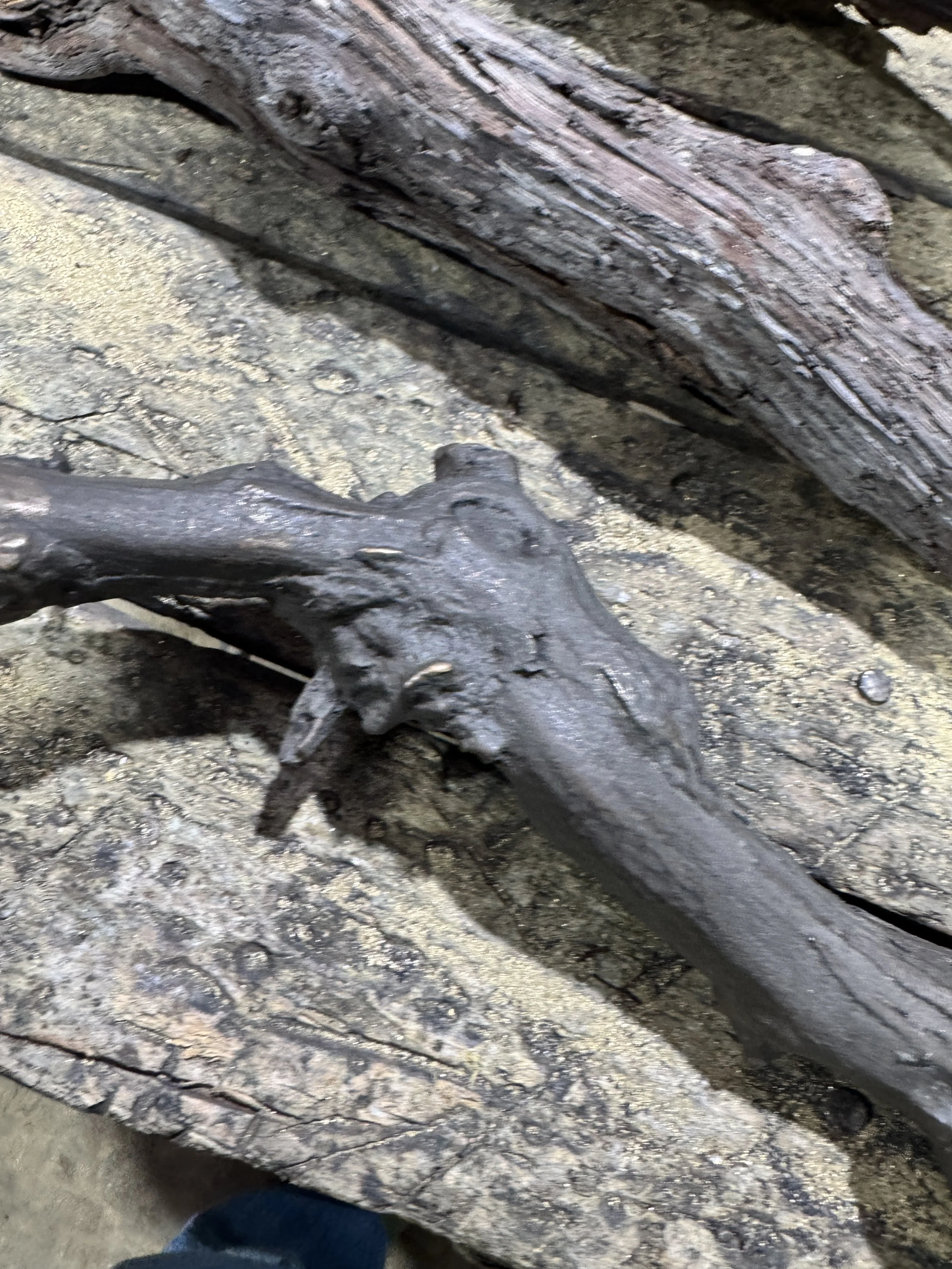
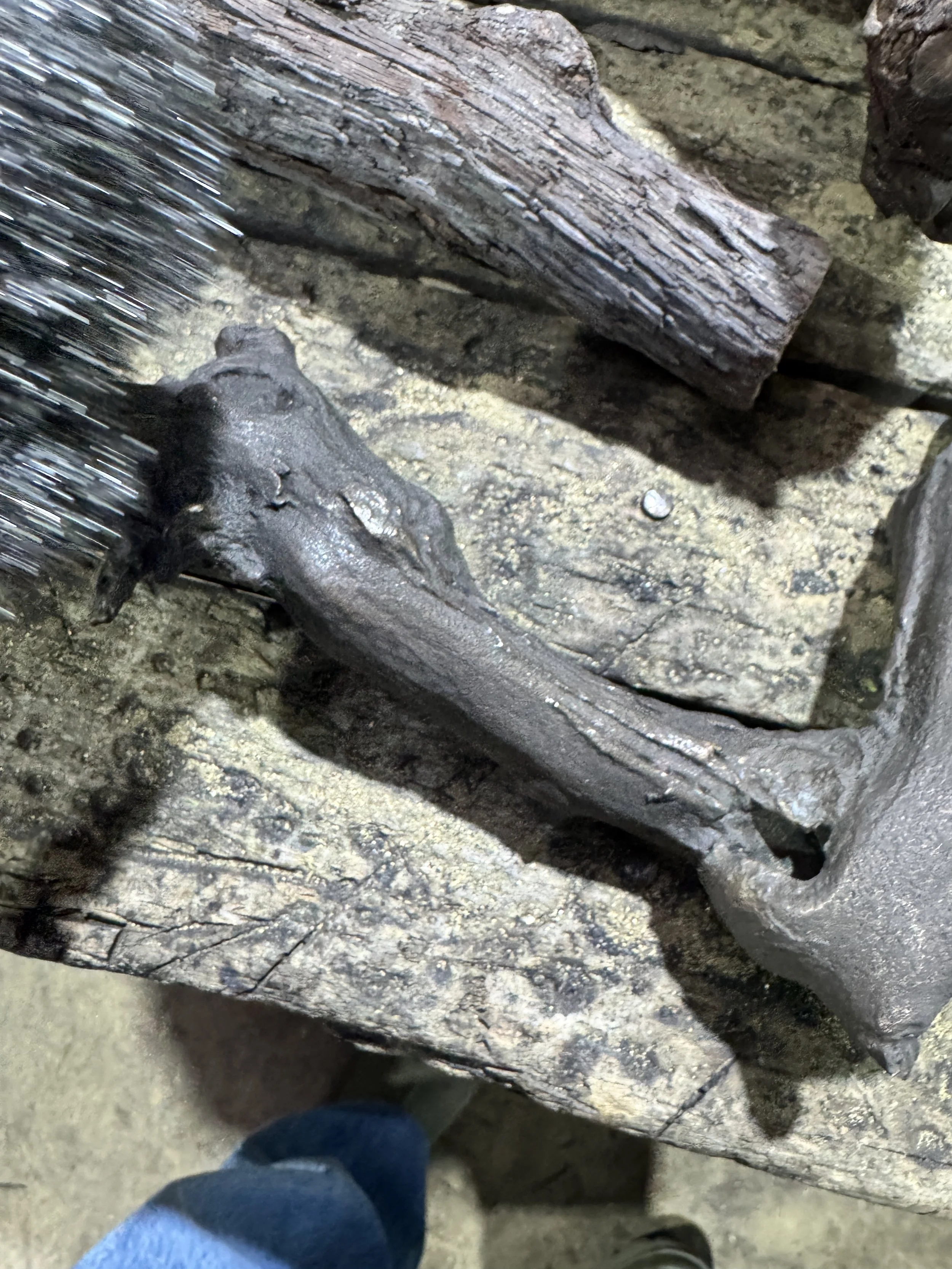
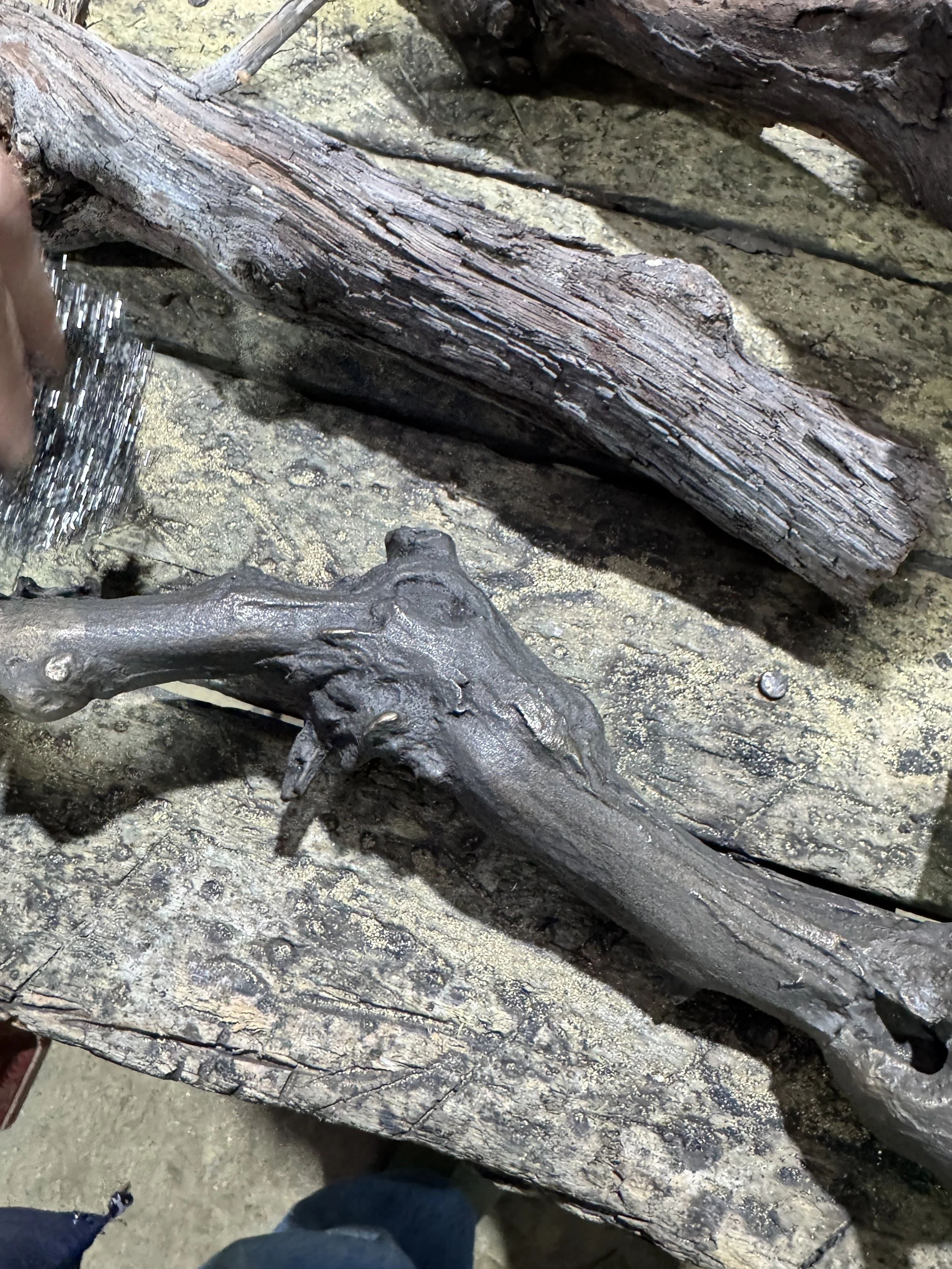
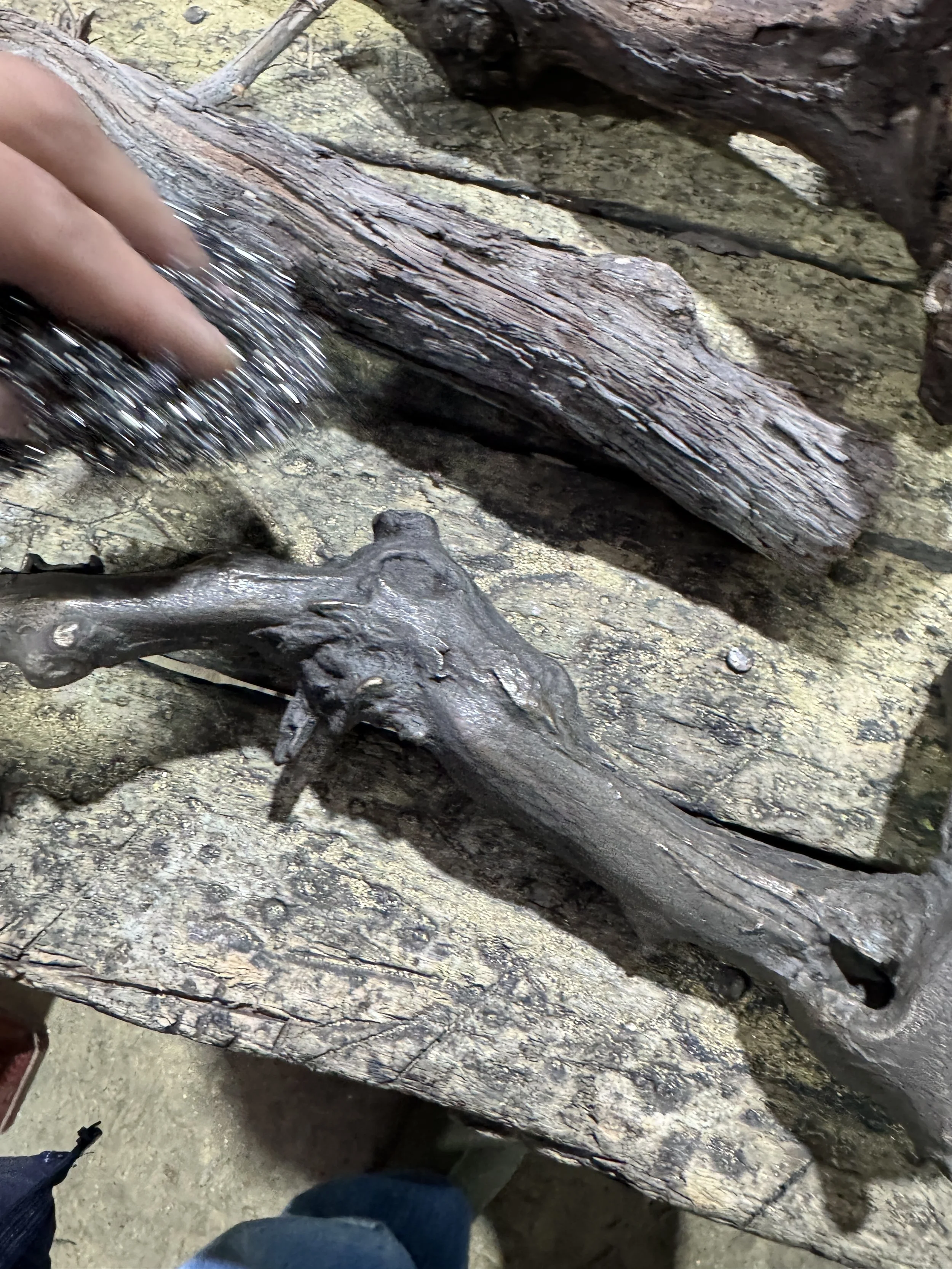
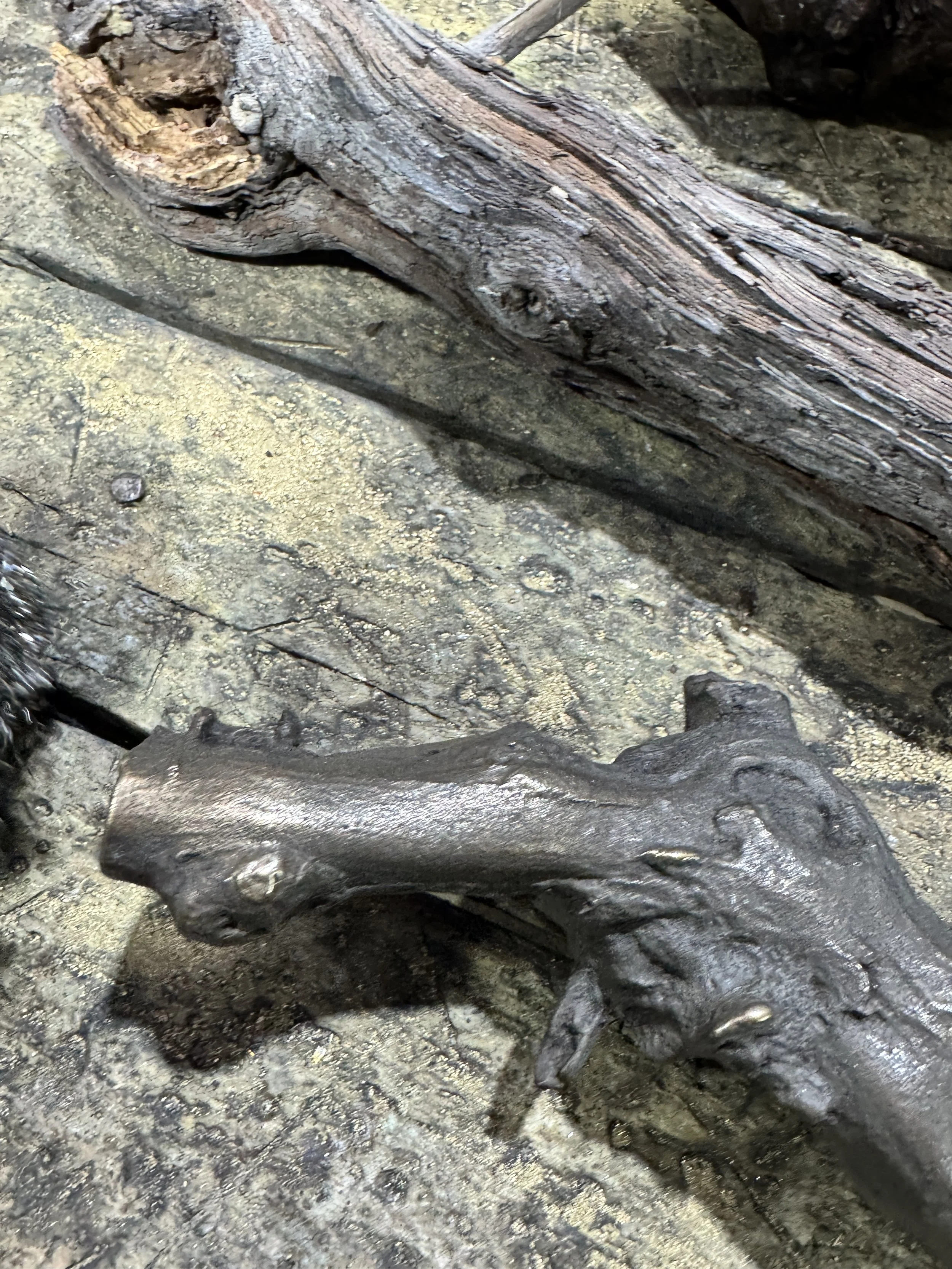
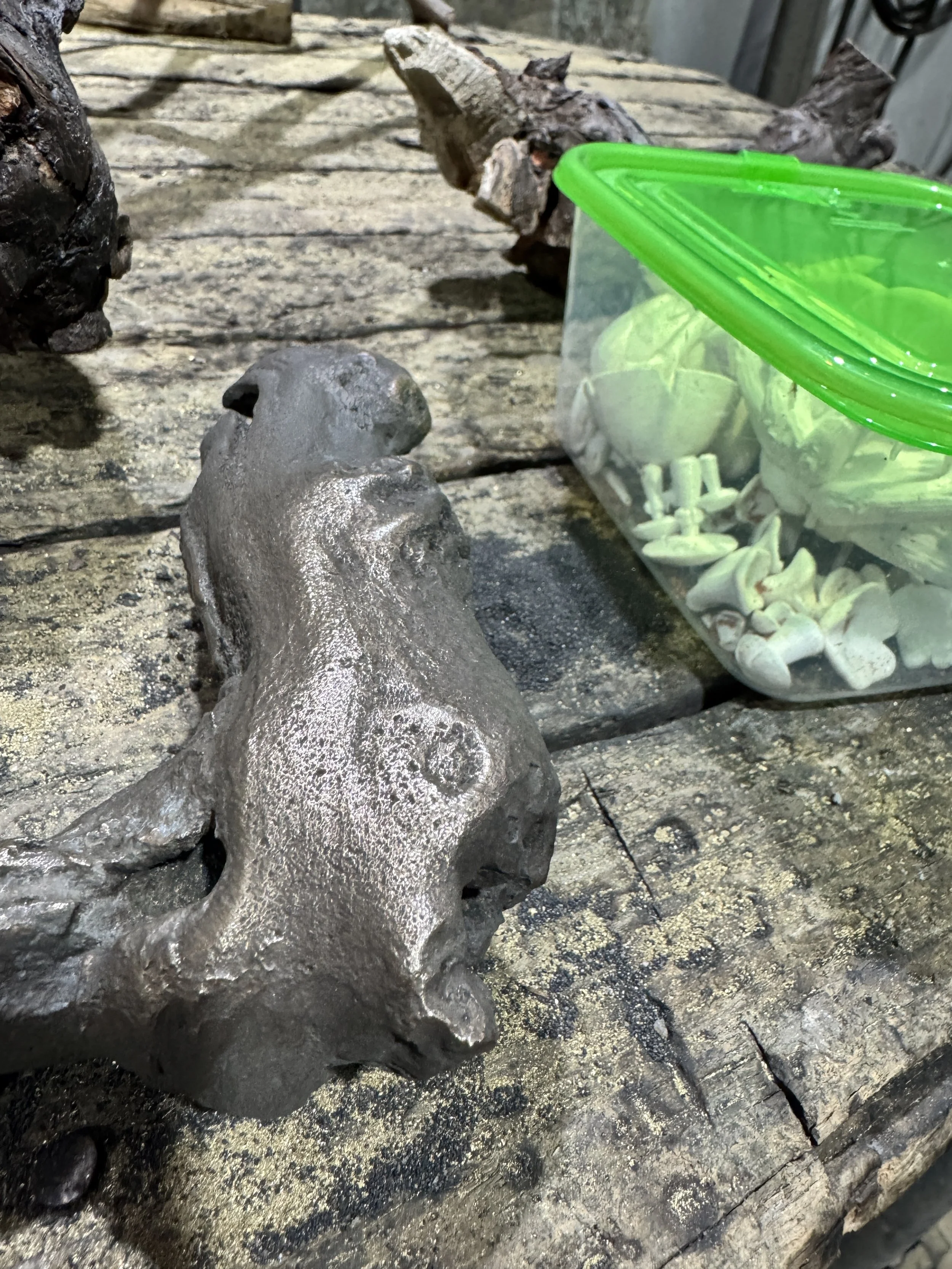
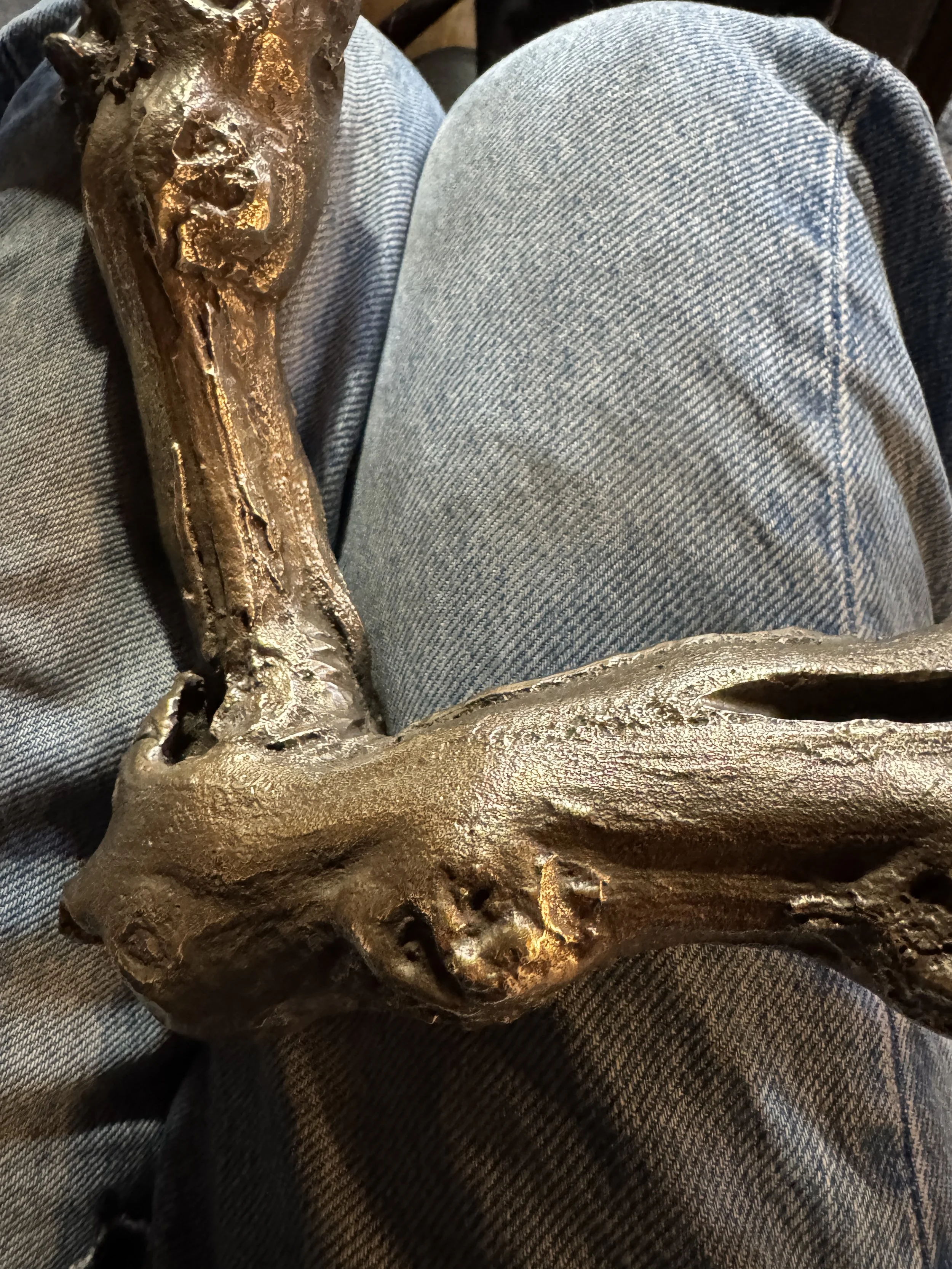
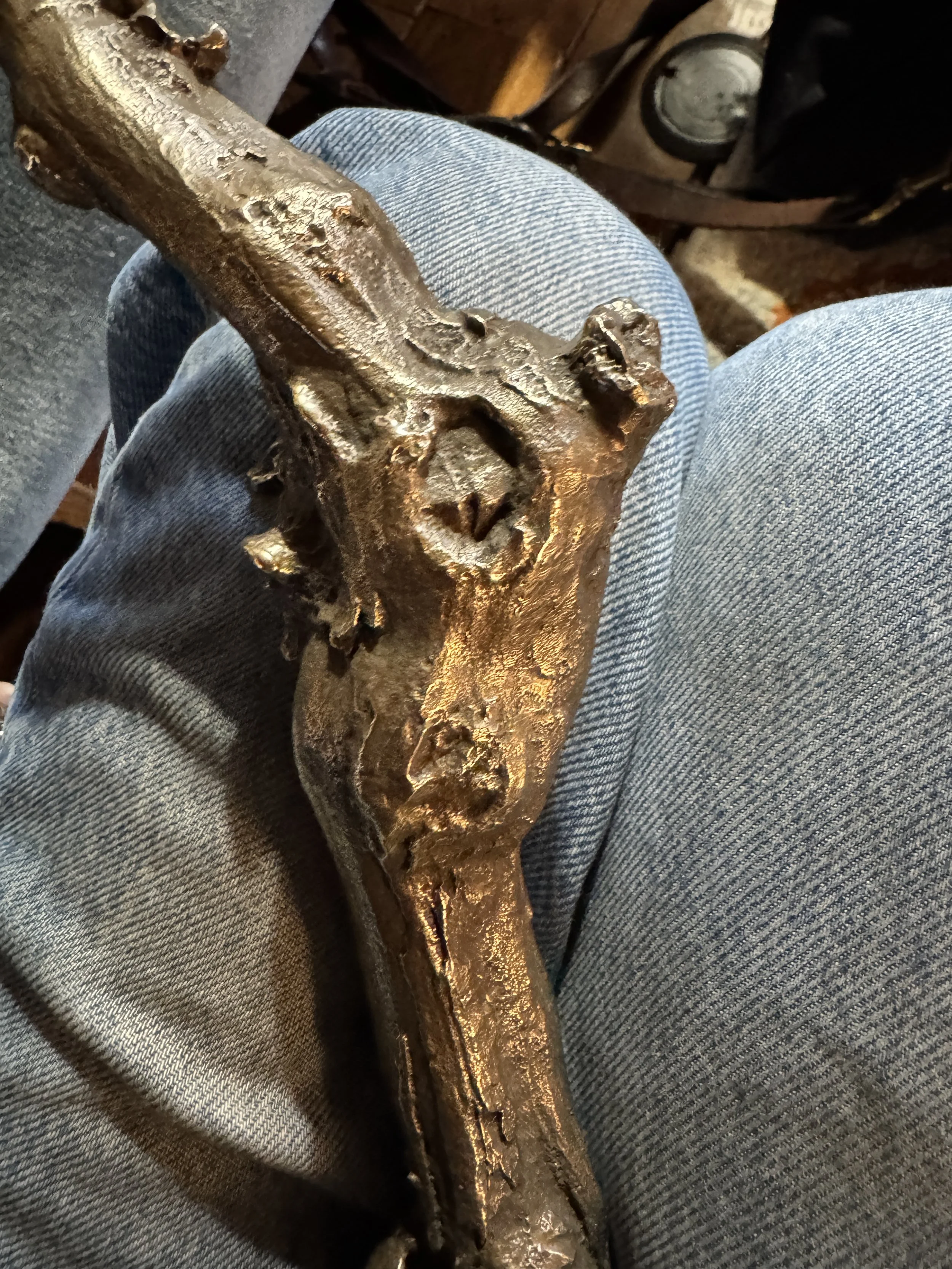
This work focuses purely on embodied knowledge, on muscle memory and the way the body carries competence even when consciousness fails. The grapevine's twisted nature, with its contortions and knots, becomes a record of adaptation and endurance. By casting a segment of the branch in bronze, I highlight the moment when organic capability transforms into permanent expectation, when what the hands know becomes what the hands must always do.
The piece explores how women's bodies become repositories of care knowledge, how certain gestures become automatic, how competence writes itself into muscle and bone. I ask the question of what it means when the body remembers but the self has forgotten, when your hands can do the work but you can no longer recall why or how you learned.
"Portrait of My Last Nerve and Who Will Test It Next"
Small wax mushroom form, black power strip
20 cm x 10 cm x 7 cm
2025
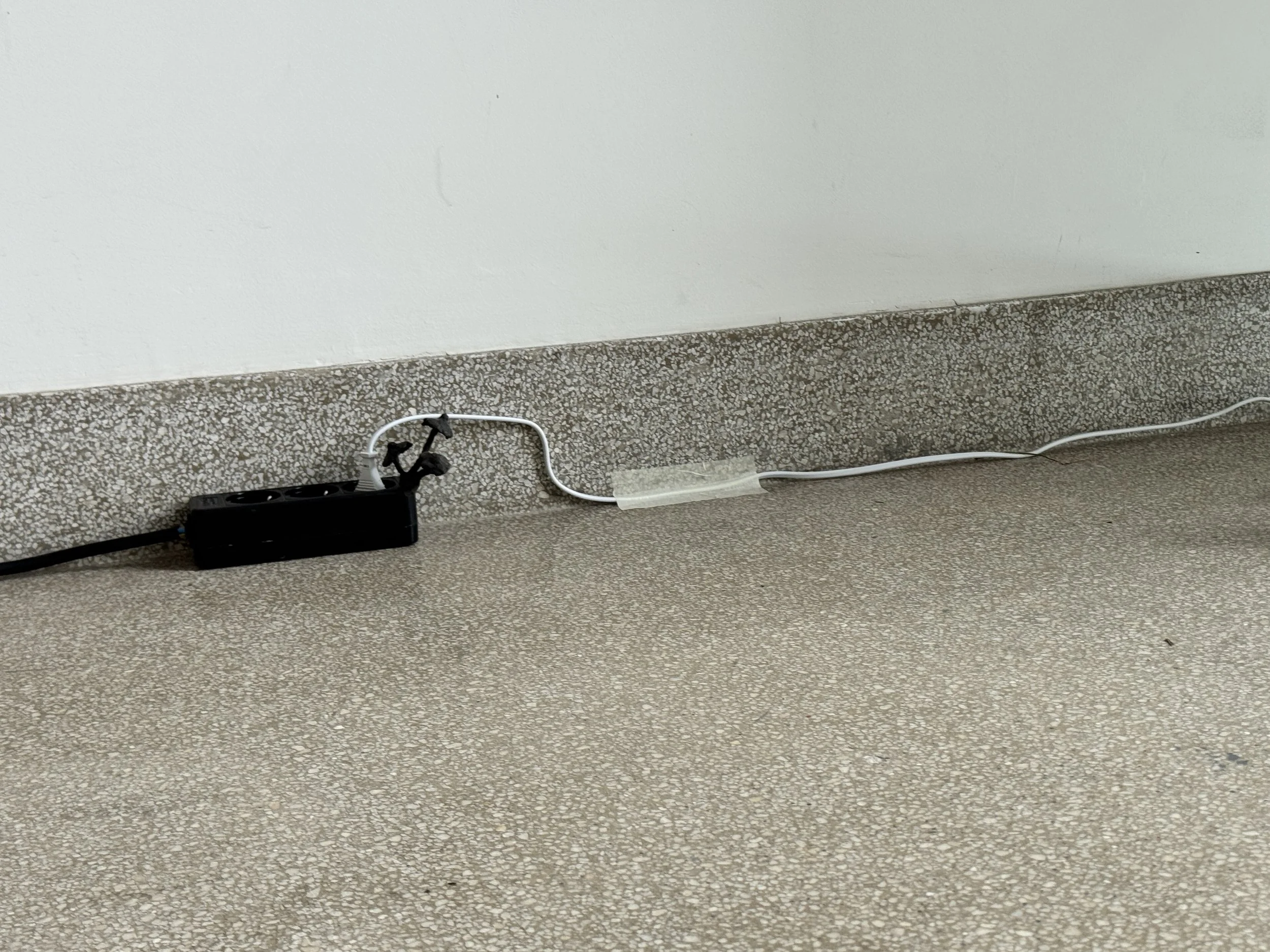
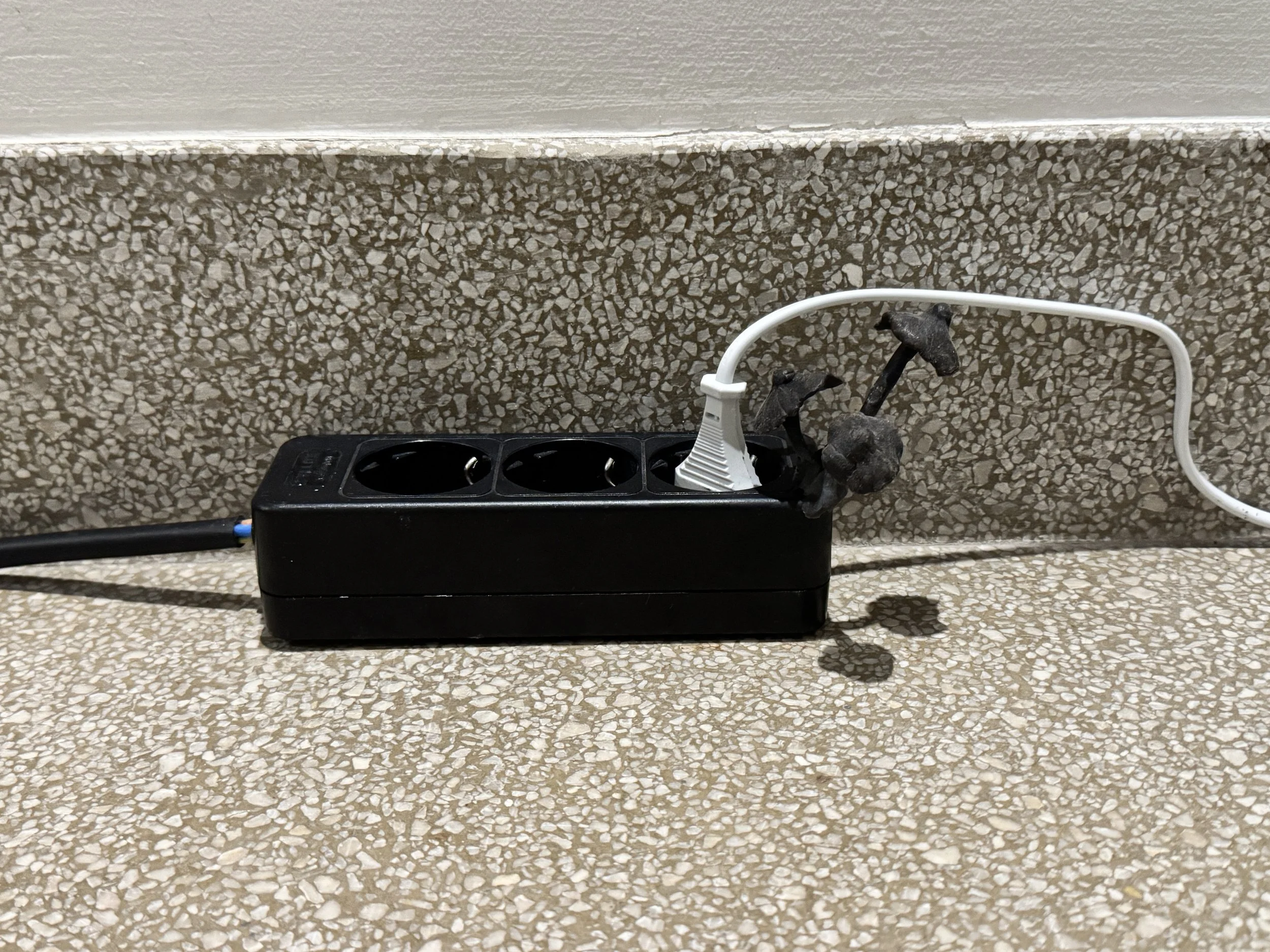
This smallest piece carries disproportionate weight. A single wax mushroom perched on the corner of a power strip, fragile, absurd, darkly humorous. It speaks to that final thread of patience, that last reserve of capability, balanced precariously on the infrastructure of modern life. The power strip, with its multiplicity of outlets, its capacity to distribute energy to multiple demands simultaneously, becomes the perfect substrate for this precarious mushroom.
Unlike the bronze works, this piece maintains the vulnerability of wax, emphasizing how close we always are to melting under pressure. It is a portrait of emotional labor at its breaking point, where the mundane task of managing power—both literal and metaphorical—becomes the site of potential collapse.
5. Material Investigation
I am working with organic materials juxtaposed against industrial processes to reflect the clash between natural capacity and manufactured expectation. Found wood, decomposing grapevine branches, serve as the weathered substrate, the raw and often difficult conditions women navigate. Bronze casting solidifies expectation into permanent structure, transforming temporary capability into eternal demand.
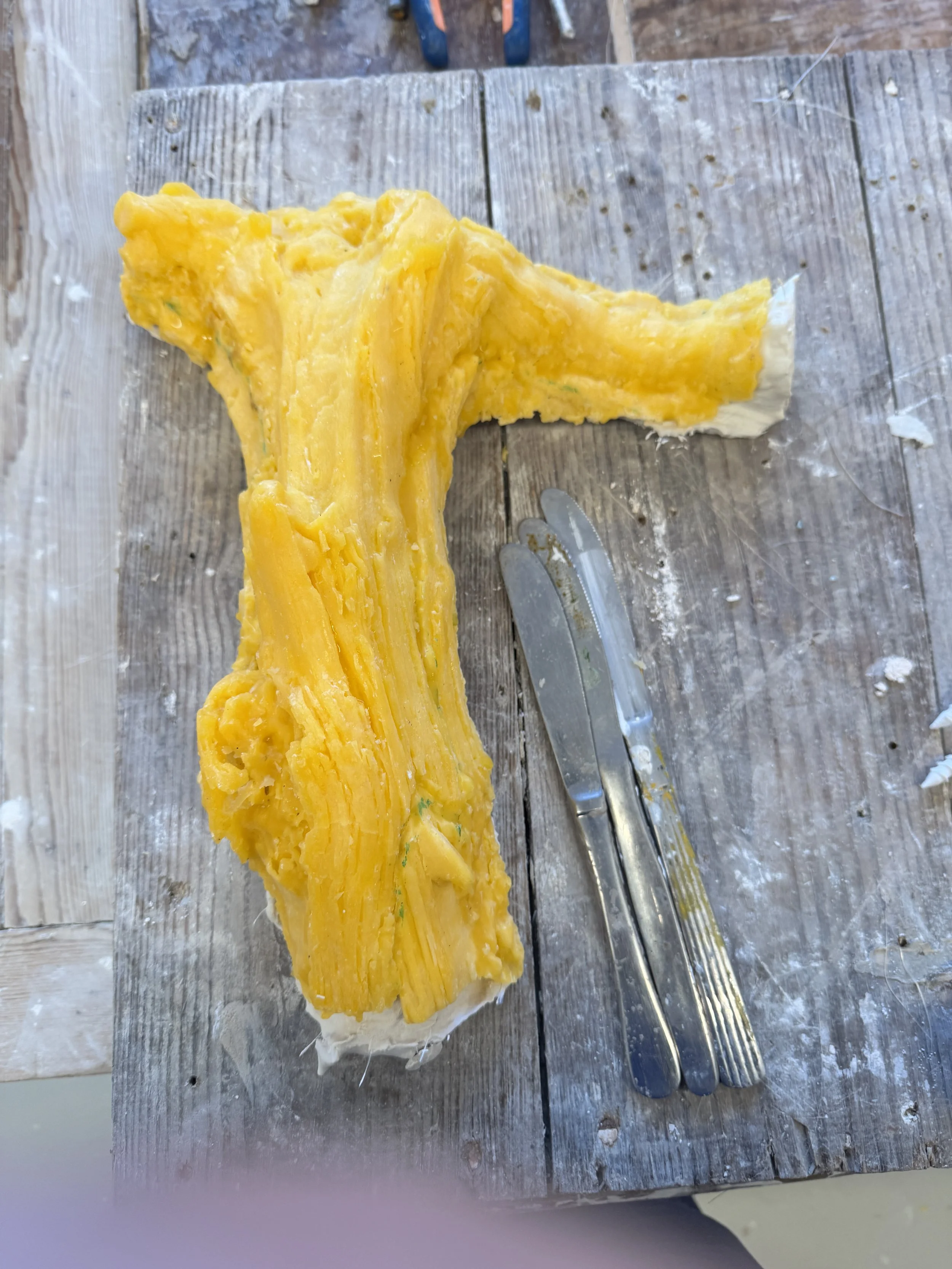
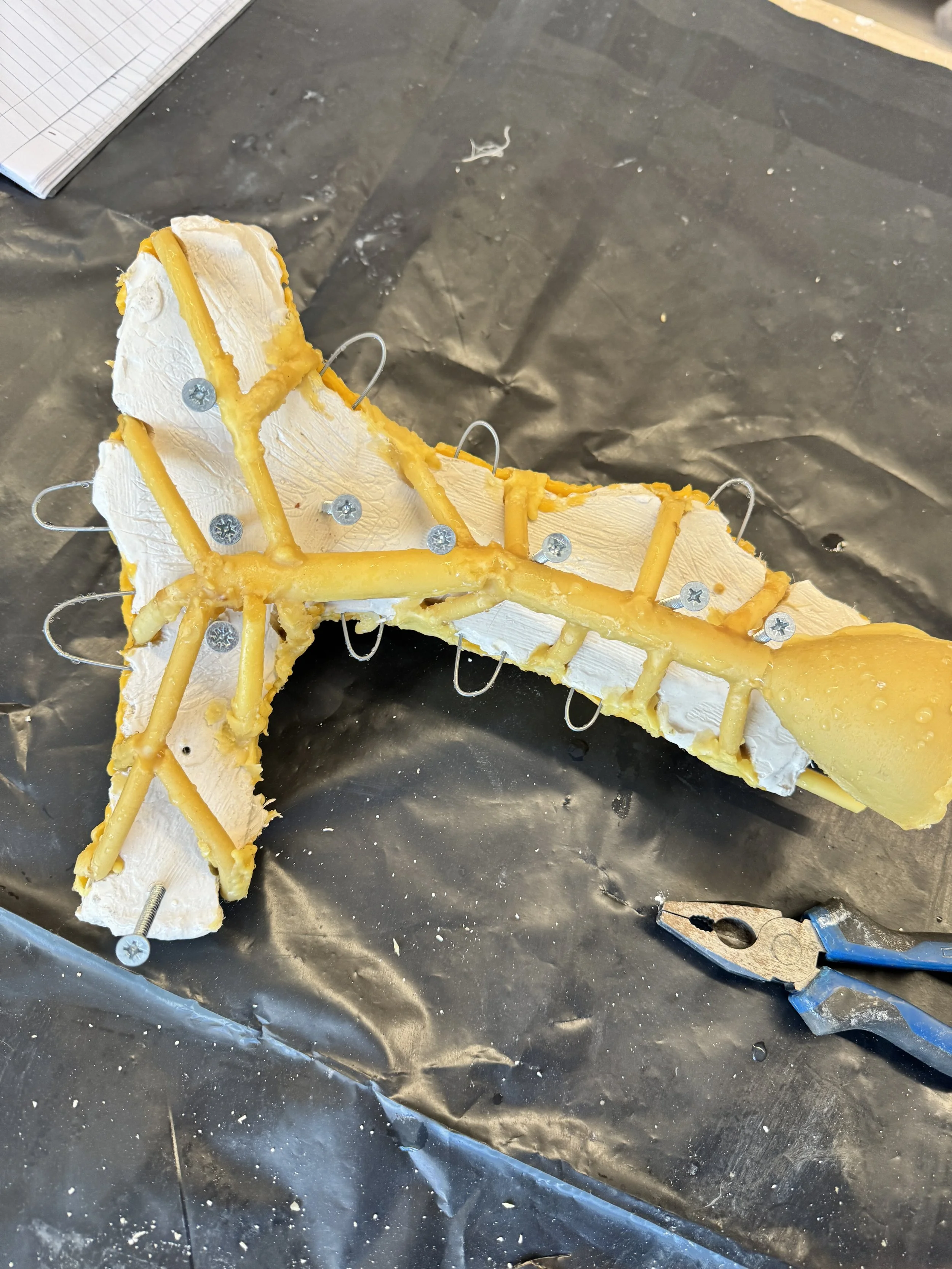
The casting process became its own metaphor. Making molds from wood, oyster mushrooms, and my own sculpted forms comments on reproductive labor, creating vessels designed to birth identical, replaceable forms over and over. Working with lost-wax and sand casting techniques, I am learning these processes as part of the conceptual investigation itself, letting the labor of learning mirror the labor being examined.
Surface treatments like patina and oxidation suggest enzyme activity, the visible wear of constant processing. The natural color palette emphasizes contrast: organic wood tones against bronze's warm metallics, highlighting the gap between what's given and what's demanded.
6. Conceptual Approach
This work examines the myth of the superwoman, not to celebrate resilience, but to question why resilience is required. The mushroom forms and branches embody paradox: they are capable yet burdened, powerful yet trapped, productive yet exhausting. Their collective presence suggests strength, but also the relentless expectation that women exist as an always-ready force, mobilized to process whatever others refuse to handle.
The sculptural language develops through tensions: strength and fragility, metal forms that are permanent yet awkward, powerful yet absurd. Invisible labor appears not as celebration but as evidence—permanent traces of what is expected to remain unseen, metal monuments to the myth of infinite female competence.
By defining the structural supports, the armatures, the substrate itself, I am asking viewers to see the infrastructure of care work. The pieces function as both evidence and resistance, asking what happens when we refuse to let competence remain invisible, when we cast it in bronze and mount it where it cannot be ignored.
7. Process and Documentation
The project developed through iterative material experimentation across multiple phases:
Initial Series (September-November 2024):
Sculpted mushroom creature forms in black microcrystalline wax
Created portobello-style caps with dense gill structures
Added tripodal legs to emphasize the fantastical, deformed quality
Built tiny mushroom forms to explore varieties of caps, gills, stems
Attended bio-plastics workshop to investigate alternative materials
Experimented with plastilina clay for softer, more embryonic forms
Installed work in PE stairwell with LED lighting
3D Printing and Surface Treatment Experiments (November-December 2024):
Learned Prusa 3D printing software and explored open-source files
Multiple attempts to achieve correct scale and detail
Extensive surface preparation: sanding, joint compound application
Experimented with gold leaf using alcohol-based size
Tested automotive paint treatments and epoxy coating layers
Discovered limitations of synthetic materials for desired effect
Bronze Casting Development (December 2024-January 2025):
Transitioned from 3D printing to bronze casting for mushroom forms and branch segments
Created molds from found wood, oyster mushrooms, and hand-carved forms
Experimented with lost-wax and sand casting techniques
Developed attachment methods for securing bronze elements to wood substrate
Explored patina and oxidation treatments for surface variation
Substrate Study (Ongoing):
Foraging and preparing decomposing wood pieces from my home property
Collecting mosses, grasses, and organic materials for context
Documenting mushroom varieties in Mondim de Basto region
Building assemblages that combine found and cast elements
Technical Support:
Prof. Norberto Jorge: material exploration, technical approach
Tecnico Alcides Rodrigues: mould-making in silicone and plaster, lost-wax casting
Tecnico Tiago Cruz: wood, stone, metal equipment training and guidance, materials testing, workshop protocols
Tecnico Tiago Pinho: 3D printing in PLA and resin
Colega Isabel Neves: led the Fundição de Alumínio para Ateliê Artístico workshop during the fall semester where I was able to create my own sand cast moulds
Documentation Practice:
I maintain a digital log documenting:
Photographs of oyster mushroom growth patterns
Notes from mycological and feminist literature
Casting experiments and technical learning
Sketches and reflections on personal experiences of care work
The project functions as both evidence and resistance—permanent traces of what is expected to remain invisible, bronze monuments to the myth of infinite female competence.
8. Bibliography
Anderson, Laurie. "O Superman (For Massenet)." Big Science, Warner Bros. Records, 1982, digital audio.
Bourgeois, Louise. Untitled (with Growth). 1989. Robert Miller Gallery, New York.
Cage, John. John Cage: A Mycological Foray—Variations on Mushrooms. Edited by Pellerin, Ananda Atelier Éditions, 2020.
Cobbett, Amanda. Glaisdale bark samples x 3 - Xanthoria parietina, Auricularia auricula-judae, 2021.
Hochschild, Arlie Russell. The Managed Heart: Commercialization of Human Feeling. University of California Press, 2012.
Hochschild, Arlie Russell. The Second Shift: Working Parents and the Revolution at Home. Viking, 1989.
Höller, Carsten. Upside Down Mushroom Room. 2000. Installation. Fondazione Prada, Milan.
Hooks, bell. Feminist Theory: From Margin to Center. 3rd ed. Routledge, 1984.
Mosfegeh, Ottessa. My Year of Rest and Relaxation. Penguin Books, 2018.
Shoemaker, Sam.
Walker, Caroline.
9. Reference Authors
Alpizar, Hialda (dahlia3d). "Detailed Blue Oyster Mushroom." 3D Model. Sketchfab. https://www.printables.com/model/930589-detailed-blue-oyster-mushroom (Accessed November 12, 2024).
Borsato, Diane. Mushrooming: An Illustrated Guide to the Fantastic, Delicious, Deadly, and Strange World of Fungi. The Experiment, 2023.
Petersen, Jens H. The Kingdom of Fungi. Princeton University Press, 2012.
Plath, Sylvia. The Bell Jar. Perennial Classics, 1999.
Schwartzberg, Louie, director. Fantastic Fungi. i2i Productions, 2019. 1 hr., 21 min. https://fantasticfungi.com/pages/the-film.
Stamets, Paul. Mycelium Running: How Mushrooms Can Help Save the World. Ten Speed Press, 2005.